
How to Vacuum Pool: Tips for a Sparkling Clean Water
When it comes to keeping your pool clean, you’ve got two main paths: rolling up your sleeves for a manual vacuuming session or letting an automatic robotic cleaner do the heavy lifting. The goal is the same—get that debris out and keep the water sparkling—but how you get there is quite different. The easiest path, of course, is letting our team of experts handle it for you.
Your Guide to a Perfectly Clean Pool
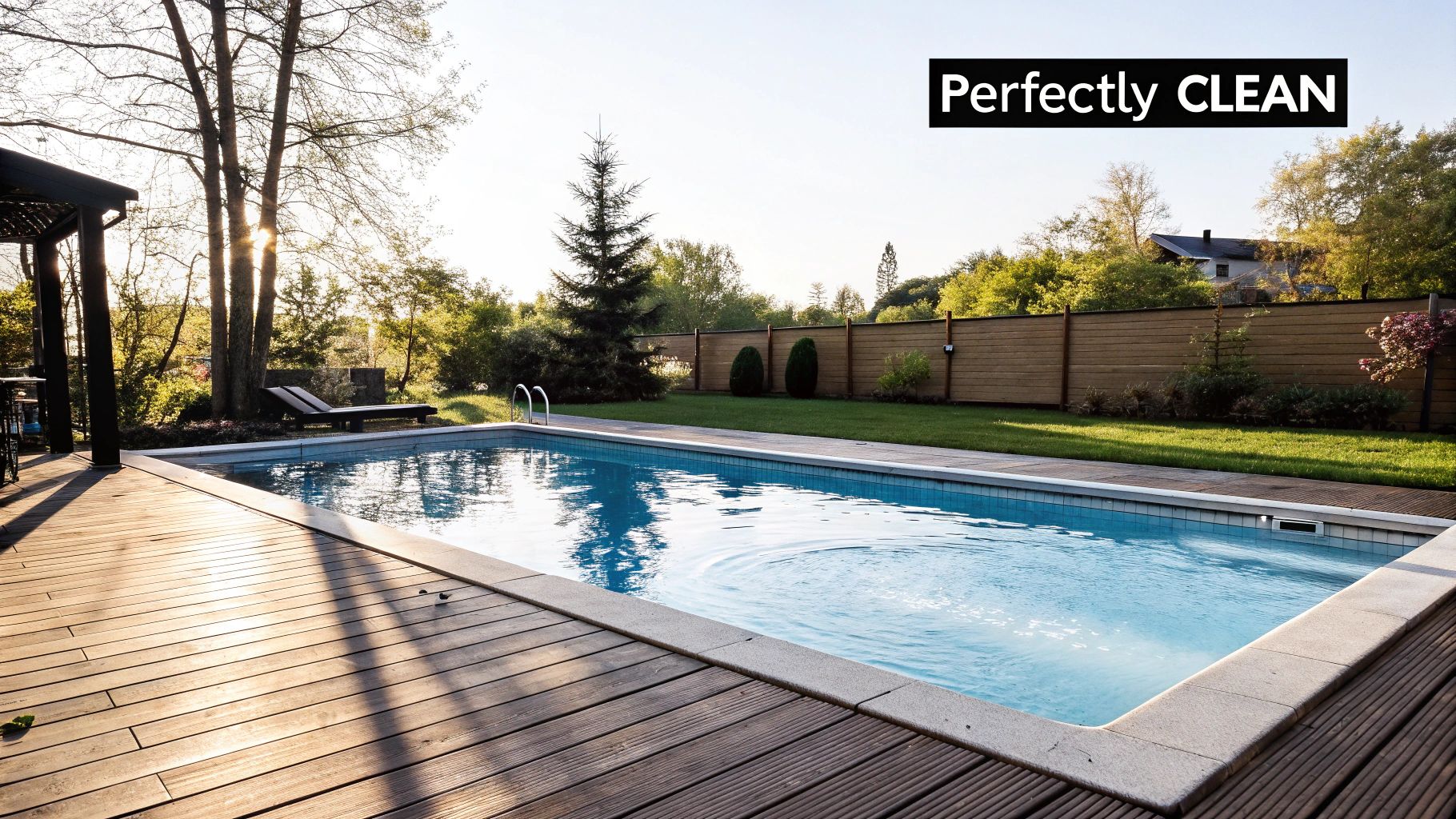
There's nothing better than looking out at crystal-clear pool water. But getting it there? That takes regular vacuuming. This isn't just about appearances; it's a critical maintenance task that prevents algae, dirt, and other gunk from building up, ensuring your pool is always ready for a swim.
Letting debris settle on your pool floor can quickly turn your backyard oasis into a cloudy, uninviting swamp. Worse, it puts a major strain on your filtration system and can throw your water chemistry way out of balance. Our professional service ensures this never happens.
This guide will walk you through the whole process, whether you’re using the old-school manual method or a modern robotic cleaner. We'll cover everything you need to know to make each cleaning session count.
Manual vs. Robotic: Choosing Your Cleaning Method
Deciding how to vacuum your pool really boils down to your budget, how much time you have, and frankly, how much you enjoy the work. Each method has its own set of pros and cons that appeal to different pool owners.
- Manual Vacuuming: This gives you total control. You can zero in on that pesky pile of leaves in the deep end or scrub a stubborn spot. The initial cost is much lower, but it definitely requires your time and a bit of elbow grease.
- Robotic Vacuuming: Talk about convenience. These smart devices are the "set it and forget it" solution. They run on their own schedule, scrubbing the floor, climbing the walls, and even tackling the waterline. They'll save you a ton of work every week.
For a clearer picture, here’s a quick comparison to help you see the key differences.
Manual vs Robotic Pool Vacuuming at a Glance
| Feature | Manual Vacuuming | Robotic Vacuuming |
|---|---|---|
| Upfront Cost | Low | High |
| Time Investment | High (your time) | Low (set and forget) |
| Effort Required | High (physical labor) | Minimal (drop it in) |
| Cleaning Precision | Excellent for spot-cleaning | Very thorough, systematic coverage |
| Power Source | Uses your pool pump | Self-contained, low-voltage power |
| Best For | Budget-conscious owners, small pools, spot-cleaning | Busy owners, larger pools, hands-off maintenance |
Ultimately, both approaches get the job done. It just depends on what you value more: saving money upfront or saving time in the long run.
While DIY cleaning is a great way to learn about your pool, many homeowners in Southwest Florida would rather spend their free time swimming than cleaning. That’s why they often turn to professional pool maintenance services to keep everything perfect without the hassle. If you want to learn more about the big picture of pool care, our guide to complete swimming pool maintenance is a great place to start.
Key Takeaway: Your choice between manual and robotic cleaning is a trade-off between investing your time or your money. Both can deliver a spotless pool, but automation brings a level of consistency and convenience that's hard to beat.
Essential Prep Work Before You Vacuum
Before you even think about connecting a single hose, there are a few things you need to do. Taking just 10-15 minutes for some prep work can turn a frustrating chore into a quick, effective cleaning session. Trust us, skipping this part is the fastest way to clog your gear and waste your afternoon.
First up, grab your skimmer net. You want to get all the big stuff floating on the surface—leaves, twigs, blossoms, you name it. If you try to vacuum with all that floating around, it's just going to get jammed in the vacuum head or hose, and your suction will drop to zero.
Once the surface is clear, it's time to brush. Get a good pool brush and give the walls, steps, and floor a solid scrub. This knocks all the stubborn dirt and clinging algae loose, suspending it in the water where the vacuum can actually grab it.
Give Your Filtration System a Quick Check
With all the loose debris taken care of, the last thing to do is make sure your filtration system is ready to pull its weight. This system is the heart of your pool, and your vacuum is useless without it running at full strength.
The infographic below breaks down this simple but crucial prep flow.
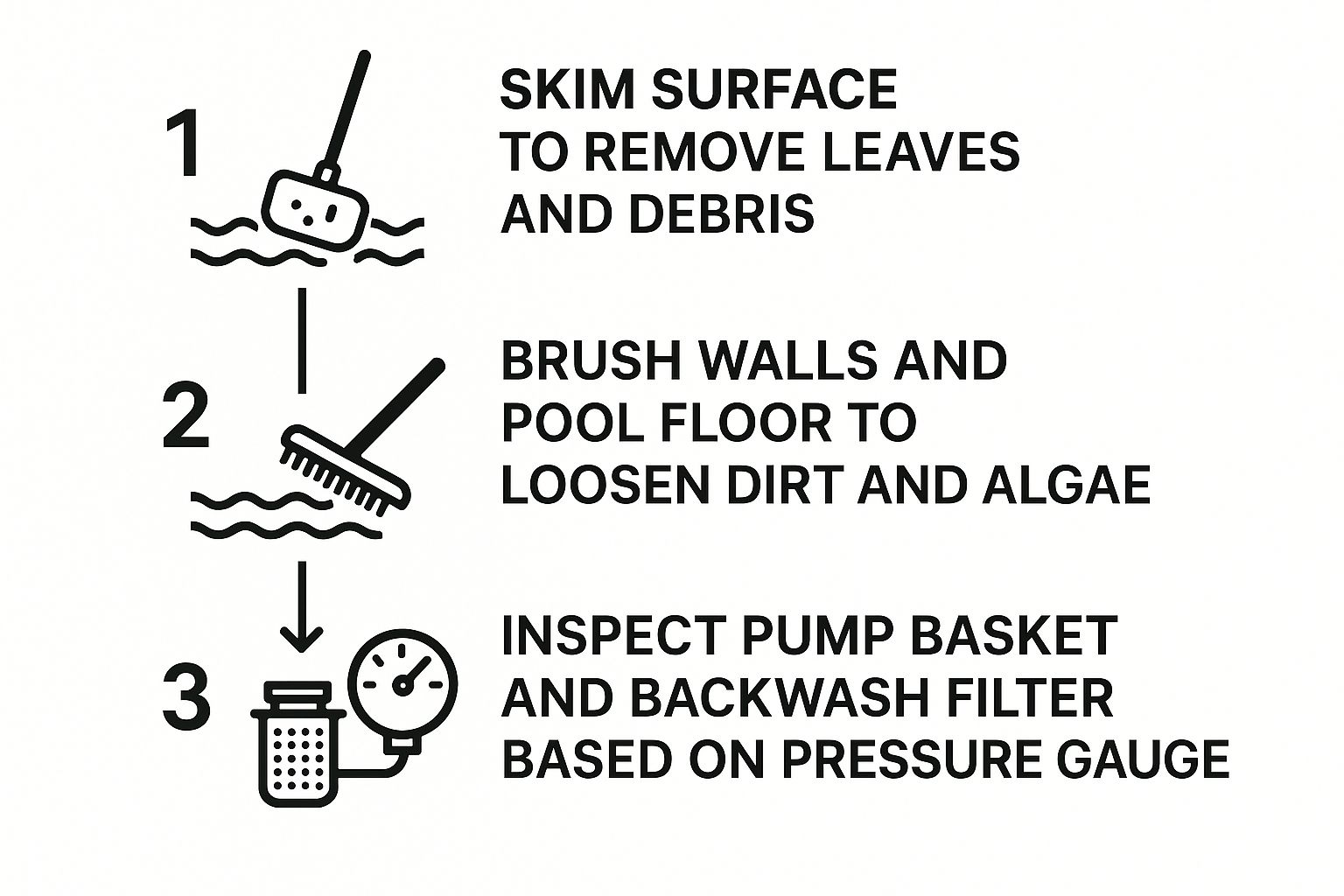
This order of operations is key: get the big stuff out, loosen the fine particles, and then make sure your equipment is primed and ready to go.
Start by popping open your pump basket. If it's full of leaves and gunk, clean it out. A clogged basket is the number one reason for weak suction. Next, glance at your filter's pressure gauge. Is it reading 8-10 PSI higher than its normal "clean" pressure? If so, it's time to backwash. A clean filter is non-negotiable for getting the powerful, steady suction you need.
If you find yourself constantly dealing with pressure problems, it might be a sign that you should look into different pool pumps and their efficiency.
Pro Tip: We always tell our clients to think of this prep work as setting the stage. A few minutes skimming and brushing now can easily save you an hour of fighting with a weak, clogged vacuum later.
Taking these steps isn't just about making the job easier; it's about protecting your equipment. It’s a standard part of our own weekly pool service visits for a reason—it guarantees a perfect clean every time.
Mastering the Manual Vacuuming Process
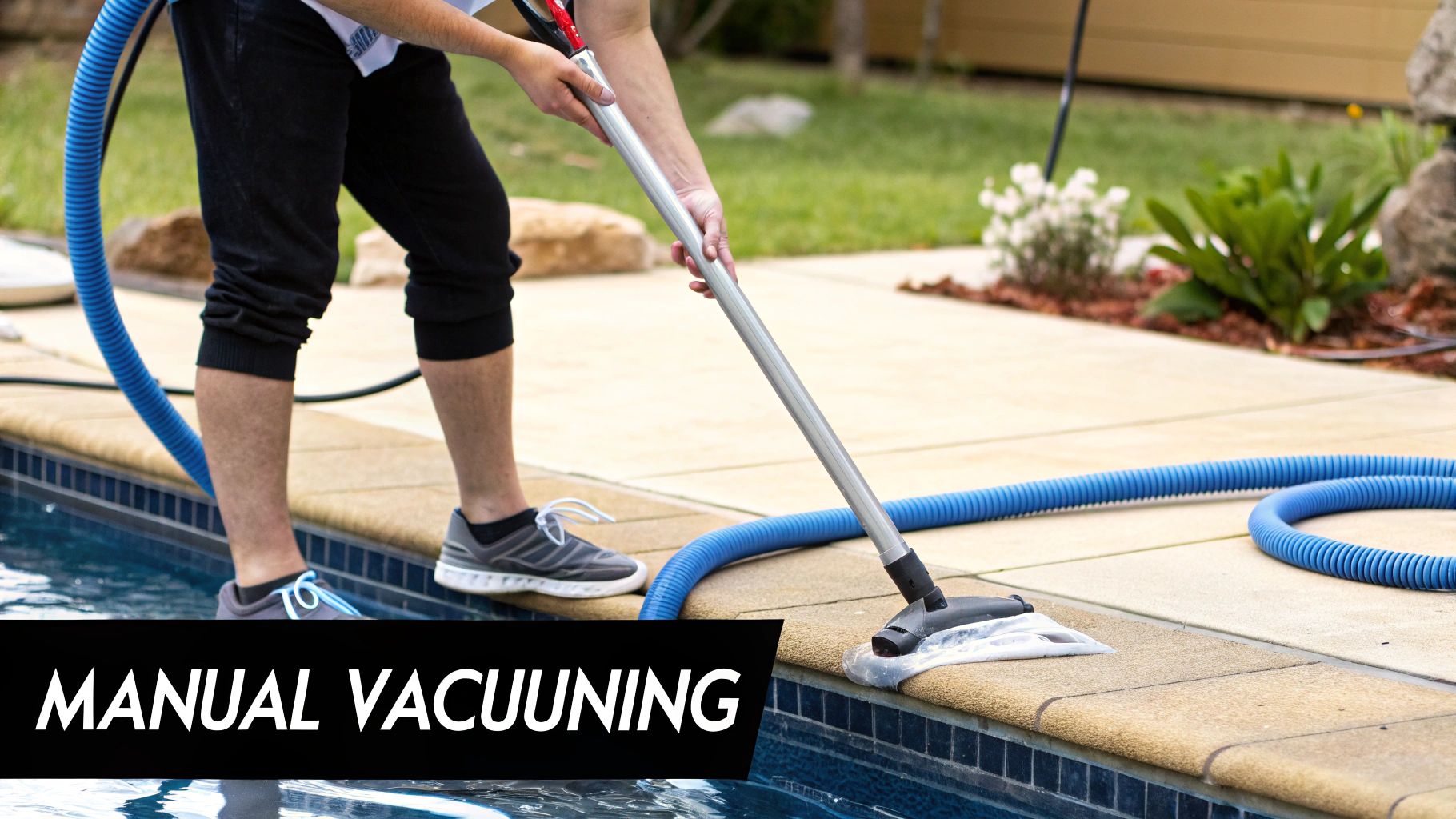
Sometimes, the best way to get a job done right is to do it yourself. For pool owners who don't mind a little hands-on work, manual vacuuming gives you complete control. It lets you zero in on those stubborn spots and problem areas with a level of precision you just can't get from an automatic cleaner.
It definitely takes more work, but getting the technique down is a skill our technicians have fine-tuned over years in the field. And it all starts with getting the setup right.
Priming the Hose for Maximum Suction
First, get your gear assembled: the vacuum head, telescopic pole, and the vacuum hose. Once everything is connected, you’re at the most critical step for getting powerful suction. You have to prime the hose.
Skipping this step means you’ll be trying to suck up debris with a hose full of air, which kills suction and can even put a dangerous strain on your pump.
The process is simple. You can either feed the entire hose into the pool, letting it sink, or take a shortcut by holding one end of the hose firmly against a return jet. You'll see a torrent of bubbles shoot out from the other end. Wait until every last bubble has escaped—that's how you know the hose is completely full of water and ready to go.
Executing the Perfect Vacuuming Technique
With a water-filled hose, you can now connect it to your skimmer. You might need to use a vacuum plate to get a snug fit, depending on your setup. Now, the real work begins.
The secret to a great vacuuming job is to move slowly and deliberately. Think of it like mowing a lawn. Guide the vacuum head in long, overlapping strokes that cover every inch of the pool floor. If you rush, all you’ll do is stir up the dirt and cloud the water, creating more work for yourself later.
Expert Tip: If you're dealing with a nasty algae bloom or a lot of fine silt, switch your multiport filter valve to the 'Waste' position. This sends all that gunk directly out of your pool system instead of clogging your filter or, even worse, cycling right back into the pool.
There's no doubt that this is a time-consuming chore, but the sparkling clean result is hard to beat. While many homeowners can get the hang of it, they often realize that time spent cleaning is time not spent enjoying the pool. If you'd rather have your weekends back, our team provides meticulous professional pool maintenance services to handle all the hard work for you, ensuring your pool is perfect every single week.
Using a Robotic Cleaner for Automated Maintenance
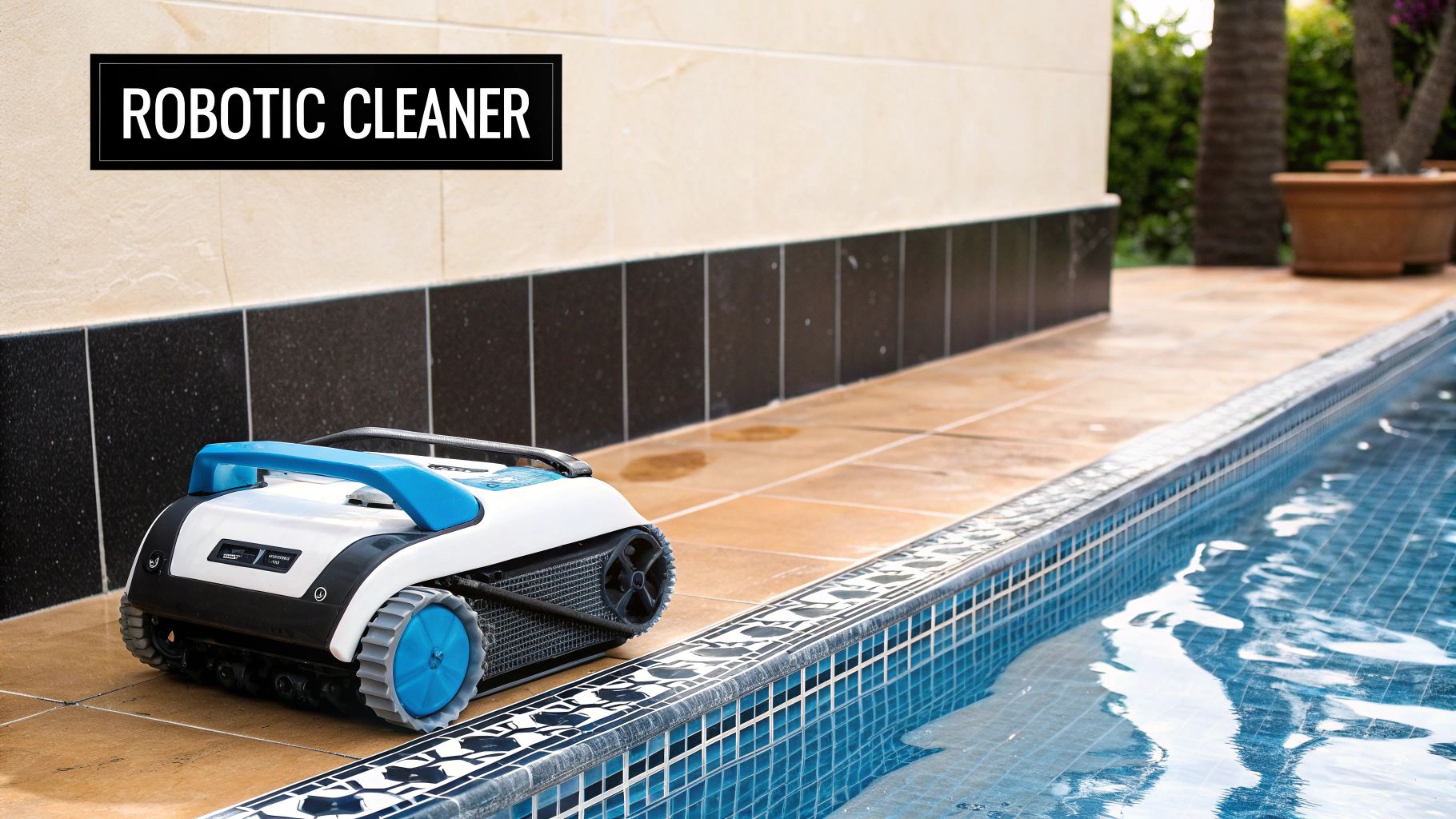
If you're a pool owner who would rather spend more time swimming and less time cleaning, a robotic cleaner is your best friend. These little machines have completely changed the game for pool maintenance, giving you a hands-off way to keep the water sparkling.
What makes them so great? Unlike the old suction-side cleaners that hook into your pool’s circulation system, robotic models are completely independent. They have their own motor, filter, and power source. This is a huge plus because it means less strain on your main pump and filter, which can help your expensive equipment last longer.
These cleaners are also incredibly smart. They use advanced navigation to methodically map out your pool's floor, walls, and even the waterline, ensuring a level of clean that’s tough to achieve by hand. They scrub away dirt and algae from every surface, leaving nothing behind.
The Shift to Automated Cleaning
It’s no surprise that more and more pool owners are making the switch. The global market for automatic pool cleaners was valued at around USD 2.60 billion and is expected to climb to USD 4.14 billion by 2030. That growth says it all: people want smarter, more efficient ways to care for their pools. You can dig deeper into the automatic pool cleaner market trends to see where the industry is headed.
Robotic cleaners don't just save you from a chore; they deliver a superior, more consistent clean. Their internal filters are designed to trap incredibly fine debris, keeping it from ever circulating back into your pool.
With so many models out there, picking the right one can feel like a big decision. If you're ready for this fantastic upgrade, our experts can point you toward the best model for your pool. Or, even better, let us handle everything. Our all-inclusive service packages cover the cleaning so you can just focus on enjoying a perfect pool, day in and day out.
Common Vacuuming Mistakes to Avoid
Even pool pros can get a little complacent and fall into bad habits. Knowing the right way to vacuum is half the battle; knowing what not to do is what separates a quick, effective clean from a frustrating Saturday afternoon.
The number one mistake we see people make is simply moving too fast. It’s tempting to rush through the job, but when you whip the vacuum head across the pool floor, you're not cleaning—you're just stirring things up. All that dirt, sediment, and algae gets kicked up into the water, only to settle right back down an hour later.
Another classic blunder is not getting all the air out of the hose before you start. If you don't prime it properly, you'll have terrible suction, or none at all. You’ll be pushing the vac head around for nothing and potentially putting extra strain on your pump motor.
Pay Attention to Your Equipment
You also have to keep an eye on your filter's pressure gauge as you clean. It's easy to get in the zone and forget, but as the filter collects all the gunk you're vacuuming up, the pressure inside the tank climbs. Once that gauge reads 8-10 PSI higher than its clean starting pressure, your water flow is choked off, and your vacuum's suction will plummet.
A high-pressure reading is your filter’s way of saying it’s full. Stop and backwash the filter before you continue, or you’re just pushing water around without cleaning anything.
Finally, let's talk about algae. Trying to vacuum up a nasty algae bloom on the standard 'Filter' setting is a recipe for disaster. You're literally sucking up algae spores, running them through the filter, and shooting them right back into the pool to start a new colony.
- For Algae: You must set your multiport valve to 'Waste'. This bypasses the filter entirely and sends all that nasty, algae-filled water straight out of your pool system for good. Yes, you'll lose some water, but you'll get rid of the algae.
- For Regular Debris: The 'Filter' setting is perfectly fine for routine cleanings when you're just picking up everyday dirt and a few leaves.
Avoiding these simple but critical missteps makes all the difference. It's this kind of attention to detail that our trained professionals bring to every job, ensuring your pool is left spotless every single time.
Common Pool Vacuuming Questions
Even when you feel like you've got the hang of vacuuming your pool, questions pop up. Our technicians get asked these all the time by homeowners just trying to get the job done right. A little expert advice can be the difference between a frustrating afternoon and a perfectly clean pool.
How Often Should I Be Vacuuming?
This really comes down to your specific pool and its surroundings. For the average backyard pool, a solid vacuuming once a week is usually the sweet spot. Sticking to a weekly routine keeps debris from breaking down and messing with your water chemistry.
Now, if your pool is under a bunch of leafy trees or gets a ton of action from the kids all summer, you'll probably want to bump that up to twice a week. It’s also smart to do an extra vacuum session after a big storm rolls through or after you’ve hosted a pool party. This is a key part of our service plans.
Why Is My Pool Vacuum Losing Suction?
There's nothing more annoying than a vacuum with weak suction. When this happens, it's almost always one of three culprits: an air leak, a clog somewhere in the system, or a dirty filter.
First, check your hose. Make sure it's completely filled with water (primed) and doesn't have any splits or cracks letting air in.
Next, hunt for clogs. The usual suspects are the skimmer basket and the pump basket—if they're packed with leaves and debris, water can't flow through properly. Lastly, take a look at your filter pressure. A dirty, clogged filter is a classic cause of poor suction, so give it a good backwash or cleaning. If you're still scratching your head, you can find more answers to common pool questions on our FAQ page.
Your filter's 'Waste' setting is a lifesaver for heavy-duty cleanups. It's perfect for getting rid of algae blooms or fine silt without sending it all through your filter media. Just remember, it pumps a lot of water out of the pool, which you'll need to replace.
If you'd rather skip the guesswork and the work, Water Medic of Cape Coral has you covered. We offer reliable, professional weekly maintenance to keep your pool in perfect shape. Contact us today for a free estimate.