
How to Look After a Pool: Quick Tips for Sparkling Water
Keeping a pool in Southwest Florida isn't just about skimming a few leaves; it's about staying ahead of the intense sun, daily downpours, and relentless humidity. The secret? A consistent routine. Think of it as a rhythm of daily, weekly, and monthly tasks that stops problems in their tracks and keeps your water sparkling and safe. For busy homeowners, our weekly pool service handles this routine for you, ensuring your pool is always perfect.
Your Essential Southwest Florida Pool Care Checklist
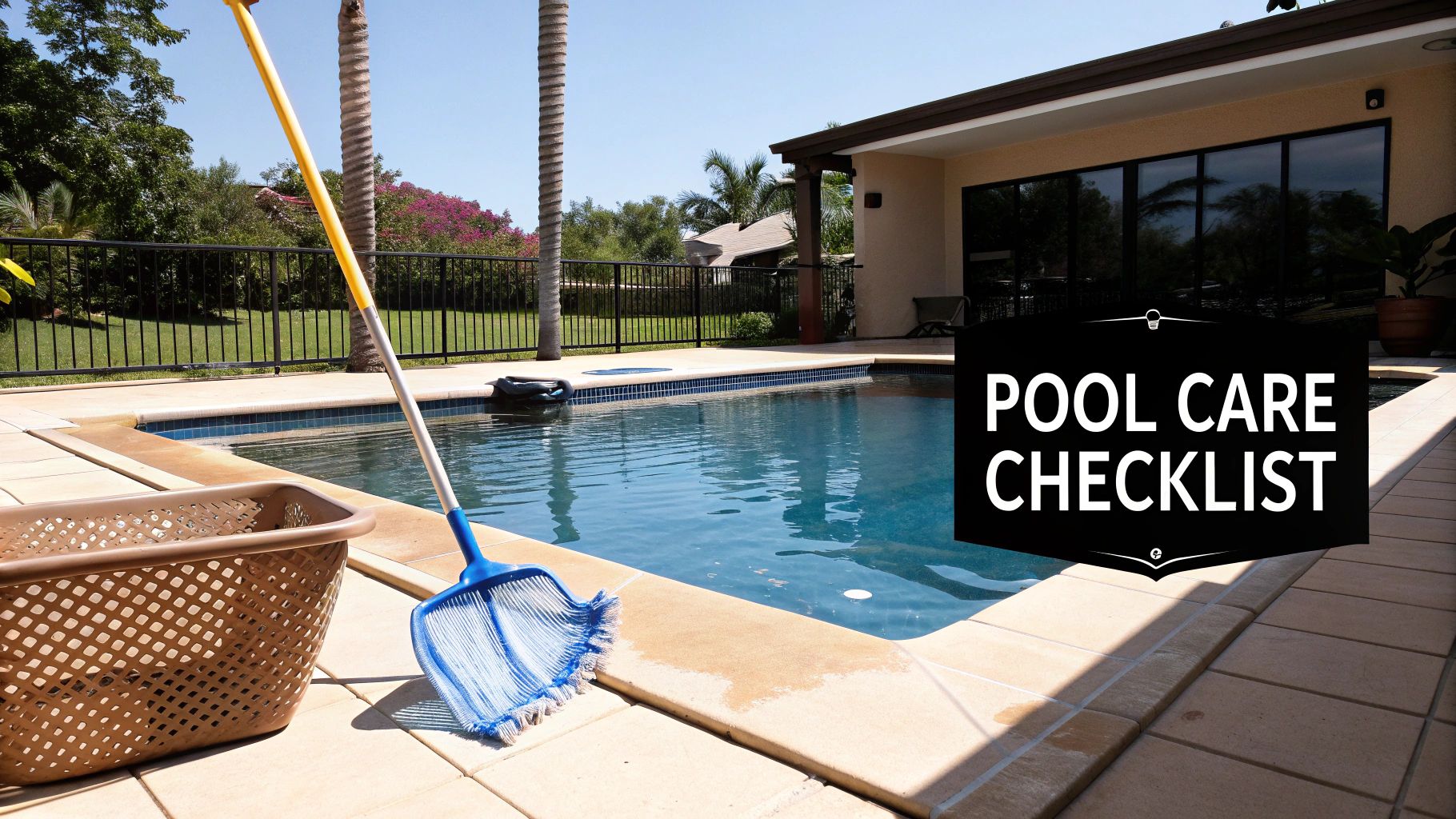
Welcome to the club! Owning a pool in our corner of paradise is amazing, but it means managing a delicate ecosystem. Consistency is the name of the game, and it’s your best weapon against cloudy water, surprise algae blooms, and equipment headaches down the road.
This checklist is your foundation—the essential habits that will protect your investment and make pool ownership a joy, not a chore. Of course, if you'd rather leave the work to the professionals, our pool cleaning services are designed to take the burden off your shoulders.
Daily Pool Tasks: The 5-Minute Win
Spending just a few minutes on your pool each day makes a world of difference. These quick tasks prevent debris from decomposing, which can stain your pool's finish and clog up the works.
- Skim the Surface: Grab your skimmer net and clear off any floating leaves, bugs, or flower petals. This is your first and easiest line of defense.
- Empty the Skimmer Baskets: Check the baskets built into the side of your pool. When they get full, water flow gets choked off, which strains your pump and torpedoes your filtration.
Weekly Maintenance Habits
This is where you really get in tune with your pool's health. Your weekly tasks go beyond surface cleaning and get into the nitty-gritty of water chemistry and sanitation.
First up, give the walls, steps, and floor a good brushing. This knocks loose any clinging dirt or the beginnings of algae. Then, vacuum up all that debris you just dislodged. Finally, it's time to test the water. You can use a quality home test kit or bring a sample to a local pool store to check and balance your chemical levels.
A steady weekly routine is the single most powerful tool you have. In the heat of a Florida summer, skipping just one week can be all it takes for algae to gain a foothold, turning a simple job into a major cleanup project.
Monthly Pool Care Deep Dive
Once a month, it’s time to play detective and give your equipment a closer look. This proactive check-up is how you spot small issues before they snowball into expensive repairs. Listen for strange noises from the pump, look for leaks, and check for any signs of wear and tear on your filter and other hardware.
Speaking of the filter, cleaning it is a non-negotiable monthly task. Whether you have a cartridge, sand, or D.E. filter, a clean one is essential for clear water and efficient circulation. If you're looking for more detail on what the pros handle, our guide to professional monthly maintenance offers a closer look.
To make life even easier, think about your landscaping. The right plants can drastically cut down on the debris that ends up in your pool. For some great, low-mess ideas, check out this guide on the best plants for pool areas.
Here’s a quick-reference table to help you keep everything straight.
SWFL Pool Maintenance Schedule At-a-Glance
| Frequency | Task | Why It's Critical in SWFL |
|---|---|---|
| Daily | Skim Surface & Empty Baskets | Constant shedding from tropical plants and afternoon storms means daily debris removal is non-negotiable to prevent clogs and stains. |
| Weekly | Brush, Vacuum & Test Water | The intense sun burns off chlorine quickly, and frequent rain dilutes chemicals, requiring weekly adjustments to prevent algae. |
| Monthly | Clean Filter & Inspect Equipment | High usage and long running hours in our climate put extra stress on equipment. Monthly checks catch wear and tear early. |
Sticking to this schedule will keep your pool in fantastic shape, ensuring it's always ready for you to enjoy.
Mastering Pool Chemistry for Crystal Clear Water
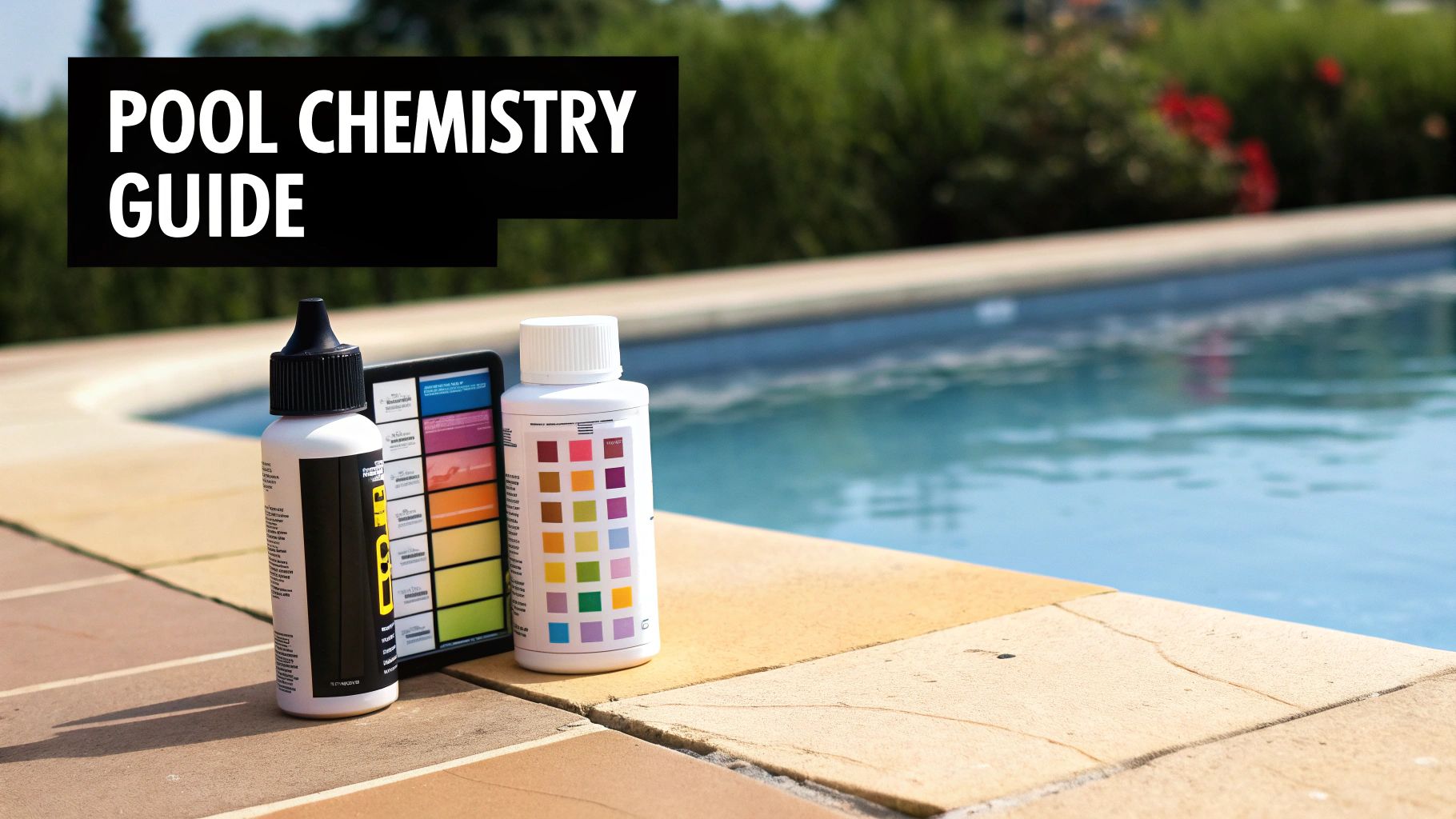
The secret to that perfect, inviting blue water isn't magic; it’s all about the chemistry. I know, that word can sound intimidating, but getting the basics right is the absolute key to preventing common frustrations like algae blooms and cloudy water. Think of it as a simple balancing act.
Here in Southwest Florida, that balance is constantly under attack from intense sun and heavy rain. A classic afternoon downpour, for example, isn't just diluting your pool—it's often acidic and can send your pH plummeting, throwing the entire system out of whack. Learning to manage your pool’s chemistry is how you get ahead of problems instead of just reacting to them.
The “Big Five” of Pool Chemistry
To keep your water balanced and safe, you really only need to keep an eye on five main things. Getting these right not only makes the water look great but also protects your pool’s plaster and expensive equipment from damage like corrosion and scaling.
- Chlorine: This is your primary sanitizer. It’s what kills bacteria, algae, and other nasty stuff. The ideal range is 1-3 parts per million (ppm).
- pH: This simply measures how acidic or basic your water is. If your pH is off, your chlorine won't work effectively, no matter how much you add. You want to be between 7.4 and 7.6.
- Total Alkalinity (TA): Think of this as the anchor for your pH. It keeps the pH level from swinging wildly. The sweet spot is 80-120 ppm.
- Calcium Hardness (CH): This is the measure of dissolved calcium. Keeping it between 200-400 ppm is crucial to prevent plaster etching (too low) or cloudy water and scaling (too high).
- Cyanuric Acid (CYA): This is your chlorine’s sunscreen. CYA, or stabilizer, protects chlorine from being vaporized by the intense Florida sun. Aim for 30-50 ppm.
It's critical to see these as an interconnected system, not just a checklist. For example, if your Total Alkalinity is too low, your pH will crash after a rainstorm. When that happens, your chlorine becomes almost useless, and you're left wondering why the pool is turning green.
For those of you with saltwater pools, the goal is the same, but the method is a little different. Your salt cell generates its own chlorine, but you still have to monitor all the other levels just as carefully. If you need a hand with your salt system, our team offers a specialized saltwater pool service to keep it dialed in.
A Few Practical Tips for Adding Chemicals
Handling pool chemicals safely is just as important as getting the measurements right. Always, and I mean always, read the manufacturer’s instructions before you start. And a huge rule of thumb: never mix different chemicals together outside of the pool—it can create some seriously dangerous reactions.
When adding chemicals, I always recommend pre-dissolving granular types in a bucket of pool water first. Then, pour the mixture slowly into the deep end while the pump is running to help it circulate. This prevents potent granules from settling on your pool’s surface, which can easily bleach or even damage the plaster. After you add anything, give it at least 20-30 minutes before you re-test the water to get an accurate reading.
As you get more comfortable with your pool's chemistry, you might find it helpful to understand the pros and cons of salt pools versus chlorine systems to decide which one truly fits your lifestyle.
The Professional Advantage
Feeling a bit overwhelmed? You're not alone. Balancing these five components is a constant job, especially with our unpredictable weather. This is exactly where a professional service makes all the difference.
At Water Medic of Cape Coral, our technicians live and breathe this stuff every day. We handle all the testing, balancing, and chemical treatments for you. We use pro-grade digital testing kits for pinpoint accuracy, ensuring your pool is not just crystal clear, but perfectly safe for your family. It's the simplest way to enjoy your pool without having to do any of the chemistry homework.
Keeping Your Pool Equipment in Peak Condition
If your pool’s water chemistry is the science, then your equipment is the engine room. Think of your pump and filter as the hardworking heart and lungs—they pull water in, scrub it clean, and push it back out in a continuous cycle. Honestly, getting a handle on this hardware is a huge part of learning how to look after your pool.
It's simpler than you might think. Water gets drawn from the pool through the skimmers and main drain, travels to the pump, and then gets pushed through the filter where all the gunk is trapped. Finally, clean water returns to the pool through the jets. Keeping this system happy is the key to heading off most common pool problems and avoiding those sudden, expensive breakdowns. A little proactive care now is always cheaper than a reactive repair later.
Your Regular Equipment Checklist
You don't need to be a mechanic to give your equipment a quick once-over. Making these checks part of your weekly routine can save you from a major headache down the road.
- Listen to Your Pump: Your pump should make a steady, low hum. If you suddenly hear loud whining, grinding, or rattling, that’s a red flag. It's often a sign the motor's bearings are going out. Catching this early can be the difference between a simple fix and a full pump replacement.
- Check the Filter Pressure Gauge: Every filter has a pressure gauge that tells you how hard it's working. After you clean your filter, take note of the "clean" pressure reading. When the pressure climbs 8-10 PSI above that baseline, the filter is clogged with debris and it's time to clean it or backwash.
- Look for Leaks: Make a habit of glancing over the pump, filter, heater, and any visible pipes. Even small drips can signal a failing seal or o-ring—an easy, inexpensive fix. If you ignore them, they can lead to significant water loss and damage the concrete equipment pad.
Understanding Different Filter Types
The filter is your number one defense against cloudy water, so knowing how to maintain your specific type is crucial. They all do the same basic job, but how you clean them varies.
Sand Filters: These are the old workhorses of the pool world. Water is forced through a large tank of specialized sand that traps debris. When the pressure gauge tells you it's full, you perform a "backwash," which reverses the water flow and flushes all the trapped dirt out to the waste line.
Cartridge Filters: These systems use a large, pleated fabric cartridge to screen out contaminants. Instead of backwashing, you'll need to pull the cartridge out every few months, give it a thorough hosing down, and then put it back.
Diatomaceous Earth (D.E.) Filters: For those who want the absolute clearest water, D.E. is the way to go. These filters use grids coated in a fine white powder (D.E.) that can trap microscopic particles. They are cleaned by backwashing, much like a sand filter, but you have to add new D.E. powder into the skimmer afterward to recoat the grids.
When your pump starts making strange noises or the filter pressure stays high even right after you've cleaned it, that's your cue that the problem is beyond a simple DIY fix. These symptoms often point to internal wear or hidden blockages that really need a professional eye to diagnose correctly.
If you think you have a serious issue, don't just hope it goes away. Our team has seen it all and can provide expert pool equipment repair to get your system humming along perfectly again.
The pool service industry has changed a lot in recent years, with new tech making everything more efficient. We're seeing more sophisticated water treatment systems and automated robotic cleaners that do an incredible job with almost no effort. You can read more about these industry trends to see where things are headed. Here at Water Medic, we make it our business to stay on top of these developments so we can bring the best, most efficient solutions to our clients.
Solving Common Southwest Florida Pool Problems
Every pool owner in our corner of Florida knows the feeling. Sooner or later, you walk outside to a surprise. It might be the first hint of green along the steps or water that's stubbornly hazy no matter how much you run the pump.
These common headaches are often a direct result of our unique climate. A sudden afternoon rainstorm throws the pH out of whack, or a wave of oak pollen over a weekend overwhelms your filter. This is your troubleshooting guide for those all-too-common issues.
We'll diagnose the likely culprits and give you clear, actionable steps to reclaim your crystal-clear water. Knowing how to handle these minor problems yourself is empowering, but it's just as important to recognize when a persistent issue needs a professional eye before it turns into a major expense. Our troubleshooting services can pinpoint the issue quickly and save you the headache.
The Battle Against Algae
Algae is public enemy number one for pool owners here. Our combination of intense sun and bathtub-warm water creates the perfect breeding ground for it. Seeing green is the most common, but it's not the only type you might face.
- Green Algae: This is the most frequent visitor. It often pops up after a chemical imbalance or when filtration is slacking. It can make the water look like pea soup or cling annoyingly to the walls and floor.
- Yellow Algae: This one looks like a dusting of pollen or sand and stubbornly sticks to the shady corners of your pool. It’s a lot more resistant to chlorine than its green cousin.
- Black Algae: The toughest of all. It appears as dark, stubborn spots with a protective slime layer, making it incredibly difficult to kill. You can't just brush this one away.
To fight back, the first move is almost always to shock the pool. This means adding a heavy dose of chlorine to super-chlorinate the water and kill the bloom. For yellow or black algae, though, you have to get physical. You'll need to vigorously brush the affected areas to break up their protective layers so the chemicals can actually do their job. If the problem persists, our specialized green pool cleaning service can restore your water to pristine condition.
Diagnosing Cloudy Water
You walk out to a pool that looks like skim milk—what gives? Cloudy water is almost always a sign that something is off with either your chemistry or your filtration.
First, take a look at your filter's pressure gauge. If the pressure is running high, that’s a dead giveaway your filter is clogged and needs a good cleaning or backwashing. If the filter seems fine, the next step is to test your "big five" chemical levels. A pH that's drifted too high is often the culprit, as it makes your chlorine less effective and allows tiny particles to just hang around in the water.
Is It a Leak or Just Evaporation?
In the Florida heat, it's perfectly normal to lose a bit of water to evaporation, sometimes up to a quarter-inch a day. But if you find yourself dragging the hose out more than once a week, you might have a bigger problem.
The easiest way to check is with the good old bucket test.
- Grab a 5-gallon bucket and place it on your top pool step. Fill it with pool water until the water level inside the bucket is the same as the pool's water level outside of it.
- Turn off the pump and let everything sit for a full 24 hours.
- After a day, compare the levels. If the pool water has dropped more than the water inside the bucket, you likely have a leak.
This simple test can save you a lot of guesswork. While some small leaks are simple DIY fixes, others require specialized detection equipment to pinpoint the source.
When you suspect an equipment issue, like a weird noise coming from the pump, this flowchart can help you figure out what to do next.
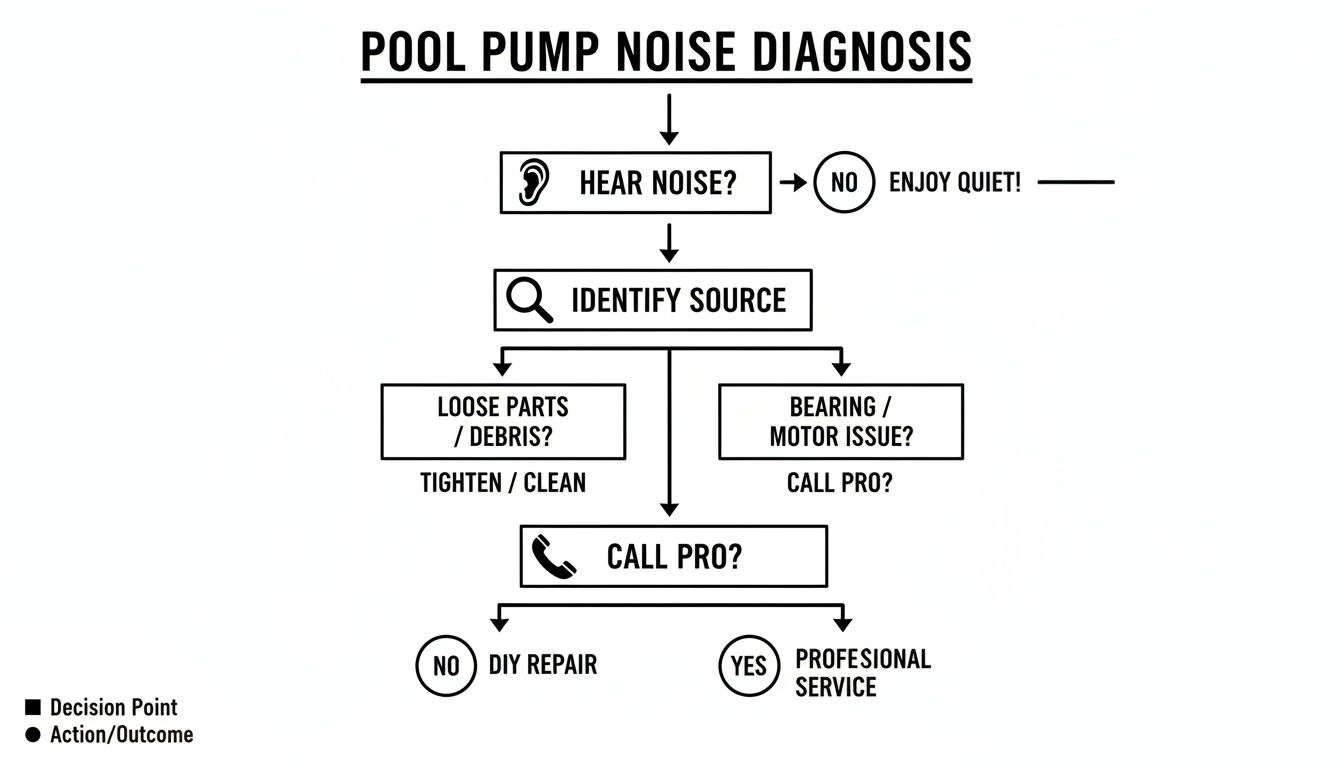
This decision tree helps you determine if a pump noise is from a simple fix, like a clogged basket, or a more serious mechanical problem that needs a pro.
Troubleshooting these issues is a key part of looking after a pool, but safety must always come first. When you're handling powerful chemicals or working with electrical equipment, you're taking on a serious responsibility.
That responsibility goes beyond just maintenance. It's about keeping people safe. The data shows that an average of 358 children drown annually in pools, most of which are at private homes. For every one of us in Southwest Florida, that statistic is a powerful reminder that proper, consistent maintenance is a non-negotiable part of owning a pool. You can learn more about key pool service industry trends and findings on Pool Magazine.
It's a sobering thought, but a well-maintained pool is a safer pool. When you’re in doubt, calling in a professional from Water Medic of Cape Coral isn’t just about convenience—it's about ensuring your pool is a safe, healthy place for everyone to enjoy.
When to Call in the Pros for Your Pool
Let’s be honest: taking care of a pool in Southwest Florida is a real commitment. It takes time, sweat, and money. While there's a certain pride in doing it yourself, there comes a point where hiring a professional isn't just a convenience—it's a smart move to protect your investment and get your free time back.
The real cost of DIY pool care goes way beyond what you spend on chlorine and test strips. You have to account for the hours you sink into brushing, skimming, and testing. Then there are the countless trips to the pool store and the hassle of storing all those bulky, hazardous chemicals. It’s like having a part-time job that never gives you a day off, even when you're on vacation.
The Hidden Costs of Going It Alone
When you’re learning as you go, the stakes are high. One small mistake with your water chemistry or a missed sign of equipment failure can snowball into a massive, expensive headache. These DIY mishaps often end up costing far more than a simple weekly service plan.
Think about these common pitfalls we see all the time:
- Costly Chemical Mistakes: Getting the chemical balance wrong isn't just ineffective; it can actively damage your pool. For instance, letting the pH stay too low can eat away at the copper coils in your expensive heater. On the flip side, high calcium levels will build up scale that clogs your plumbing and chokes your salt cell.
- Missed Equipment Warnings: Do you know the subtle whine a pump motor makes right before it gives out? Our technicians do. They’re trained to spot the early warning signs—a tiny drip from a seal, a weird noise—that a homeowner might not notice until a major breakdown happens.
- The Value of Your Time: Your weekends are precious. Spending Saturday afternoon fighting an algae bloom or trying to figure out why the water is cloudy is time you could be relaxing with your family and actually enjoying the pool.
A professional pool tech does so much more than "throw in some chemicals." Think of them as your pool's personal doctor, performing a weekly check-up to protect your equipment, preserve your pool's finish, and keep the water perfectly safe for your family.
The Real Value of Expert Maintenance
Putting in a pool is a huge investment, and the upkeep isn't cheap either. The average in-ground pool costs a pretty penny to install, and annual maintenance can add thousands to that. It’s a multi-billion dollar industry, yet surprisingly, only about 50% of pool owners in the U.S. use a professional service. Here in Southwest Florida, with our intense sun and rain, professional care is hands-down the best way to protect that big investment. You can see more on the costs and statistics of pool ownership from Renosys.com.
When you hire a dedicated service like Water Medic of Cape Coral, you’re not just paying for a clean pool. You’re buying consistency, a longer life for your equipment, and total peace of mind. We take the burden off your shoulders so your pool is always balanced, sparkling, and ready to jump into whenever you are.
For anyone who values their time and wants to know the job is done right, professional care is the obvious choice. It's the confidence you get from having local experts with over 25 years of experience navigating our unique Florida climate looking after your pool. If you want to know who you'd be trusting with your backyard oasis, you can learn more about the team you can trust on our About Us page.
Your Top Florida Pool Care Questions Answered
When you own a pool in Southwest Florida, a lot of questions come up. Our climate throws some unique curveballs, from intense summer heat to hurricane season. We get calls about these same issues all the time, so let's walk through the most common questions we hear from local homeowners.
Think of this as getting direct advice from the pros at Water Medic of Cape Coral. We want you to feel confident and in control of your pool.
How Often Should I Really Run My Pool Pump in Florida?
In our neck of the woods, you need to run your pump long enough to filter every drop of water in your pool at least once a day. For most backyard pools, that means an 8 to 10-hour run time is the sweet spot.
But when the summer heat really kicks in, from about June through September, you’ll want to bump that up to 12 hours. Trust me, it's worth it. That extra circulation is your number one defense against algae and ensures all those expensive chemicals are actually getting mixed in and doing their job. It's tempting to cut the runtime to save on the electric bill, but that's a classic rookie mistake. You'll end up spending far more on shock and algaecides to clean up the green mess that poor circulation causes.
Pro Tip: A variable-speed pump is a game-changer for Florida pool owners. It can run longer at a lower, quieter speed, giving you incredible filtration while slashing your energy costs. If you're thinking about an upgrade, we can help you pick and install the perfect one for your pool.
What Is the Best Way to Handle My Pool During a Hurricane?
Knowing what to do before a storm is a non-negotiable skill here. The absolute golden rule is: never, ever empty your pool. The weight of that water is what keeps the pool shell from popping right out of the ground when the soil gets saturated. An empty pool during a hurricane is a recipe for disaster.
Here's what you should do:
- Lower the Water: Drop the water level by about a foot. This gives all that heavy rainfall a place to go without overflowing your deck.
- Kill the Power: Head to your circuit breaker and turn off all the power to your pool equipment. This is a must to protect your pump, heater, and any automation from getting fried by power surges.
- Stow Everything: Secure any loose items on your patio. Chairs, umbrellas, pool toys, and even your cleaning poles can become dangerous projectiles in hurricane-force winds.
After the storm rolls through, the cleanup can be a real bear. You're dealing with a ton of debris and water chemistry that's been completely thrown off by rainwater. If it feels overwhelming, Water Medic of Cape Coral has specialized post-storm recovery services to get your pool safely back to blue without all the headache.
Is a Saltwater Pool Easier to Maintain?
A lot of people think saltwater pools are "maintenance-free," but that's a bit of a myth. They do offer a wonderfully soft, silky swimming experience, and it's true you don't have to lug around heavy buckets of chlorine pucks. The salt cell generates its own chlorine, which is a fantastic feature.
But that's just one piece of the puzzle. You still have to regularly test and balance all the other water chemistry levels—pH, alkalinity, calcium hardness, and stabilizer. The salt cell itself also needs to be inspected and cleaned every few months to remove mineral scale, otherwise, it stops working efficiently. So while they do automate one task, they still demand the same overall attention to keep the water healthy.
Our team at Water Medic has worked on thousands of both saltwater and traditional chlorine pools. We know the ins and outs of each system and can keep yours running perfectly, no matter which type you have.
Why Is My Pool Water Cloudy but the Chemicals Seem Balanced?
This is easily one of the most frustrating things a pool owner can deal with. Your test kit says everything is perfect, but you can't see the bottom of the shallow end. Nine times out of ten, this points straight to a filtration problem.
First thing's first: look at your filter's pressure gauge. If it's reading 8-10 PSI or higher than its normal "clean" pressure, it's screaming for a cleaning. It's time to backwash your sand or D.E. filter or give that cartridge a good, deep clean. If the filter is clean, the next suspect is pump runtime. Are you sure it's running that full 8-10 hours every day?
Another common culprit, especially in the spring and summer, is all the microscopic gunk—pollen, dust, and lotions—that's too tiny for your filter to grab. A dose of water clarifier can work wonders by clumping these tiny particles together, making them big enough for the filter to finally trap.
If you’ve tried all that and you're still stuck in a cloudy water cycle, you might be looking at an early-stage algae bloom or, more likely, your filter media itself (the sand or the cartridge) is old and needs to be replaced. If you can't seem to clear it up, a quick service call from Water Medic can diagnose the real problem and get your water sparkling again.
Ready to take the guesswork out of pool care and get your weekends back? The team at Water Medic of Cape Coral has over 25 years of experience keeping Southwest Florida pools pristine and healthy. Let our experts handle the chemistry, cleaning, and equipment checks so all you have to do is enjoy your beautiful pool. Visit us online to get a free quote for our weekly pool service today!