Hard Water Stains Removal Made Simple
When you see those chalky, white mineral rings around your faucets or that cloudy film on your shower doors, you're looking at the calling card of hard water. Those stubborn marks are calcium and magnesium deposits left behind as water evaporates, a problem homeowners in Southwest Florida know all too well.
This isn't just a cleaning headache; it's a sign of a bigger issue flowing through your pipes. You can fight this battle on two fronts: constantly cleaning the stains after they appear, or preventing them from forming in the first place. Your choice really comes down to how much scrubbing you're willing to do versus solving the problem for good with a professional water treatment solution.
Your Options for Hard Water Stain Removal
From pantry staples to heavy-duty commercial products, there's no shortage of ways to tackle existing stains. While DIY methods offer temporary relief, they can't match the lasting results of a professionally installed water system.
-
DIY Solutions: For everyday spots, white vinegar or lemon juice are common go-to's. Their natural acidity does a good job of breaking down mineral deposits, but it's a constant, manual effort. This is a starting point, but not a final solution.
-
Commercial Cleaners: When you're facing years of caked-on limescale, you'll probably need something stronger. Specialized cleaners are formulated to cut through thick buildup, but this is a reactive approach that requires repeat purchases and handling of harsh chemicals.
-
Professional Prevention: This is where you stop cleaning and start solving. Instead of just wiping away the symptoms, a water treatment system from Water Medic removes the minerals from your water before they ever have a chance to build up, saving you time and protecting your home.
Cleaning gives you a clean slate, but it's only temporary. As long as hard water is running through your home, those stains are guaranteed to come back. It's a frustrating, endless cycle of scrubbing that can eventually cause permanent etching and damage to glass, chrome, and tile.
The most effective strategy isn't about finding a miracle cleaner. It's about fixing the water itself. When you treat the root cause with a professional system, you reclaim all those hours spent scrubbing and simultaneously protect your home's fixtures and appliances.
For those of us who are tired of fighting a losing battle, the only real solution is to stop the minerals at the source. A system like a whole-home reverse osmosis unit doesn't just prevent stains—it delivers purified, fantastic-tasting water to every single tap in your house. If you're ready to ditch the temporary fixes for a permanent one, the first step is understanding exactly what's in your water with a free water test from our team.
Quick Guide to Hard Water Stain Removal
To help you choose the right approach, here’s a quick rundown of different methods for common surfaces. This table compares some go-to DIY solutions against commercial products and highlights when it's best to stop scrubbing and call a professional.
| Surface Type | DIY Solution | Commercial Product Type | When to Call a Pro |
|---|---|---|---|
| Glass Shower Doors | Vinegar & water spray (50/50 mix) | Limescale remover spray | When glass becomes permanently etched or cloudy |
| Faucets & Fixtures | Lemon juice or vinegar-soaked rag | Chrome/Metal polish with descaler | If fixtures are corroded or permanently damaged |
| Tile & Grout | Baking soda paste & vinegar | Grout cleaner with acid | When grout is crumbling or stains won't lift |
| Toilets & Sinks | Pour vinegar in the bowl/basin overnight | Pumice stone or acid-based bowl cleaner | For deep, set-in stains that resist all cleaning |
Ultimately, while these cleaning methods work, they are all temporary. The only way to permanently stop the cycle of cleaning and re-cleaning is to treat your home's water supply with a system from Water Medic.
What Causes Hard Water Stains
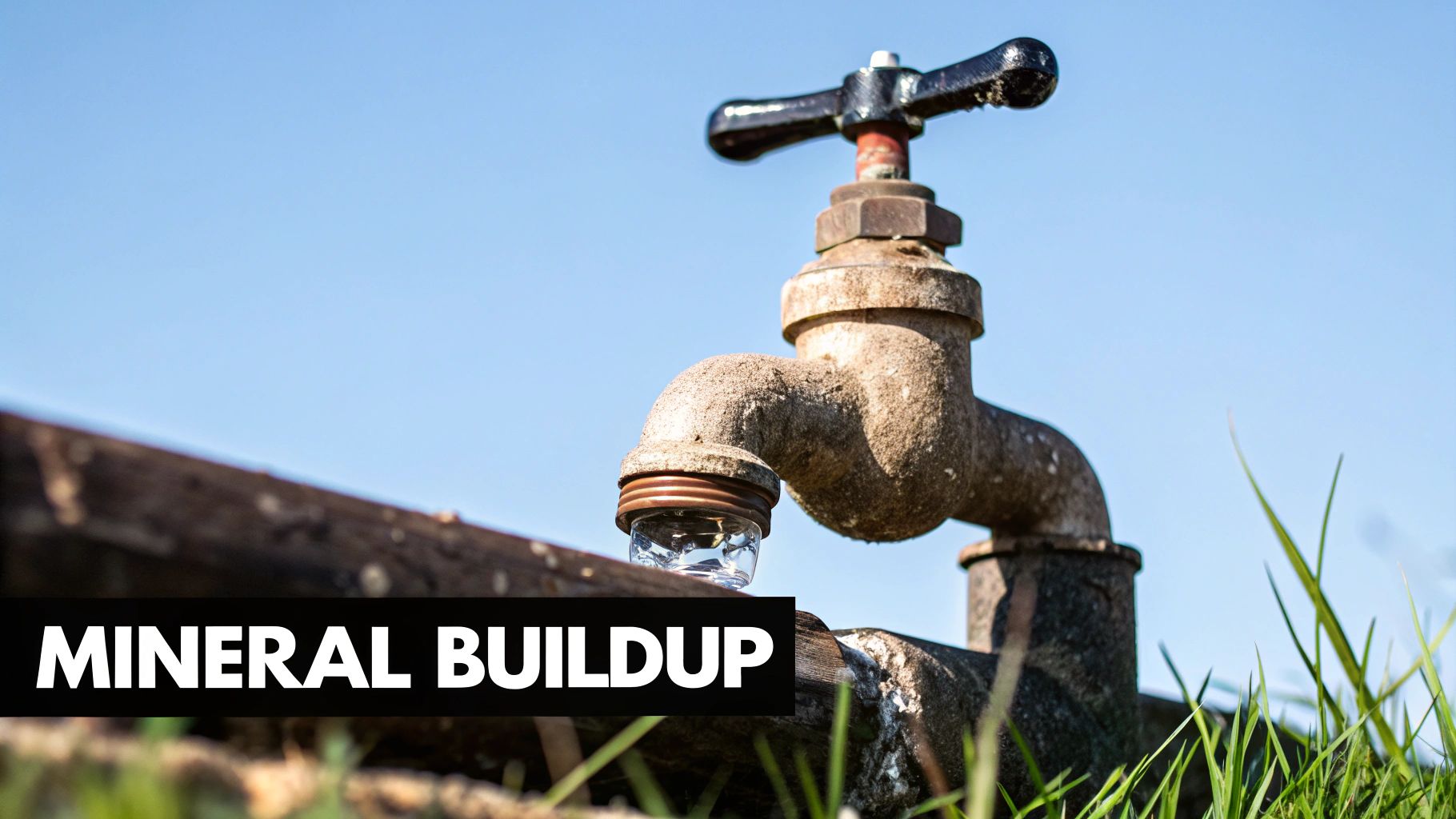
To really win the battle against those chalky white spots on your shower doors and fixtures, you first have to understand the enemy. The frustrating truth is hard water stains aren't just surface-level grime; they are mineral deposits that have chemically bonded to your home’s surfaces. That’s a crucial distinction because it explains why regular soap and water barely make a dent.
The problem starts with the water itself. As rainwater seeps through the ground—especially through Florida's limestone-rich soil—it dissolves and picks up minerals. The main culprits here are calcium and magnesium. When this mineral-packed "hard water" evaporates from a surface, it leaves those microscopic rock particles behind. This is the stubborn, unsightly residue we all know as limescale.
This issue is so widespread that it's fueling a massive industry. The global hard water stain remover market was valued at around $1.5 billion in 2025 and is expected to hit $2.3 billion by 2033. This growth shows just how many homeowners are waking up to the damaging effects of mineral buildup. You can dive deeper into the trends driving the hard water stain remover market on datainsightsmarket.com.
Measuring Water Hardness
Not all hard water is created equal. Its severity is measured in Grains Per Gallon (GPG), a unit that tells you exactly how much dissolved calcium and magnesium is in your water. Figuring out where your water falls on this scale is the first step toward finding a real solution, rather than just scrubbing away at the symptoms forever.
- Soft Water (0-3 GPG): This is the gold standard. Water in this range lathers up beautifully and leaves behind practically no mineral residue.
- Moderately Hard Water (3-7 GPG): You'll start to notice faint spots on your dishes and a film on shower doors, forcing you to clean more often.
- Hard Water (7-10.5 GPG): The stains become much more obvious and are a real pain to remove. Soap scum becomes a constant companion, and you’ll likely notice your appliances aren't working as well as they used to.
- Very Hard Water (Over 10.5 GPG): This is common territory for us here in Southwest Florida. This level of hardness causes aggressive mineral buildup that can clog pipes, ruin water heaters, and even permanently etch glass.
The endless cycle of cleaning hard water stains is a symptom, not the core problem. Simply removing the spots is a temporary fix because the next time you turn on the faucet, a new layer of minerals is deposited. The only permanent hard water stains removal strategy is to treat the water itself.
Beyond The Stains: Identifying Other Signs
Those visible stains are just the tip of the iceberg. If you're seeing white spots on your faucets, you can bet the same minerals are building up inside your home's plumbing and expensive appliances. This is the damage you can't see—until it's too late.
Keep an eye out for these other common signs of a serious hard water problem:
- Soap Scum Buildup: Hard water minerals react with soap to form that sticky, gross residue that coats your tubs, showers, and sinks.
- Faded and Stiff Laundry: Those same minerals get trapped in the fibers of your clothes, leaving them feeling scratchy, looking dull, and becoming brittle over time.
- Dry Skin and Dull Hair: That mineral film doesn't just stick to faucets; it sticks to you. It can clog pores and strip your skin and hair of their natural oils, leading to irritation and lifelessness.
- Poor Appliance Performance: Limescale buildup inside your coffee maker, dishwasher, and water heater forces them to work harder, use more energy, and ultimately fail much sooner than they should.
Recognizing these signs is critical. It shifts your perspective from a simple cleaning chore to a whole-home maintenance issue. While DIY cleaning methods can give you temporary relief, they do nothing to protect your pipes or appliances. For homeowners in Cape Coral dealing with very hard water, the most effective and economical long-term solution is a professional water treatment system.
At Water Medic, we can test your water for free, show you exactly what's causing the problem, and design a solution to stop stains for good.
DIY Methods for Removing Hard Water Stains
When you're staring down those chalky white films and stubborn rings, your first line of defense is probably already in your pantry. Many of the most effective hard water stains removal tricks rely on simple, acidic household staples that are fantastic at dissolving the mineral deposits causing all the trouble.
But let's be honest, while these methods work for a quick fix, they're just a temporary truce in the ongoing war against hard water. The constant need for scrubbing and soaking really just highlights the real issue: the water itself. A little elbow grease can bring back the shine, but it won't stop the next layer of minerals from setting up shop. This endless cleaning cycle is exactly why so many homeowners in Southwest Florida start looking for a permanent solution to protect their property.
Tackling Glass Shower Doors
Cloudy glass shower doors are the classic calling card of hard water. That constant spray of mineral-rich water builds up a tough, opaque film that regular soap and water just can't penetrate.
A surprisingly powerful solution is a simple 50/50 mix of white vinegar and water. Just pour it into a spray bottle and go to town, coating the entire glass surface until it's completely saturated. The real key here is patience—the acetic acid in the vinegar needs time to work its magic. Let it sit for at least 15-20 minutes to start breaking down the calcium and magnesium. If you're dealing with a really thick, stubborn buildup, you might need to let it soak for up to an hour.
Once it's soaked, grab a non-abrasive sponge or a microfiber cloth and start scrubbing in a circular motion. You’ll actually feel the mineral gunk start to loosen up. After a good scrub, rinse the glass thoroughly with clean water and—this is critical—dry it completely with a squeegee or a dry towel. Skipping that final drying step is like an open invitation for new spots to form right away.
Restoring Shine to Tile and Grout
Hard water doesn't just make tile look dull; it can seep into grout and discolor it, making your bathroom or kitchen look perpetually grimy. For this job, a baking soda paste is your best friend.
Just mix baking soda with a little water until you get a thick paste, something like the consistency of toothpaste. Slather this paste directly onto the stained tile, paying special attention to the grout lines. Want to give it an extra cleaning punch? Spray the paste with your vinegar-and-water solution. You'll get a satisfying fizzing reaction that helps lift the mineral deposits right out of the porous grout.
Let the paste sit and do its thing for about 15-30 minutes. Then, use an old toothbrush or a stiff grout brush to scrub the area. The slightly abrasive texture of the baking soda, combined with the acid, works wonders without damaging the tile. Rinse it all off with water and dry the area to see the difference. It’s a great feeling, but it also shows just how much effort it takes to maintain these surfaces—a stark contrast to the effortless prevention you get with a water softener.
Reviving Delicate Chrome Fixtures
Chrome faucets, showerheads, and handles are notorious for showing hard water spots, which can quickly turn their brilliant shine into a dull, spotty mess. Chrome can scratch easily, so you need to be gentle.
This is where lemon juice comes in. Its natural citric acid is strong enough to dissolve mineral buildup but gentle enough that it won't damage the finish. The easiest way is to just cut a lemon in half and rub it directly on the fixtures, squeezing a bit to release the juice. For those tricky, hard-to-reach spots or really heavy buildup, try soaking a paper towel in lemon juice and wrapping it around the fixture. Let it sit for about an hour.
After the time is up, just wipe away the loosened gunk with a soft, damp cloth. Then, buff the fixture with a dry microfiber towel to bring back that mirror-like sparkle. It works, but this constant polishing is a chore that completely disappears once your home is protected by a proper water treatment system.
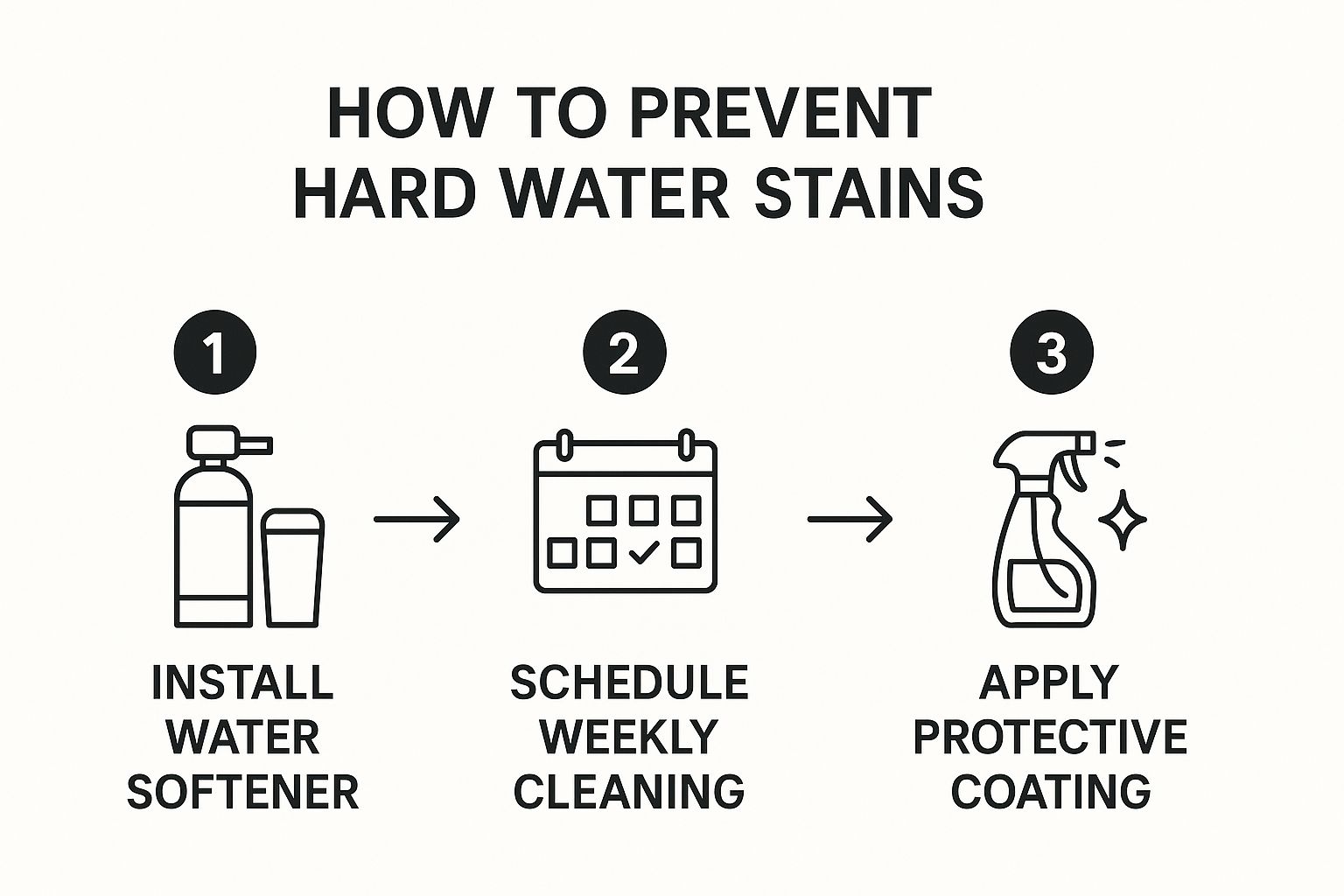
This simple infographic shows the ideal process—preventing the stains from ever forming in the first place by treating the water at its source.
The endless cycle of spraying vinegar, making pastes, and scrubbing fixtures is a tell-tale sign of a bigger hard water problem. While these DIY methods provide temporary relief, they demand time and effort that could be saved by addressing the root cause.
Natural vs Commercial Stain Removers
When you're deciding how to tackle these stains, you're usually choosing between something from your kitchen or something from the hardware store. Here’s a quick breakdown of how they stack up.
| Factor | DIY Solutions (Vinegar, Lemon) | Commercial Cleaners (Acids) | Recommendation |
|---|---|---|---|
| Effectiveness | Good for light to moderate stains. | Very effective, even on heavy, old buildup. | Start with DIY. If it doesn't work, move to a targeted commercial product. |
| Cost | Very low cost; uses common household items. | Moderate cost per bottle, but can add up. | DIY is the clear winner for budget-conscious cleaning. |
| Safety | Generally safe, non-toxic, and food-grade. | Often contain harsh chemicals requiring gloves and ventilation. | For homes with kids and pets, DIY is much safer. Always follow safety instructions for chemicals. |
Ultimately, while pantry remedies are incredibly useful for quick touch-ups, they only treat the symptom, not the cause. They don't do anything about the mineral-rich water flowing through your pipes every single day.
The only way to achieve a truly permanent solution for hard water stains removal is by installing a system that removes those minerals before they ever reach your faucets. A proactive approach, like the advanced ScaleNet systems we offer at Water Medic, saves you countless hours of cleaning and protects your home from long-term damage.
Choosing the Right Commercial Stain Removers
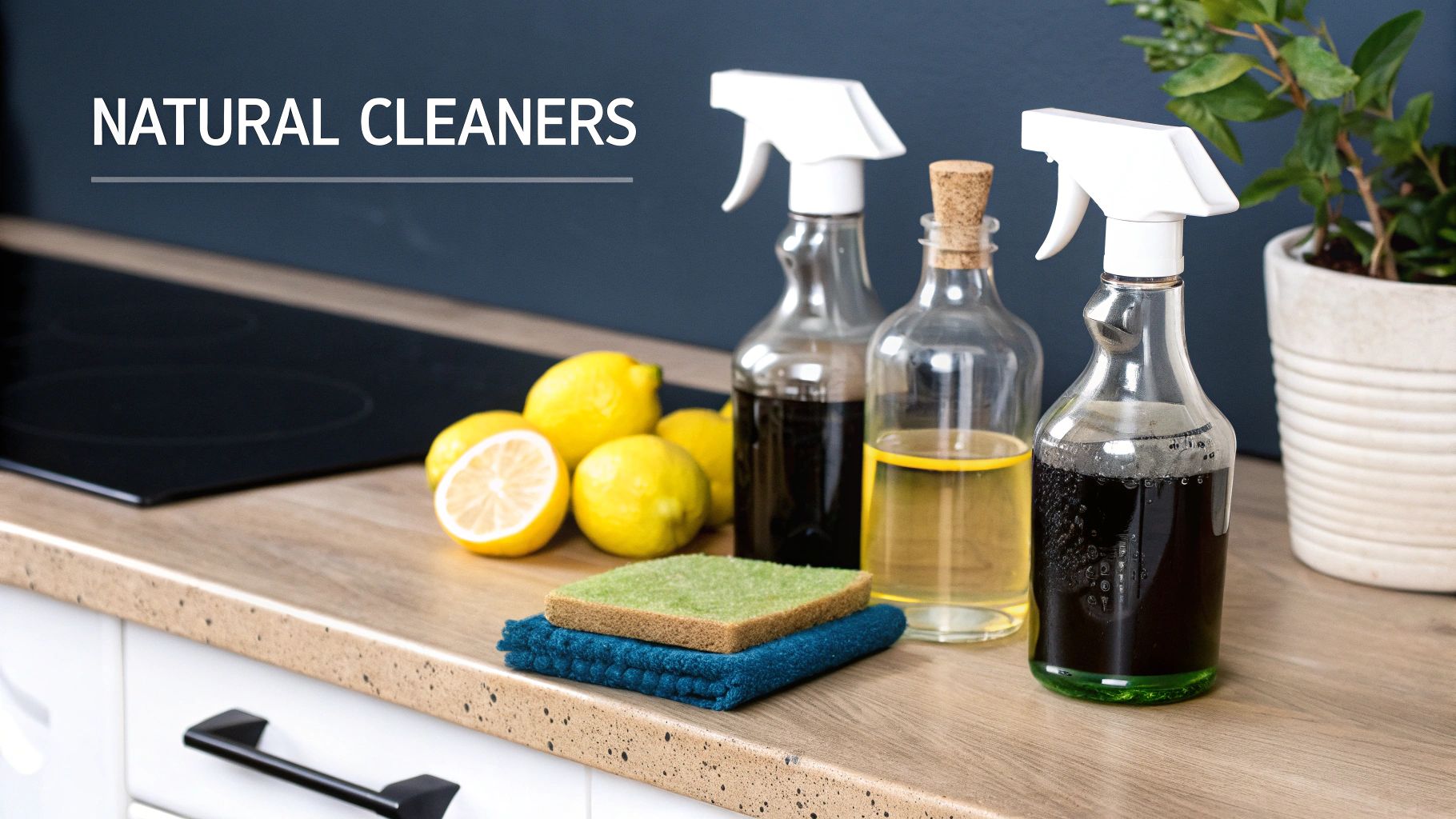
So, the vinegar and lemon juice tricks aren't making a dent in those stubborn hard water stains. It happens. When you're dealing with years of accumulated limescale, it's time to bring in the big guns: a commercial-grade cleaner.
These products are engineered to do one thing well—dissolve the tough mineral bonds that household remedies just can't handle. But walking down the cleaning aisle can feel overwhelming. With dozens of bottles all promising miraculous results, how do you choose the right one without accidentally ruining your beautiful tile or expensive fixtures?
The secret is to look past the marketing hype and understand what’s actually in the bottle. Using the wrong formula on a sensitive surface can be a costly mistake.
Decoding the Labels: Acidic vs. Abrasive Cleaners
Most hard water removers you'll find fall into two main camps: acidic or abrasive. They both get the job done, but they work in completely different ways, and it's crucial to know the difference.
Acidic Cleaners are the heavy hitters. These formulas use potent acids like sulfamic acid or phosphoric acid to chemically dissolve the calcium and magnesium that create limescale. They're incredibly effective, but that power comes with a warning. Use them on the wrong surface—like natural stone (marble, travertine), polished concrete, or certain metal finishes—and you could end up with permanent etching or discoloration.
Non-Acidic or Abrasive Cleaners work with good old-fashioned elbow grease. These are usually pastes or powders containing fine, gritty particles that physically scrub the mineral deposits away. They’re generally safer for more materials, but you still have to be careful. Scrubbing too aggressively can leave micro-scratches on delicate surfaces like high-gloss plastics or that shiny new chrome faucet.
Before you go all-in with a new cleaner, always test it on a small, hidden spot first. This simple five-minute check can save you from the headache of permanently damaging a countertop or fixture—a mistake that costs a lot more than a bottle of cleaner.
Safety First When Handling Strong Chemicals
Those warning labels on the bottle aren't just for show. The same powerful chemicals that make hard water stains removal so effective can be genuinely harmful if you don't handle them correctly.
Before you even unscrew the cap, make sure the room is well-ventilated. Crack a window or flip on the exhaust fan to keep the fumes from building up. And please, always wear protective gear:
- Waterproof Gloves: Your skin will thank you. Chemical burns and irritation are no joke.
- Safety Goggles: It only takes one accidental splash to cause serious eye damage.
And here’s a rule to live by: never, ever mix different cleaning products. Combining chemicals, especially anything with bleach and ammonia, can create toxic chlorine gas. Once you're done, give the surface a thorough rinse with plain water to wash away any leftover chemical residue.
Thankfully, the market is evolving. Driven by consumer demand for safer and more sustainable options, many brands are developing less aggressive formulas that are still tough on minerals. You can read more about these market advancements in hard water stain removers on openpr.com.
When Constant Cleaning Is a Warning Sign
If you find yourself in a never-ending cycle of buying and using these powerful chemical removers, take a step back. This is a huge red flag that you have a much bigger hard water problem. Commercial cleaners are just a temporary band-aid; they don't stop the minerals from coming right back.
This is where you have to shift your thinking from being reactive to being proactive. Instead of just scrubbing away the symptoms, it’s time to fix the root cause. It's exactly why we developed advanced, eco-friendly solutions like our salt-free ScaleNet systems, which prevent scale from ever forming in the first place—without adding salt to your water.
Ultimately, the best way to deal with hard water stains is to stop them before they start. If you’re tired of the endless battle with limescale, a professional water analysis from Water Medic of Cape Coral is the definitive next step. We can show you exactly what’s in your water and design a permanent solution to protect your home and end the cleaning fight for good.
Ready to Stop Scrubbing? Here’s How to Prevent Hard Water Stains for Good
https://www.youtube.com/embed/DOi0EelsH-s
You’ve tried it all. You’ve sprayed the vinegar, made pastes with baking soda, and maybe even pulled out the heavy-duty chemical cleaners. The shine comes back for a little while, but those chalky white spots always seem to return.
If you’re stuck in that endless cycle, you’re not alone. But it’s a clear sign you’re only cleaning up the symptoms, not treating the actual problem.
What if you could stop those stains before they even had a chance to form? The real secret to winning the war against hard water isn't finding a miracle cleaner—it's fixing the water itself. This is where you can shift from constantly reacting to the problem to proactively solving it for your entire home.
The Proactive Approach: Water Treatment
A whole-home water softener is, without a doubt, the most effective way to solve hard water issues permanently. This isn't just another cleaning product; it's a system that gets installed where your main water line enters the house, treating every drop of water before it reaches your faucets and appliances.
It works through a process called ion exchange. It sounds complicated, but the idea is pretty simple.
Inside the softener, you have a tank full of tiny resin beads. As your hard water—full of calcium and magnesium, the two minerals that cause all the trouble—flows through, those minerals stick to the beads like a magnet. The resin grabs onto the "hard" minerals and releases "soft" sodium ions in their place. What comes out the other side is softened water, free of the minerals that cause limescale and soap scum.
This is a proactive fix. It means no more cloudy shower doors, no more white rings around your faucets, and no more weekends spent scrubbing. It's a permanent solution, not a temporary patch.
The Benefits Go Way Beyond a Spotless Home
Sure, putting an end to endless scrubbing is a huge plus, but the advantages of a water softener touch so many other parts of your daily life. The difference is something you can see and feel.
- Softer Skin and Hair: Hard water leaves behind a mineral film that can clog pores and make your hair feel dull and dry. Soft water rinses clean, leaving your skin and hair feeling genuinely refreshed.
- Brighter, Softer Clothes: Those same minerals trap dirt in the fibers of your clothes. With soft water, detergents work better, leaving your clothes cleaner, your colors brighter, and your towels feeling fluffy again.
- Use Less Soap and Detergent: Soft water lathers up easily. You'll find you can use up to 50% less soap, shampoo, and laundry detergent to get a better clean, which saves you money.
- Protect Your Appliances: Limescale is the silent killer of water heaters, dishwashers, and washing machines. By preventing that buildup, a water softener helps your appliances run more efficiently and can extend their lifespan by years.
Investing in a water softener isn't just about making cleaning easier. It's about protecting the pipes, fixtures, and appliances throughout your home and improving your quality of life. It’s one solution that solves a dozen different problems.
Your Local Water Treatment Experts
Here in Southwest Florida, we know a thing or two about hard water. It's a fact of life for most homeowners. At Water Medic of Cape Coral, we’ve spent more than 25 years helping our neighbors get rid of it for good. We understand the specific water challenges in our area and have the experience to provide a real, lasting solution.
We keep things straightforward. It all starts with a complimentary, no-obligation water test right in your kitchen. We’ll show you exactly what’s in your water, measure the hardness in Grains Per Gallon (GPG), and explain how it’s affecting your home. No guesswork—just clear, simple data.
From there, our technicians can recommend a system that’s properly sized for your family’s needs and our local water chemistry. Our professional installation ensures everything works perfectly from day one, so you can start enjoying the benefits immediately. Feel free to explore our high-efficiency Water Softener Systems to see what a customized solution looks like.
If you’re ready to finally stop scrubbing and start enjoying the real benefits of soft water, give us a call. Let Water Medic of Cape Coral provide the permanent fix you’ve been looking for.
A Few Common Questions We Hear About Hard Water
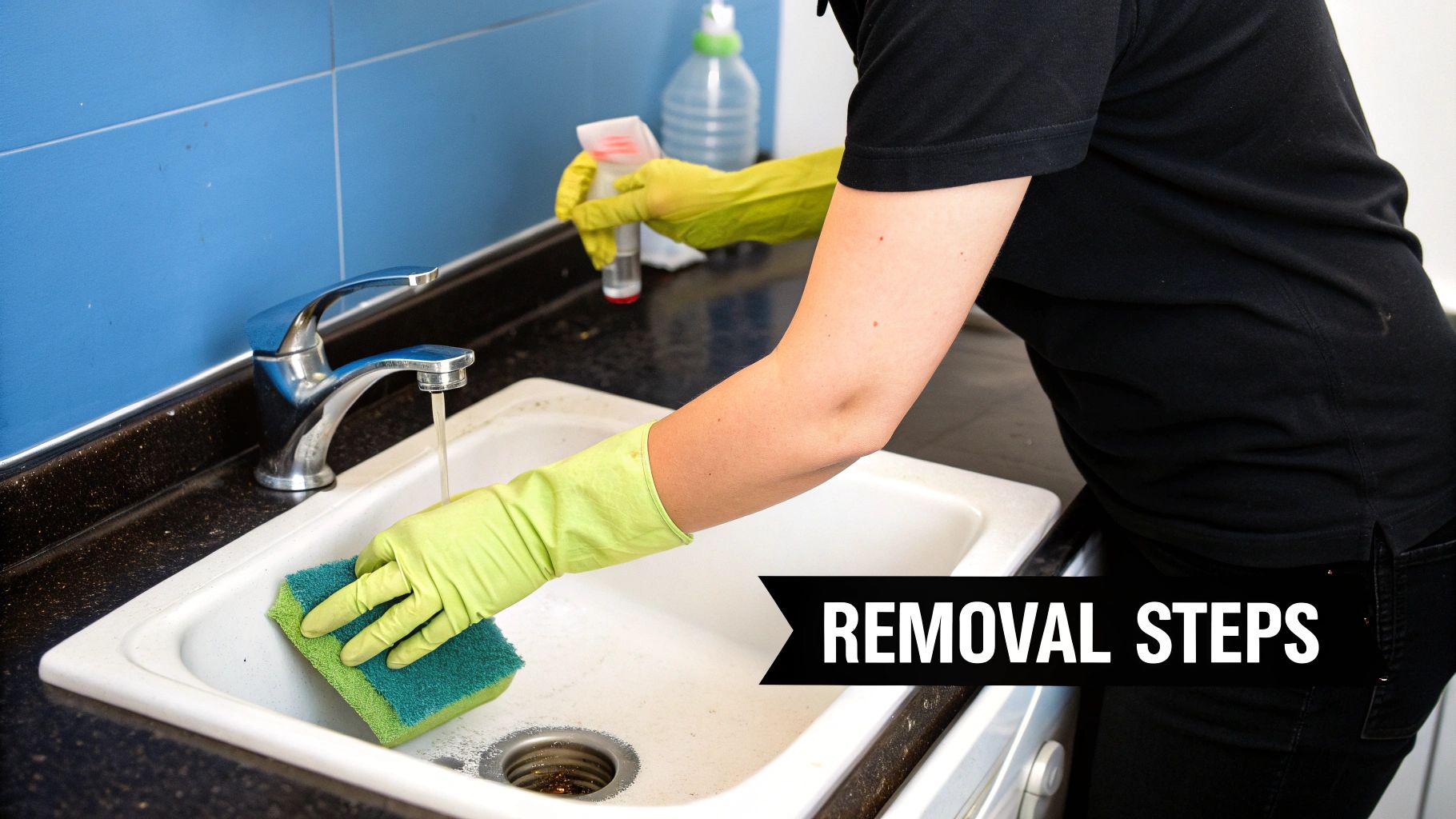
Even with the best cleaning tips, it's normal to have some lingering questions. After all, dealing with the fallout from mineral-heavy water day in and day out gets old fast.
To help clear things up, I've pulled together answers to some of the most common questions we get from homeowners here in Southwest Florida. My hope is to give you the clarity you need to finally break the cycle of endless scrubbing and find a real, whole-home solution.
Can Hard Water Stains Actually Cause Permanent Damage?
Yes, they absolutely can. That chalky film you see is more than just an eyesore; it's a sign of a deeper problem. Over time, those same mineral deposits will physically etch into glass surfaces, leaving a permanent cloudy haze that no amount of scrubbing will ever remove. It’s a similar story for metal fixtures, where the buildup corrodes the finish and causes irreversible pitting.
This is exactly why being proactive is so important.
- The Temporary Fix: Constantly cleaning with vinegar or other products can keep the stains at bay and slow down the damage.
- The Permanent Solution: The only way to stop the mineral assault on your home for good is to soften the water before it ever reaches your taps.
The longer you let hard water run through your home, the greater the risk of damage that goes beyond looks and starts hitting your wallet with expensive repairs.
Is It a Good Idea to Just Use Bottled Water Instead?
For drinking, sure. But for your home? It’s not a practical or financially sound solution. The worst damage from hard water happens where you can't see it—inside your pipes, water heater, dishwasher, and washing machine. You can't use bottled water in those places.
So even if you drink bottled water, your pricey appliances and plumbing are still completely exposed to scale buildup.
A whole-home water softening system is the only way to truly solve the problem. It treats every drop of water that comes into your house, protecting your entire plumbing system and every appliance, while giving you amazing water from every single tap.
How Can I Tell If I Really Need a Water Softener?
If you're in a constant battle with chalky stains, soap scum that won’t quit, dry skin after a shower, and appliances that just don't work like they used to, you're seeing all the classic signs.
The only way to know for sure is with a professional water analysis.
At Water Medic of Cape Coral, we provide a complimentary water test that gives you a precise measurement of your water’s hardness in Grains Per Gallon (GPG). This takes all the guesswork out of the equation. With real data, we can recommend a system that’s sized perfectly for your family’s needs and your home’s specific water profile. It's the first step toward a permanently stain-free home.
You can even check out our advanced, salt-free ScaleNet systems that prevent buildup and don't require you to lug around heavy salt bags.
Are you ready to stop scrubbing and start protecting your home from hard water damage for good? The team at Water Medic of Cape Coral is here to help you find a permanent solution. Contact us today for your free, no-obligation water test!