
How to Drain a Pool in SW Florida Without Costly Mistakes
Thinking about draining your pool? It might seem simple enough, but here in Southwest Florida, it’s a high-stakes job. One wrong move can lead to some seriously catastrophic damage. It’s about more than just getting the water out; you need a solid understanding of our local soil and groundwater pressure to prevent your pool shell from literally popping out of the ground. This is a task where professional expertise, like that offered by our pool repair services, is not just a convenience—it's essential protection for your investment.
Why Draining a Pool in Florida Is a Job for Experts
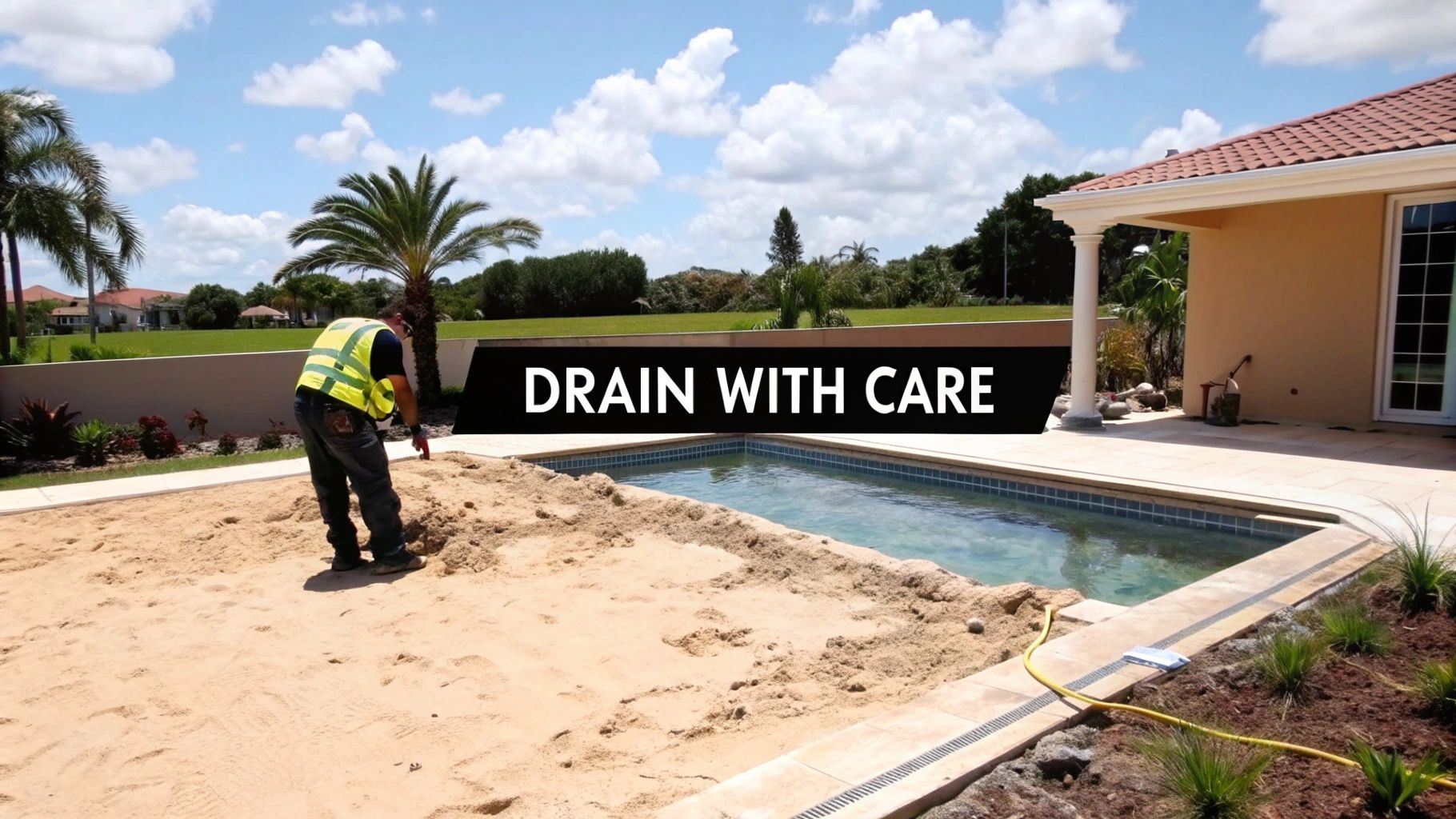
The ground beneath our feet in Southwest Florida isn't like most places. We're dealing with a unique mix of sand and clay, all sitting on a notoriously high water table, especially during the rainy season. This geological quirk creates a massive risk when it’s time to empty a pool.
Right now, your full pool is like a heavy anchor. The sheer weight of the water is pushing down, counteracting the immense upward pressure from the groundwater and keeping the shell locked in place.
But the moment you start pumping that water out, you throw that delicate balance out of whack. The surrounding sandy soil offers little resistance, and the powerful force of the groundwater—what we call hydrostatic pressure—starts pushing up on your now-empty pool shell. This pressure can easily lift the entire structure, crack it, or even "pop" it right out of the ground. It can turn a routine maintenance task into an absolute homeowner's nightmare.
The Financial Risks of a DIY Pool Drain
I get it. The thought of saving a few bucks by doing it yourself is tempting, but the potential financial fallout is just devastating. An improperly drained pool is one of the top reasons we see major structural failures. In fact, these kinds of mistakes are behind up to 80% of concrete pool cracks in areas with expansive soils like ours, where the ground shifts dramatically without the stabilizing weight of water.
The repair bill for just a single significant crack can run anywhere from $5,000 to $15,000, which completely dwarfs the cost of bringing in a pro from the start. You can get a better sense of these costs by checking out some insights on industry trends.
At Water Medic of Cape Coral, we’ve seen the aftermath of countless well-intentioned DIY projects over the last 25 years. Our team has become the go-to for local pool owners because we know how to manage these risks. Our entire process is built on a deep, hands-on understanding of Southwest Florida's unique geology and hydrology.
Protecting your investment is our top priority. A professional pool drain isn't just a service; it's an insurance policy against thousands of dollars in potential structural damage to your property.
To put it in perspective, here’s a quick comparison of what you might face going it alone versus calling in an experienced team like ours.
DIY vs Professional Pool Draining at a Glance
| Factor | DIY Approach | Professional Service (Water Medic) |
|---|---|---|
| Risk Assessment | Guesswork based on online guides; may not account for local conditions or recent rainfall. | Expert evaluation of the current water table, soil conditions, and weather forecasts. |
| Damage Potential | High risk of shell cracking, lifting ("pool pop"), or other costly structural failures. | Extremely low risk due to specialized equipment and proven hydrostatic pressure management techniques. |
| Equipment | Rental pumps that may not be correctly sized; lack of specialized pressure relief tools. | Commercial-grade pumps and equipment, including hydrostatic valve keys and monitoring tools. |
| Cost Outcome | Potentially low upfront cost, but extremely high risk of $5,000-$15,000+ in repair bills. | A predictable, fixed service fee that acts as an insurance policy against catastrophic failure. |
| Time & Hassle | Days of monitoring, worry, and labor, plus navigating complex local discharge rules. | A fast, efficient, and worry-free process handled in a matter of hours by an insured team. |
Ultimately, the choice comes down to weighing a small, certain cost against a huge, uncertain risk.
Your Trusted Partner in Pool Safety
When you work with a seasoned professional, you’re not just paying someone to pump water. You’re bringing in a team that knows exactly how to read and react to Florida’s tricky environmental factors. We don’t guess—we assess.
Before a single drop of water is pumped, our technicians are on-site evaluating the water table, checking the forecast, and setting up specialized equipment to guarantee a safe, controlled drain.
We know the exact steps to protect your investment, from properly managing hydrostatic relief valves to making sure we’re in full compliance with local water discharge regulations. This guide will walk you through the professional methods we use, showing you exactly why expert handling is so crucial. When it comes to an asset as valuable as your pool, relying on experience isn't a luxury—it's a necessity. If you're at all concerned about the state of your pool, our comprehensive pool repair services are here to give you the peace of mind you deserve.
The Hidden Dangers Lurking Beneath Your Pool
Draining a pool seems simple enough, but you're actually dealing with a powerful, invisible force that can cause catastrophic damage. This force is called hydrostatic pressure, and it's the single biggest threat to an empty pool shell, especially here in Southwest Florida.
Think of your full in-ground pool as a heavy boat sitting securely in the water. The thousands of gallons of water inside push down, creating a perfect balance with the groundwater pressure pushing up from below. This equilibrium is what keeps your pool shell stable and firmly in the ground.
The moment you start pumping that water out, you remove the downward force. Your now-lightweight pool shell is like an empty canoe in a wavy lake. The surrounding groundwater, which is always present in Florida's high water table, exerts immense upward pressure. With nothing holding it down, the pool can literally be lifted, or "popped," right out of the ground. It’s a shocking sight, and it happens more often than you’d think.
How Different Pools Face Different Risks
This isn't a one-size-fits-all problem. Different pool types have unique vulnerabilities to this upward pressure, which is why a professional eye is so critical before you even think about draining.
-
Gunite and Concrete Pools: These brutes are incredibly durable, but they're also rigid. If that underground water pressure finds a weak spot, it won't just lift the pool—it can cause massive structural cracks right through the shell. We're not talking about cosmetic fixes; these cracks compromise the entire structure and lead to wildly expensive repairs. A tiny, unnoticed fissure near the main drain could also be a symptom of a larger issue, which is why we always suggest professional leak detection services if you have any doubts before draining.
-
Fiberglass Pools: Being much lighter and more flexible makes these shells prime candidates for "popping." The entire one-piece structure can be shoved upward, snapping plumbing lines and destroying the surrounding pool deck in the process.
-
Vinyl Liner Pools: The big risk here is what we call a "liner float." When the pool is empty, groundwater can seep in between the liner and the pool walls. This causes the liner to bulge, stretch, and pull away from its track. Once that happens, getting the liner to fit correctly again is next to impossible, usually meaning you're on the hook for a full, costly replacement.
This hidden danger is made much worse by Florida’s wild weather. A sudden, heavy downpour—a staple of our summer afternoons—can completely saturate the ground in just a few hours. The water table can shoot up overnight, creating a massive spike in hydrostatic pressure that an empty pool simply can't fight.
The ground can go from safely dry to dangerously saturated in less than a day. Draining your pool without keeping a close eye on an impending rainstorm is one of the most common and costly mistakes a homeowner can make.
Why a Professional Assessment is Your Best Defense
This is exactly where bringing in an experienced team makes all the difference. Before we even touch a pump, the Water Medic crew performs a thorough site assessment. We don’t just look at the pool; we analyze the entire surrounding environment.
We use specialized tools and years of on-the-ground experience in this area to get an accurate read of the current groundwater level. We also obsessively check the local weather forecast—not just for today, but for the entire time the pool will be empty. This foresight lets us pick the absolute safest time to drain, keeping that window of vulnerability as short as possible.
Think of our assessment as your property's insurance policy. It's the difference between a controlled, safe procedure and a gamble that could cost you tens of thousands of dollars. Trying to drain a pool without this expert knowledge is like trying to sail through a storm without a weather report. You might get lucky, but the odds are definitely not in your favor.
How the Pros Safely Drain a Pool
Thinking about draining your pool yourself? I’d urge you to reconsider. After decades of doing this in Southwest Florida, I can tell you it’s less about just pumping out water and far more about managing powerful, invisible forces that can wreck your investment. Let's walk through how a seasoned professional tackles this job, so you can see why it’s not a weekend DIY project.
It all starts with a thorough on-site assessment. We never just show up and drop a pump in the water. First, we have to analyze the current water table, check the forecast for any approaching rain, and inspect the specific construction of your pool. Honestly, this initial evaluation is the most crucial part—it determines if the entire project is even safe to begin.
Dealing With Discharge and Following the Rules
Once we get the green light, the next puzzle is figuring out where thousands of gallons of pool water can legally go. You can't just let chlorinated water flow into the nearest storm drain. Most municipalities, especially here in Lee and Collier counties, have strict rules against that. Doing it wrong can land you a hefty fine and cause real harm to local ecosystems.
Our team knows these local regulations like the back of our hand. We make sure the water is properly dechlorinated before it goes anywhere, and we route it to a spot on the property that won't cause flooding or erosion for you or your neighbors. It’s about protecting you from liability and being a good steward of our environment.
When it's time to get the water moving, every piece of equipment matters. This includes taking the time for choosing the right discharge hose to ensure a smooth and efficient process.
This flowchart really breaks down how groundwater pressure builds up and can cause a pool shell to lift or "pop" right out of the ground if it's emptied the wrong way.
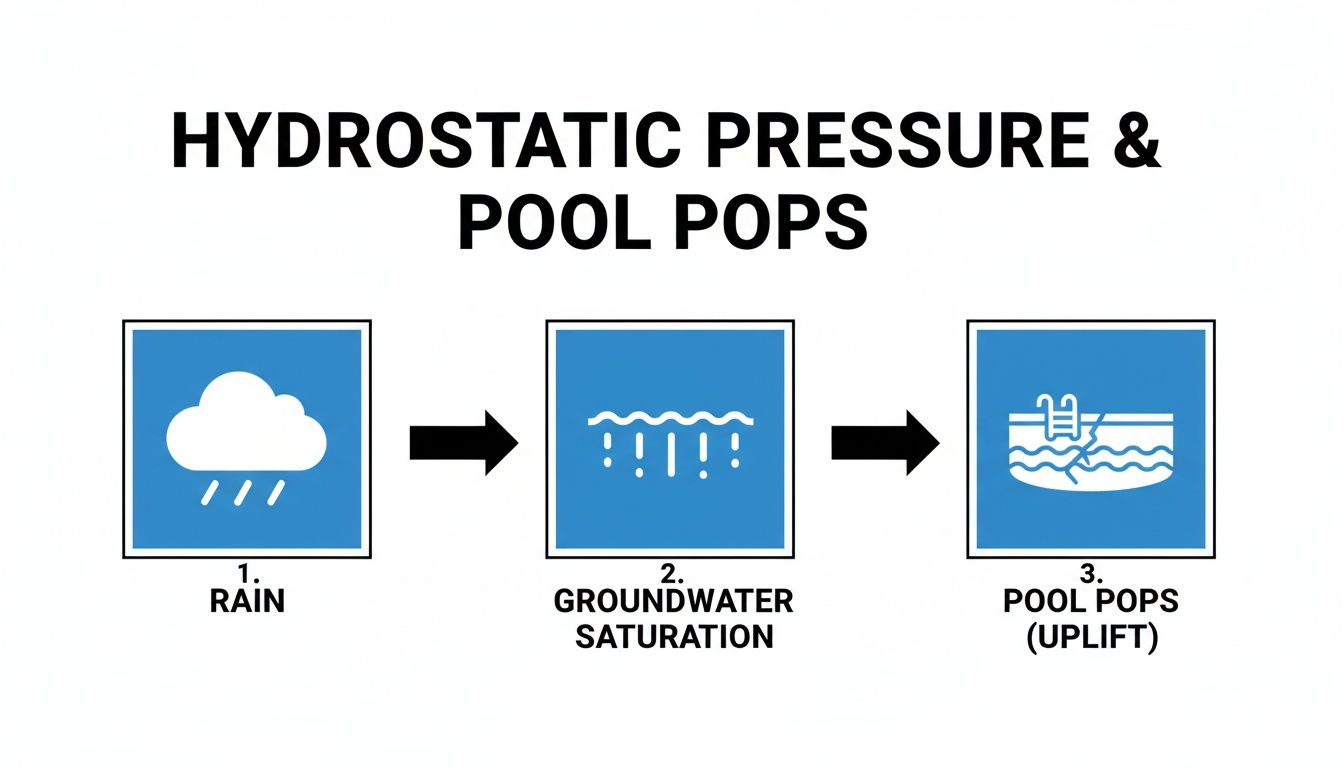
As you can see, heavy rains saturate the ground, raising the water table. This creates enormous upward hydrostatic pressure that can easily buckle or lift an empty, unsupported pool shell.
The Overlooked Hero: The Hydrostatic Relief Valve
Here’s where real professional experience makes all the difference. At the bottom of most in-ground pools, inside the main drain, sits a hydrostatic relief valve. This little part is your pool's most important defense against popping. Think of it as a one-way gate: if the upward pressure from groundwater gets too high, the valve opens to let water into the pool, equalizing the pressure.
So many DIY attempts end in disaster because people either don't know this valve exists or have no idea how to open it. As soon as the water level gets low enough, our technicians use a special tool to pop that valve open. This single, simple action is often what stands between a safe drain and a catastrophic failure.
One of the most dangerous mistakes you can make is leaving the hydrostatic relief valve closed while draining your pool. You're trapping immense groundwater pressure under the shell with nowhere to go, dramatically increasing the odds of your pool lifting right out of the ground.
Ignoring this step is like supergluing the release valve on a pressure cooker. It’s not a matter of if something will give, but when.
Pacing the Pump and Keeping a Watchful Eye
We bring in commercial-grade submersible pumps built for this kind of work. A classic DIY mistake is using a pump that’s too powerful and drains the water too fast, which violently disrupts the pressure balance. Our approach is a slow, controlled drain, giving the pool structure and the surrounding soil time to adjust gradually.
And we're not just sitting back and watching the water level drop. Our eyes are on several things at once:
- The Pool Shell: We’re constantly checking the plaster for any new hairline cracks or signs of stress.
- The Water Table: We keep monitoring the groundwater to make sure it's staying put.
- The Equipment: A pump that quits or a hose that clogs can bring everything to a dangerous halt. This is where our background in pool equipment repair becomes invaluable, even on a drain job.
This constant vigilance allows us to react immediately to the slightest change. It’s a calculated, precise procedure that shows why it pays to hire a team that truly understands the unique hydrology of Southwest Florida. The peace of mind you get from knowing your pool is in safe hands is priceless.
When Draining Your Pool Is the Only Solution
While we always try to avoid it, sometimes draining a pool is the only way forward. Certain major repairs are simply impossible to tackle with thousands of gallons of water in the way. It's a big decision, so knowing when it's genuinely the right call is something every pool owner should understand.
For many homeowners, the trigger is a necessary structural repair. If you've got significant cracks in the gunite or plaster, the pool has to be emptied. There’s no other way for a technician to properly patch, seal, and let the materials cure. The same goes for a full resurfacing project—you can't apply a brand-new finish without a completely empty and dry shell.
Non-Negotiable Draining Scenarios
Another situation we see often is when a pool's water chemistry is just too far gone to save. Over years of use, the concentration of Total Dissolved Solids (TDS)—minerals, salts, and old chemical residues—can creep up so high that your sanitizer stops working effectively.
Once TDS levels climb past 2,500 parts per million (ppm), you'll notice you're using more and more chlorine but getting less and less out of it. At that point, no amount of chemical shock or balancing can fix the underlying problem. The only real solution is to drain that old, tired water and start over.
Similarly, an acid wash is a powerful cleaning process for removing stubborn algae stains and mineral deposits from a plaster surface. It involves carefully applying a diluted acid solution to etch away the very top layer of plaster, revealing a fresh, bright surface underneath. This is a job that absolutely requires an empty pool.
Here are a few clear-cut scenarios where a full drain is almost always required:
- Major Structural Repairs: Fixing large cracks in the pool's shell or floor.
- Complete Resurfacing: Applying a new layer of plaster, pebble, or another finish.
- Acid Washing: Deep cleaning stained and discolored plaster surfaces.
- Extreme Chemical Imbalance: When TDS or Cyanuric Acid levels are uncontrollably high.
- Main Drain Replacement: Getting to the main drain components at the deepest point of the pool.
Draining a pool isn't just a last resort; it's a necessary step for specific, high-impact maintenance that restores the health, safety, and appearance of your investment. Think of it as hitting the reset button on your pool's water and surfaces.
Smarter Alternatives to a Full Drain
However, a full drain isn't always the answer. At Water Medic, we see ourselves as consultants first. Our goal is to find the most effective and least risky solution for your specific problem. Many common issues, like slightly high TDS or cloudy water, can often be resolved without taking on the risks that come with an empty pool.
A partial drain and refill is a great middle-ground strategy. By replacing just a third or half of the water, we can significantly dilute the TDS and other contaminants without fully exposing the pool shell to dangerous hydrostatic pressure. It's a safer, faster, and more economical option in many cases.
Even better, we offer a modern solution that avoids draining altogether. Our advanced Reverse Osmosis (RO) filtration service is a true game-changer. We bring a mobile RO unit right to your home that purifies your existing pool water, stripping out TDS, calcium, cyanuric acid, and other impurities while the pool stays full. This process leaves you with water that's cleaner and softer than what comes from your tap.
Here in Southwest Florida, we're constantly battling salty well water and acidic rain. Draining annually for an acid wash can remove 40-60% of scale buildup, which can slash energy costs by up to 25% by making your system more efficient. Given how Florida's acidic rain can corrode plaster over time, a professional drain and service every few years is often essential. You can see how market trends are shaping pool maintenance strategies across the industry.
Before you decide to drain your pool, give us a call. Let us assess the situation—we might just save you time, money, and a whole lot of stress.
Refilling Your Pool the Right Way for Lasting Quality
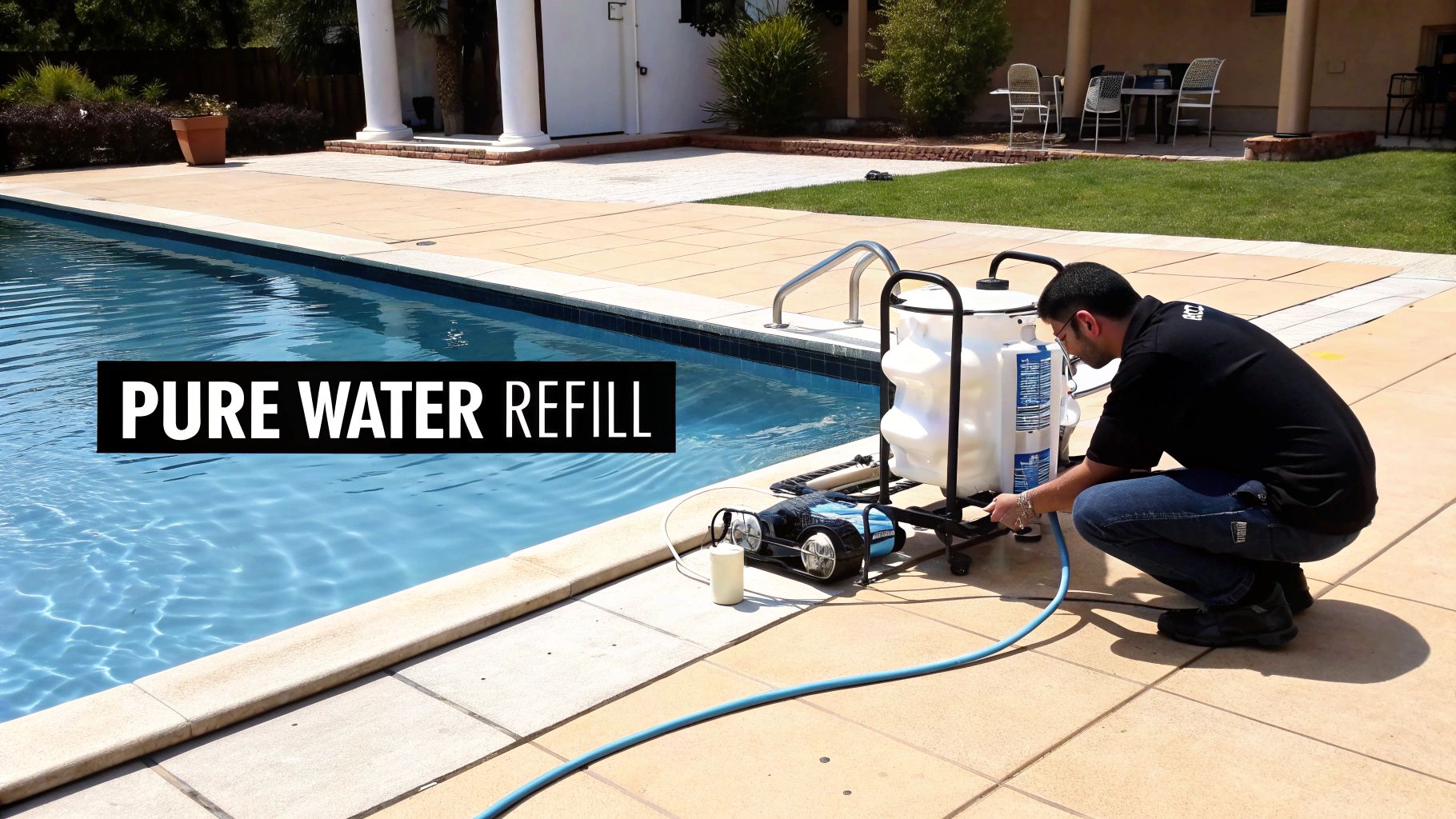
Getting all the water out is a big step, but the job is only half done. How you refill your pool is just as critical as how you drained it. This part of the process sets the stage for its long-term health and, honestly, how much you'll enjoy it. Rushing this or using the wrong water source can kick off a chain reaction of problems that will follow you for months.
A costly mistake we see all the time, particularly around Cape Coral, is refilling a freshly serviced pool with untreated well water. It seems convenient, I get it. But that water is often loaded with metals like iron and copper, not to mention high levels of calcium. The second that water touches your beautiful new plaster, it can start leaving ugly stains.
Even worse, it starts your pool off on the wrong chemical foot. You end up fighting an uphill battle from day one, trying to balance water that's already full of contaminants.
The Problem with Untreated Water
When you fill a pool with mineral-heavy water, you’re basically pre-polluting it. The iron leaves behind those tell-tale rust-colored streaks, and calcium builds up as stubborn scale along the waterline and inside your expensive equipment. This forces you to dump in far more chemicals to get things balanced, and even then, the water never feels quite right.
This is a huge issue across Southwest Florida, where the number of pools is skyrocketing. With over 1 million residential pools in the state, the challenges of proper maintenance are everywhere. Just look at the aftermath of Hurricane Irma in 2017—an estimated 25% of pools collapsed from ignored hydrostatic pressure. Mishaps when you drain a pool account for around 15% of all annual service calls we see.
And a quick refill doesn't solve the problem; it can even make it worse. Rapidly refilling ignores the same soil saturation issues that cause damage during a drain. In fact, engineering reports suggest 60% of pool cracks come from this exact ground instability. It's a complex issue tied into the massive global swimming pool market and the unique geology of our area.
Starting With a Clean Slate
This is where being water treatment experts gives us a serious advantage. At Water Medic, we don't just drain and repair pools; we're specialists in water quality. We always advocate for refilling your pool with water purified by our mobile reverse osmosis (RO) systems.
Think of it as giving your pool a completely clean slate. Our RO filtration process strips out all the problematic minerals, metals, and dissolved solids before the water even enters your pool.
Using purified water for the refill is the single best investment you can make after a pool drain. It creates a pristine aquatic environment that makes chemicals work more effectively, reduces future usage, and delivers a superior swimming experience.
This approach pays off immediately in several ways:
- No Staining: Your new plaster or finish stays brilliant and unblemished.
- Easier Balancing: Chemicals work exactly as they should, without fighting against existing contaminants.
- Reduced Chemical Use: Over time, you'll spend less on chlorine, acid, and algaecides.
- Softer Water: The water feels silky and is far less irritating to your skin and eyes.
Our Comprehensive Refill and Balancing Process
Our commitment to quality doesn’t stop once the hose is turned off. A Water Medic refill is a complete, start-to-finish service designed for lasting results. After we fill your pool with exceptionally clean, RO-purified water, our technicians get to work on the crucial chemical balancing process.
We meticulously test and adjust every key parameter:
- Chlorine: We introduce the initial dose of sanitizer to establish a safe and effective baseline.
- pH and Alkalinity: These are carefully balanced to protect your pool surfaces and keep swimmers comfortable.
- Calcium Hardness: We add just the right amount to protect your plaster from etching without creating new scale.
- Cyanuric Acid: A stabilizer is added to shield the chlorine from being burned off by the intense Florida sun.
This careful, multi-step process ensures your pool is not only full but perfectly balanced and ready for you to enjoy. It shows our dedication to doing the job right—from the first assessment to the final chemical test. By handling every part of the process when you drain a pool and refill it, we protect your investment and guarantee a beautiful, low-maintenance outcome. You can learn more about how we achieve this with our advanced well water treatment solutions.
Pool Draining FAQs
Even after understanding the risks, it's natural to have a few more questions before committing to draining your pool. Getting clear answers is the best way to make the right call for your home and your budget. Let's tackle some of the most common questions we get from homeowners here in Southwest Florida.
How Often Should I Drain My Pool in Florida?
There's no one-size-fits-all answer, but for a standard plaster pool, you’re generally looking at draining it every 3 to 5 years. This is usually done for an acid wash to get rid of tough stains and mineral scale that weekly brushing just can't touch.
But the real driver is your water chemistry. If your Total Dissolved Solids (TDS) or Cyanuric Acid (CYA) levels creep up so high that chemicals are no longer effective, it's time to act. Before you jump to draining, let our team at Water Medic test your water. We might find a less drastic solution, like a partial drain or our RO filtration service, is all you need.
Can I Leave My Pool Empty for a Few Weeks?
Definitely not. I can't say this strongly enough: leaving a pool empty for more than a day or two, especially in Florida, is a recipe for disaster. An empty pool shell is fighting against immense upward pressure from the groundwater—what we call hydrostatic pressure—which can literally pop it right out of the ground.
On top of that, the relentless Florida sun will bake the plaster, causing it to shrink, dry out, and crack. At Water Medic, our entire process is built around speed and safety. We work to drain, service, and start refilling your pool within 24 to 48 hours to protect your investment from these exact problems.
"The single biggest mistake a homeowner can make is leaving their pool empty for too long. Every hour it sits empty, especially during the rainy season, increases the risk of catastrophic, irreversible damage."
What Is the Best Time of Year to Drain a Pool?
The safest time to drain a pool in Southwest Florida is always during our drier, cooler months. Think late fall through early spring. During this period, the ground is less saturated, meaning the water table is lower and there’s far less hydrostatic pressure to worry about.
Trying to drain a pool in the middle of our summer rainy season is a huge gamble. One heavy downpour can saturate the ground in minutes, creating a dangerous amount of pressure against the empty shell. We always start with a careful weather and site check before we even think about dropping the first pump in.
For more answers to specific questions about your pool's condition or our services, you’ll find a lot of information in our collection of pool service FAQs.
How Much Does Professional Pool Draining Cost?
The price tag for a professional drain and refill can vary quite a bit. It really depends on your pool's size, its overall condition, and why you’re draining it in the first place.
While it is an investment, it’s a small one compared to the tens of thousands of dollars in potential repairs from a DIY job gone wrong. A popped shell, major structural cracks, or a buckled deck are devastatingly expensive problems. Hiring a pro isn't just about getting the job done; it's about buying peace of mind and an insurance policy against catastrophic failure.
Don't gamble with the structural integrity of your backyard's biggest asset. For a safe, efficient, and professional pool draining service that understands Southwest Florida's unique challenges, trust the experts. Contact Water Medic of Cape Coral today for a transparent, no-obligation quote and let us protect your property. Visit us at https://watermedic.com to schedule your consultation.