Discover difference between ro and distilled water for your home
The biggest difference between RO and distilled water boils down to one simple concept: Reverse osmosis (RO) is a filtration process, while distillation is a purification process that involves boiling and condensation.
Think of it this way: RO water is like a very thorough screening, filtering out contaminants but leaving some beneficial minerals behind, which gives it a better taste. Distillation, on the other hand, strips out nearly everything—including those minerals—resulting in exceptionally pure but often flat-tasting water.
RO vs. Distilled Water: A Quick Comparison
When you're trying to choose the right water for your Southwest Florida home, getting to the bottom of the RO vs. distilled water debate is key. Both are a huge step up from regular tap water, but they get there in completely different ways. These differences have a real impact on taste, convenience, and how you can use the water around your house, from what you drink to how long your appliances last.
Reverse osmosis is all about pressure. It forces water through a super-fine, semi-permeable membrane. This membrane acts like a bouncer at a microscopic level, letting water molecules through while blocking bigger particles like salts, heavy metals, and bacteria. It's an efficient, on-demand process, which is why it’s the backbone of most modern whole-house water treatment systems.
Distillation is much more old-school; it basically mimics the natural water cycle. You boil the water, it turns to steam, and all the minerals and other gunk get left behind. That steam is then cooled and condenses back into pure liquid water. It's effective, but it’s also slow, eats up a lot of energy, and usually only makes small batches at a time—not exactly practical for a family's everyday needs.
Key Differences at a Glance
For homeowners here in Southwest Florida, where well water can be loaded with minerals, salts, and even heavy metals, the level of contaminant removal is a make-or-break factor. RO systems are incredibly effective, removing over 95% of total dissolved solids (TDS). Their membranes can filter out particles as tiny as 0.0001 microns, catching everything from bacteria and viruses to lead, mercury, and arsenic. You can find more detailed water purity comparisons online.
This visual breakdown really simplifies the two processes and their best uses.
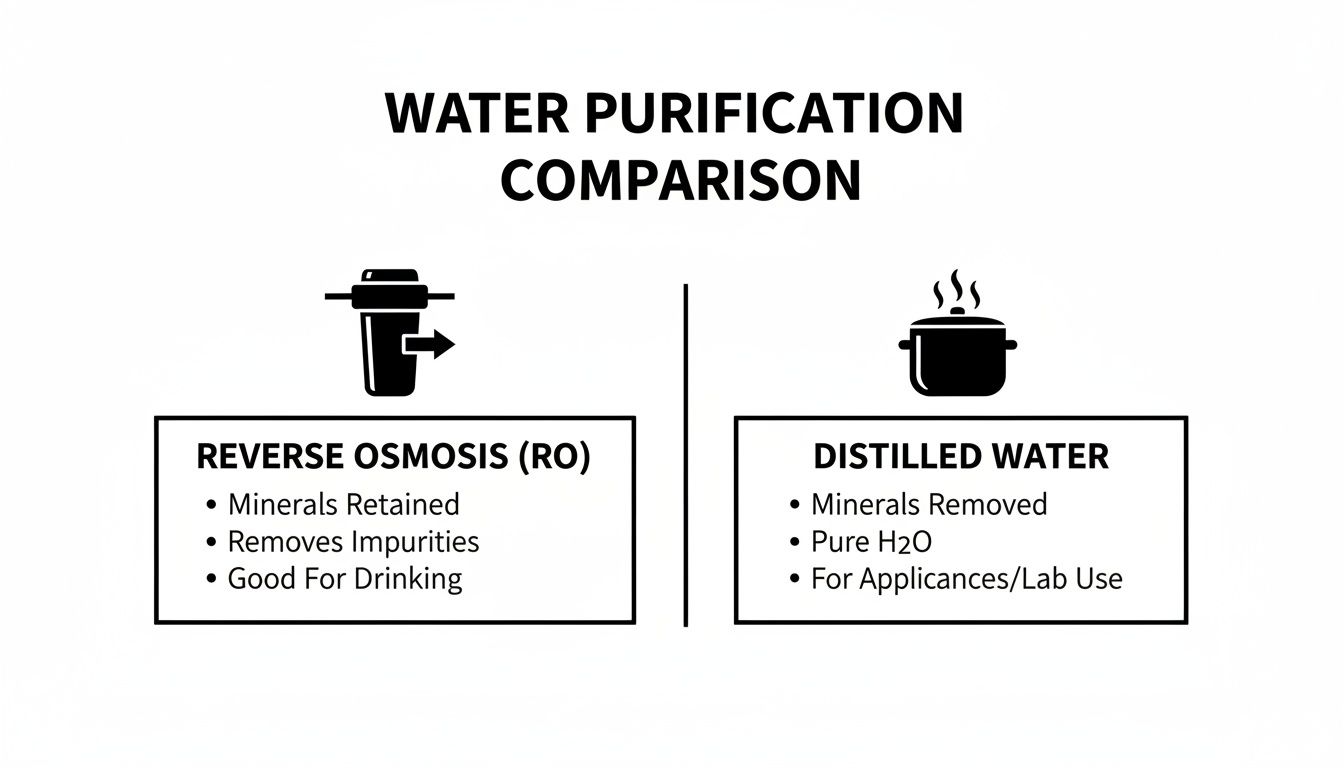
As you can see, the core difference is right there in the icons: RO is a physical filtration process, while distillation relies on heat. This fundamental distinction is why RO often emerges as the more practical and efficient choice for most homes.
To make the choice even clearer, here’s a straightforward, side-by-side breakdown of the key characteristics of RO and distilled water. This table should help any homeowner make a quick, informed decision.
Quick Comparison: RO Water vs. Distilled Water
| Feature | Reverse Osmosis (RO) Water | Distilled Water |
|---|---|---|
| Purification Method | Pushes water through a semi-permeable membrane. | Boils water, collects the condensed steam. |
| Contaminant Removal | Removes 95-99% of TDS, including bacteria, heavy metals, and pesticides. | Removes nearly 100% of minerals, metals, and bacteria. Less effective against some VOCs. |
| Mineral Content | Retains some essential minerals, improving taste. | Virtually zero mineral content. |
| Taste | Clean, crisp, and refreshing. | Flat and bland due to lack of minerals. |
| pH Level | Slightly acidic (6.0-6.5 pH). | Neutral to slightly acidic (5.5-7.0 pH). |
| Energy Consumption | Low; uses water pressure. | High; requires electricity to boil water. |
| Production Speed | Fast, on-demand supply. | Slow, produces water in small batches. |
| Best For | Drinking water, cooking, aquariums, and whole-house use. | Medical devices, car batteries, steam irons, and lab use. |
Ultimately, this comparison highlights that while both methods produce very pure water, their underlying processes lead to very different outcomes. For daily, whole-home use, RO is almost always the more logical and convenient solution.
How Each Purification Technology Works
To really get to the bottom of the RO vs. distilled water debate, you have to look at how each one is made. These aren't just two different names for "pure water"—they're the products of completely different processes, and that affects everything from their taste to how you can use them around the house.
One method uses modern filtration to screen out impurities, while the other mimics the way nature cleans water, just on a much smaller and slower scale.
The Science Of Reverse Osmosis Filtration
Reverse osmosis, or RO, is a smart, efficient process that uses your home's water pressure to push water through an incredibly fine filter. Think of this filter—a semi-permeable membrane—as a microscopic gatekeeper. It's designed to let tiny water molecules slip through while blocking almost everything else.
The result is impressive. This single step physically removes a huge range of contaminants we often see in Southwest Florida's water supply:
- Dissolved salts and minerals that lead to hard water
- Heavy metals like lead and arsenic
- Chlorine and chemical disinfectants
- Bacteria, viruses, and other microorganisms
Because RO is a filtration process, it works on demand, giving you a steady flow of clean water right when you need it. Modern under-sink reverse osmosis systems, like the ones we expertly install, are compact and highly effective, often using multiple stages of filtration (like carbon filters) to polish the water for fantastic taste and clarity.
The Process Of Distillation
Distillation works on a completely different principle, essentially copying the Earth’s natural water cycle. The concept is straightforward: you boil water until it evaporates into steam. When the water turns to gas, it leaves behind anything heavier that can't evaporate with it—minerals, salts, bacteria, you name it.
That steam is then collected in a separate container and cooled down, where it condenses back into pure liquid water. What you're left with is incredibly pure water, almost entirely free of any dissolved solids.
Key Takeaway: While distillation is great for creating demineralized water for things like medical equipment or car batteries, it's a slow, energy-hungry process. It makes water in batches, which just isn't practical for supplying an entire household with all the water needed for drinking, cooking, and daily life.
The core difference is in the method. RO is an advanced filtration technology built for the modern home, delivering purified water instantly. Distillation is a purification method that, while thorough, is far less convenient and efficient for residential use.
Choosing the right technology is key for any homeowner wanting better water quality. For a deeper dive into what system might be best for your home, professional water filtration system services can offer personalized guidance. Here at Water Medic, we specialize in advanced RO systems designed to handle the specific water challenges we face in Southwest Florida, providing a far more practical and reliable solution for your family.
A Closer Look at Contaminant Removal
When you're trying to decide on a water purification system, it really comes down to one thing: getting rid of the nasty stuff. This is where the differences between reverse osmosis and distillation become crystal clear. You have to look at what each process takes out, and just as importantly, what it can leave behind. For those of us in Southwest Florida, this isn't just an academic exercise—our local water has its own unique set of challenges.
Reverse osmosis systems are your first line of defense against a whole host of contaminants. Think of the RO membrane as a microscopic gatekeeper, physically blocking almost everything that isn't pure water from passing through.
This process is incredibly good at removing:
- Total Dissolved Solids (TDS): RO systems are champions at this. They strip out 95-99% of the salts, minerals, and metals that make water hard and taste "off."
- Heavy Metals: Lead, arsenic, mercury, and chromium don't stand a chance. The RO membrane effectively blocks these toxic substances from getting into your family's drinking water.
- Bacteria and Viruses: The pores in an RO membrane are tiny—around 0.0001 microns. That’s small enough to stop microorganisms in their tracks, making your water microbiologically safe.
- Pharmaceuticals and Pesticides: RO is also a powerhouse against emerging threats like trace prescription drugs and agricultural chemicals that find their way into our groundwater.
Where Distillation Falls Short
Distillation works by boiling water and collecting the pure steam, which is a fantastic way to remove things that don't boil. All the minerals, salts, and heavy metals get left behind, which is why distilled water has virtually zero TDS.
But here’s the catch: distillation has a major blind spot. It struggles with a group of chemicals called Volatile Organic Compounds (VOCs). These are chemicals that have a low boiling point—sometimes even lower than water itself.
The Key Weakness of Distillation: When you boil water, VOCs like certain pesticides, solvents, and chlorine byproducts can turn into a gas right along with the water. They travel with the steam, get condensed, and end up right back in your supposedly "purified" water. Sometimes, they can even become more concentrated.
This is a huge deal. While distillation gives you demineralized water, it offers no guarantee that you're safe from certain chemical threats. A well-designed RO system, however, has this problem solved.
The RO Advantage: More Than Just a Membrane
Modern RO systems, like the ones we install here at Water Medic, are much more than just a single membrane. They are complete, multi-stage filtration units that provide layers of protection. A typical setup will include both pre-filters and post-filters to catch anything the RO membrane might not be designed for.
This is where the real magic happens. Many of our systems use specialized carbon filters as part of this process. These are specifically designed to grab onto VOCs, chlorine, and other chemicals that ruin the taste and smell of your water. This multi-pronged attack ensures your water is purified both physically and chemically.
By combining sediment filters, carbon blocks, and the RO membrane, you get a comprehensive barrier that distillation just can't match on its own. It's this layered security that makes a professionally installed Water Medic RO system the superior choice for protecting your family from the widest possible range of threats. Here in Southwest Florida, that kind of peace of mind isn't a luxury—it's essential.
How Water Purity Impacts Your Taste, Health, and Appliances
The real difference between RO and distilled water goes way beyond the science behind them. It's about how each one shows up in your day-to-day life. The kind of water you use has a direct, noticeable effect on everything from the taste of your coffee to how long your dishwasher lasts. It’s all about the purity level—what’s left in, and what’s taken out.
You'll see the most striking difference in two key areas: the taste of the water you drink every day and how it protects—or harms—your expensive home appliances.
Taste and Health: The Mineral Question
Let’s start with taste, because it’s the first thing you’ll notice. Distilled water has a reputation for tasting flat, bland, and sometimes even a little metallic. That’s because the distillation process is so thorough it removes everything, including the healthy minerals like calcium and magnesium that give water a pleasant, crisp taste.
Reverse osmosis water, by contrast, usually keeps a small amount of these beneficial minerals. This gives it a clean, refreshing flavor that most people find much more enjoyable for drinking and cooking. For those who want the best of both worlds, we can add a remineralization filter to our RO systems. This carefully puts back a balanced mix of electrolytes, giving you premium-quality drinking water straight from the faucet.
When it comes to daily hydration, remineralized RO water is widely seen as the better option. Drinking water with absolutely no minerals can, over the long term, impact your body’s electrolyte balance. RO gives you the purity you want without taking away the essential elements your body actually needs.
Protecting Your Investments: Appliances and Pools
Pure water isn't just for drinking; it's also your best line of defense against the damage caused by hard water. Here in Southwest Florida, mineral scale buildup is a constant headache for any appliance that uses water. Both RO and distilled water are excellent at stopping it.
Because they are virtually free of minerals, using them in things like steam irons, coffee makers, and humidifiers prevents that chalky white scale from forming. This simple switch keeps your appliances running efficiently and can seriously extend their lifespan. Pure water means better performance and fewer problems.
The stakes are even higher for your bigger investments. Anyone who manages a property or owns a pool in this area knows that scale can destroy expensive equipment like pool heaters and pumps. The hard water we deal with makes this equipment work harder, leading to early breakdowns and costly repairs. While both pure water types prevent scale, only one makes sense for large-scale use.
A whole-house reverse osmosis system is the ultimate solution for protecting your entire property. It delivers a limitless supply of purified water, not just for your small appliances but for your pipes, fixtures, and pool. For pool owners, it’s the most practical way to stop scale on tiles and in equipment, which means less time scrubbing and fewer harsh chemicals. This solution often works alongside our powerful water softeners to handle mineral problems across a whole property.
At the end of the day, choosing an RO system is an investment in your family’s health and the longevity of your home. You get the clean, great-tasting water you want while protecting your most valuable systems from the inside out.
Comparing Long-Term Costs and Environmental Impact
When you’re investing in your home’s water quality, the sticker price is only part of the story. You really need to look at the whole picture—the day-to-day running costs and the environmental footprint of each method. This is where reverse osmosis and distillation really part ways, especially for homeowners looking for a practical, long-term solution.

A countertop distiller might seem like a simple, one-and-done purchase, but its ongoing expenses and the sheer hassle of using it add up fast. On the flip side, a high-quality reverse osmosis system is built for efficiency and convenience right out of the box.
The True Cost of Operation
The biggest difference in long-term cost is energy consumption. There's no way around it: distillation is an energy hog. It works by boiling water for hours on end, which requires a lot of electricity. A typical home distiller can take several hours just to produce a single gallon, racking up your power bill with every batch. It's like leaving a slow cooker on all day just to get a bit of pure water.
In contrast, a Water Medic RO system uses your home’s existing water pressure to do most of the heavy lifting, so it barely uses any electricity. This makes it a much smarter financial choice for a family that needs plenty of clean water for drinking, cooking, and everything in between. The annual maintenance is simple and predictable, too—usually just a quick filter change.
Energy Consumption and Environmental Responsibility
If you're an eco-conscious homeowner, especially here in an energy-focused state like Florida, this is where the choice becomes crystal clear. Producing distilled water is incredibly inefficient; it can take up to 10 times more electricity than an RO system to purify the same amount of water because of all that constant boiling. This heavy energy draw means a much larger carbon footprint.
Modern RO systems, which run on water pressure or low-watt pumps, use a tiny fraction of that energy. We're talking about a potential 80-90% drop in your energy bills compared to running a distiller. Learn more about the efficiency of water purification methods.
Plus, having a professionally installed RO system at home means you can finally stop buying bottled water. That alone dramatically cuts down on the plastic waste that pollutes our local environment.
The Bottom Line: An RO system delivers unlimited, on-demand purified water with minimal energy use and affordable upkeep. Distillation is a slow, expensive batch process that’s neither convenient nor environmentally friendly for the demands of a modern household.
Convenience and Lifestyle Integration
Think about how you actually live your life. A home distiller makes water one gallon at a time—a slow process that you have to actively manage. You have to fill it, turn it on, wait for hours, and then find a place to store the water. That just doesn't work for a busy family that needs a steady supply of clean water for filling a pot for pasta or making a quick pot of coffee.
A Water Medic RO system, on the other hand, fits right into your daily routine. Installed neatly under your sink or as a whole-house reverse osmosis system, it gives you purified water instantly, straight from the tap. This on-demand convenience means you never have to plan ahead or worry about running out. Modern, high-efficiency systems have also come a long way in minimizing water waste, making them a responsible choice for any homeowner who cares about both their time and our region's precious natural resources.
The Verdict for Southwest Florida Homes
When you lay it all out—the purification process, what's left in the water, the taste, health effects, and the real-world costs—the debate between reverse osmosis and distilled water has a pretty clear winner for us here in Southwest Florida. While distilled water is incredibly pure, the process is slow and eats up a lot of electricity, making it impractical for much more than a few specific uses.
For a steady, affordable supply of fantastic water for your entire home, a reverse osmosis system is, without a doubt, the way to go.
Our local water is a special kind of trouble. We've got high mineral content that creates that frustrating, crusty hard water scale. If you're on a well, you're likely fighting iron that stains everything it touches. Even city water comes with a dose of chlorine. A professionally installed whole-house reverse osmosis system is built to handle exactly these problems, offering a complete fix that a small countertop distiller can't even touch. This isn't just about a glass of water; it's about protecting your home's entire plumbing ecosystem.
Why RO is the Smarter Solution for Our Area
With over 25 years of experience helping homeowners in Cape Coral and the surrounding communities, we at Water Medic have seen it all. We know what works here, and RO systems directly solve the headaches we deal with every day. The system is a workhorse, removing the dissolved solids that clog up your pipes, water heater, and expensive appliances, which saves you a fortune in repairs and early replacements.
More specifically, it targets the exact contaminants that affect our daily lives:
- Hardness Minerals: This is your best defense against the scale that kills appliances and clogs plumbing.
- Iron: Say goodbye to those ugly orange and brown stains on your sinks, toilets, and showers.
- Chlorine: It gets rid of that "pool water" taste and smell from municipally treated water.
- Other Contaminants: It provides a reliable barrier against salts, pesticides, and other unwanted pollutants.
A whole-house RO system isn't just for drinking. It delivers purified, softened water to every single tap, shower, and appliance. That means your coffee tastes better, your skin and hair feel softer, your clothes come out brighter, and you get the simple peace of mind that your family's water is clean and safe.
A Better Investment for Your Florida Property
Looking at the big picture, the financial side of RO just makes more sense. A home distiller might seem cheaper upfront, but its high electricity use and painfully slow output make it expensive and inconvenient over time. For Southwest Florida homeowners, RO wins on cost, convenience, and long-term performance. In fact, our professional RO installations are often 40-60% more cost-effective than distillation when you add up energy, maintenance, and filter costs.
Choosing an RO system is a genuine investment in your home's value and your family's health. You get an unlimited supply of purified water right on tap, which means no more fussing with small batches or contributing to plastic bottle waste.
Here at Water Medic of Cape Coral, our job is to equip our neighbors with water treatment solutions that actually work for our unique local conditions. We know the water here, and we have the expertise to get the job done right. To see what a difference truly clean water can make, give us a call for a complimentary water quality analysis. We’d be happy to show you firsthand why reverse osmosis is the clear choice for your home.
Frequently Asked Questions
When you're trying to figure out the difference between RO and distilled water, a few key questions always come up. Here are the answers we give homeowners in Southwest Florida to help them choose with confidence.
Is RO or Distilled Water Better for Daily Drinking?
For everyday drinking water, Reverse Osmosis is hands-down the better choice. It really comes down to the minerals. The distillation process strips out everything—including healthy minerals like calcium and magnesium that your body needs. This is why distilled water often has a bland, flat taste.
Our RO systems, on the other hand, can be equipped with a remineralization filter. This extra step puts a balanced blend of beneficial minerals and electrolytes back into the water. The result is crisp, refreshing water that not only tastes great but is also better for your family's daily hydration.
Which Water Best Protects My Appliances and Pool?
Both RO and distilled water are great for preventing scale in small appliances like coffee makers or irons. But when you're talking about protecting your entire home and pool, RO is the only practical solution. Distillation is a very slow, energy-hungry process that makes water in small batches. It just can't keep up with the demands of a whole house or a swimming pool.
A whole-house reverse osmosis system from Water Medic gives you a continuous supply of pure water on demand. That kind of efficiency is critical for protecting your major investments—from your pipes and water heater to expensive pool equipment—from the destructive mineral scale we see so often here.
Can I Install a Whole-House RO System Myself?
You might see DIY kits online, but a whole-house RO system is a sophisticated piece of equipment. Honestly, it's a job for a professional. A bad installation can cause a whole host of problems, from serious water pressure drops and leaks to filtration that doesn't actually fix your water issues.
A professional installation from Water Medic of Cape Coral ensures your system is perfectly sized and calibrated for your home’s plumbing. We know the unique well water systems in this area inside and out, which means we can guarantee your investment will run smoothly for years. It's not worth risking your home's water supply—let our experts get it right from the start.
Ready to get pure, great-tasting water flowing through your home? Contact Water Medic of Cape Coral for a free water analysis and find out how a reverse osmosis system can protect your family and your property. Visit us at https://watermedic.com to schedule your consultation today.