Change from chlorine to saltwater pool: Quick Guide
Tired of that harsh chemical smell and the red, irritated eyes that come with a traditional chlorine pool? If so, you're not alone. Making the change from chlorine to saltwater pool has become a go-to upgrade for homeowners who want a more luxurious, low-maintenance swimming experience. It's less about constant chemical chores and more about enjoying a gentler, automated system—an investment that pays off in both lifestyle and property value. At Water Medic, we specialize in making this transition seamless and rewarding.
Why You Should Convert Your Chlorine Pool to Saltwater
For many pool owners in Southwest Florida, the routine is all too familiar: lugging heavy buckets of chlorine tablets or jugs of liquid shock, constantly testing, and worrying about getting the chemical balance just right. It's a cycle that often results in water that feels harsh and uninviting. Deciding to convert to saltwater is about more than just changing your sanitizer; it's about reclaiming your weekend and truly elevating your backyard oasis with our expert help.
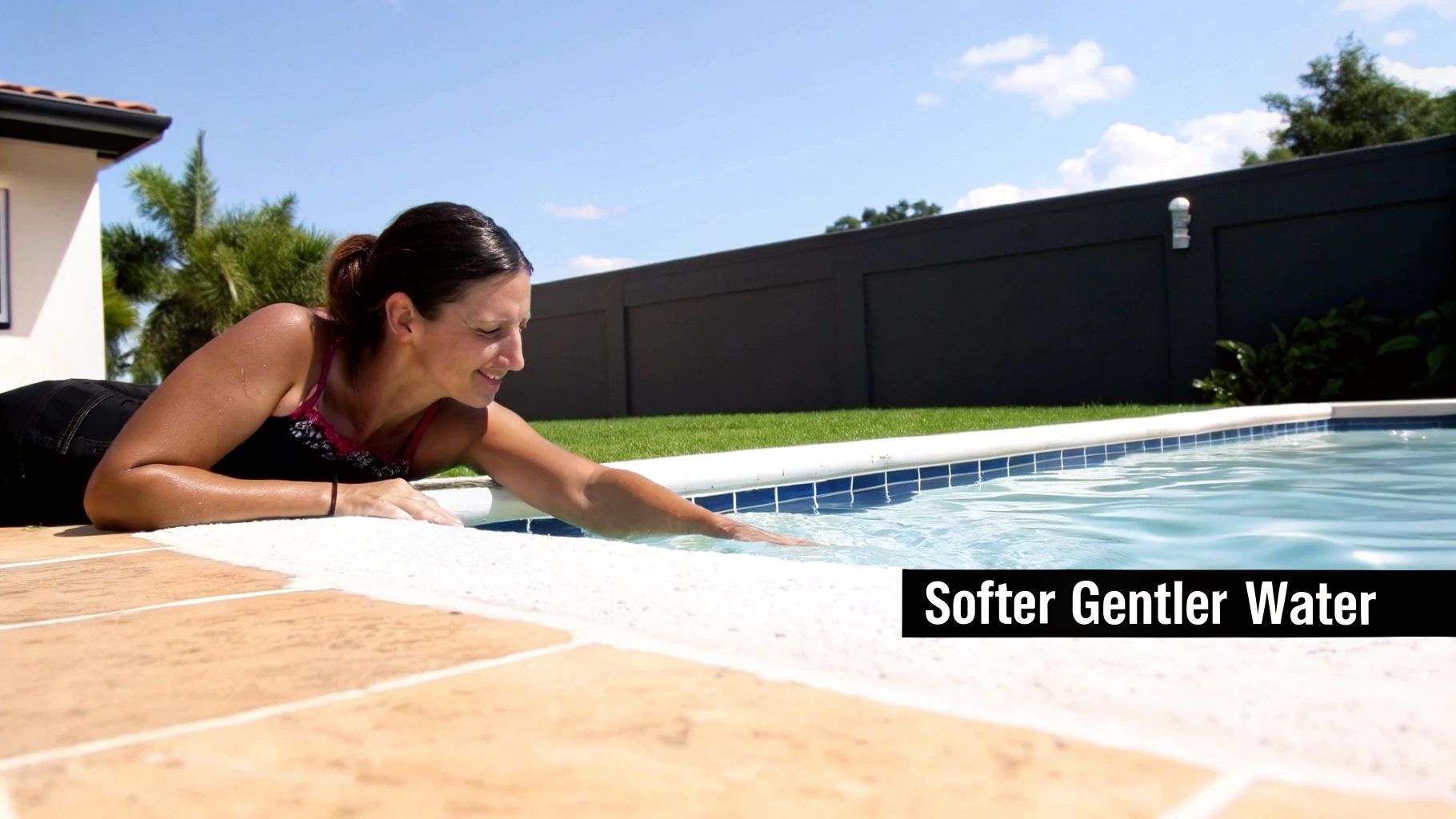
Imagine slipping into water that feels soft and silky against your skin, almost like swimming in a natural spring. That’s the first thing you'll notice. Saltwater pools use a salt chlorine generator to produce pure chlorine from a very low concentration of salt. The result is water that's incredibly gentle on your skin, eyes, hair, and even your swimsuits.
A Better Experience for Swimmers
The biggest and most immediate perk is the amazing water quality. In a standard chlorine pool, the chlorine reacts with sweat, oils, and other contaminants to create byproducts called chloramines. These are the real culprits behind that potent "chlorine smell," itchy skin, and burning eyes.
A saltwater system, on the other hand, constantly generates fresh, pure chlorine, which prevents chloramines from ever building up. This leads to a noticeably better swim:
- Silky-Smooth Water: The low salt level (actually less salty than human tears) gives the water a remarkably soft and smooth feel.
- No More Irritation: You and your family can swim for hours without the red eyes and dry, itchy skin that so often follow a dip in a traditional pool.
- Swimsuits Stay Vibrant: The gentler water is much kinder to fabrics, helping preserve the color and integrity of your swimwear.
A saltwater pool provides a more luxurious swimming environment. The water is smoother on the skin and less irritating to the eyes and hair, creating a spa-like experience right in your own backyard.
This level of comfort makes the pool far more inviting for everyone, but it’s a game-changer for kids and anyone with sensitive skin.
Less Work and Long-Term Savings
Beyond the pure comfort, a saltwater pool just makes life easier. The salt chlorine generator is the heart of the system, and it automates the whole sanitation process. It monitors and produces chlorine on an as-needed basis, keeping the level consistent and safe without you having to lift a finger every day.
That means no more last-minute trips to the pool store because you ran out of chlorine on a hot holiday weekend.
This automated approach doesn't just save you time; it saves you money. While converting does have an upfront cost, the long-term savings really add up. You'll essentially eliminate the recurring expense of buying chlorine, which can easily save you hundreds of dollars every single year.
Chlorine vs. Saltwater Pool At a Glance
To make the comparison even clearer, here’s a straightforward breakdown of how these two systems stack up against each other.
| Feature | Traditional Chlorine Pool | Saltwater Pool |
|---|---|---|
| Swimmer Experience | Can cause red eyes, itchy skin, and a strong chemical smell. | Water feels soft and silky. No harsh smell or irritation. |
| Routine Maintenance | Requires frequent testing and manual addition of chlorine tablets or liquid. | Salt cell generates chlorine automatically. Less frequent chemical handling. |
| Upfront Cost | Low initial setup cost. | Higher initial investment for the salt chlorine generator. |
| Long-Term Cost | Ongoing expense of buying chlorine, shock, and other chemicals. | Significantly lower annual cost; no need to buy chlorine. |
| Environmental Impact | Involves storing and handling concentrated, hazardous chemicals. | Reduces the need for manufactured chlorine, creating it on-site from natural salt. |
Ultimately, while chlorine pools get the job done, saltwater systems offer a more refined and convenient experience for the modern pool owner.
The shift toward this technology isn't just a local trend. Industry analysis shows the saltwater chlorinator market is expected to surpass 20 million units sold annually by 2025. This global movement highlights a clear preference for automated, user-friendly, and more sustainable pool solutions.
Of course, before making the switch, it's wise to know all your options. While saltwater is a fantastic choice, you can also explore various chlorine alternatives to find what works best for you. Here at Water Medic, our expert technicians can walk you through the entire process, ensuring a seamless conversion that completely transforms how you enjoy your pool.
Budgeting for Your Saltwater Pool Conversion
Making the switch from a classic chlorine pool to a saltwater system is a smart investment, one that pays you back over time with softer water and lower chemical bills. But before you dive in, it’s crucial to understand the full picture of the costs involved. A clear budget from the start helps you make the right choices without any surprises.
The heart of the entire conversion is the salt chlorine generator. Its price tag can swing quite a bit depending on the size of your pool, the features you want, and the brand you choose.
Setting a Realistic Budget
No one likes unexpected fees. To build an accurate budget, you need to look beyond just the main equipment and labor. Think about things like local permits or the possibility that your existing pump might need an upgrade to work efficiently with the new system.
Here in Florida, for instance, securing a permit for the electrical work can add another $100 to $200 to your total. The final cost often hinges on your local building department's specific requirements.
Keep an eye out for other potential costs that can sometimes hide in plain sight:
- Electrical upgrades needed to power the generator.
- The discovery that your old filter needs a deep clean or even a full replacement.
- Tricky site access that might add a few hours to the labor bill.
Factoring in these possibilities gives you a much more realistic and complete budget to work with.
Breaking Down the Initial Costs
Let's start with the big-ticket item: the salt chlorine generator. For an average residential pool, you can expect the unit itself to run anywhere from $800 to $2,000.
Why the wide range? It comes down to features. Higher-end models might include handy automation, self-cleaning functions, or even remote monitoring from your phone, giving you incredible control over your pool's chemistry. While they cost more upfront, these features can save you a ton of time on manual adjustments down the road.
To give you a clearer idea, here’s a breakdown of the typical one-time costs you'll encounter.
Estimated Saltwater Conversion Cost Breakdown
This table outlines the typical one-time costs associated with converting a pool, from equipment to professional labor, helping homeowners budget effectively for the upgrade.
| Cost Component | Typical Price Range (USD) | Notes |
|---|---|---|
| Salt Chlorine Generator | $800 – $2,000 | Varies based on your pool's size and the unit's features. |
| High-Purity Salt | $15 – $30 per 50 lb bag | This is a one-time startup cost to get your water to the right salinity. |
| Electrical Work | $150 – $300 | Most generators require a dedicated 240V connection. |
| Professional Installation | $400 – $700 | Covers labor for plumbing, wiring, and initial system setup. |
Getting the right equipment from the start is key. A professional can help you choose a generator that’s not just sized correctly for your pool but is also built to last, ensuring you get the most out of your investment.
Factoring In Installation and Salt
A professional installation is surprisingly quick, usually wrapping up in a single day. Our technicians handle everything—from neatly integrating the new unit into your existing plumbing to running the electrical and performing the initial startup tests.
You can expect the labor for this to run between $400 and $700. That price typically includes the time it takes to get your water chemistry perfectly balanced on day one and a full walkthrough to show you how your new system works.
The salt itself is a minor, one-time expense. You'll need high-purity, pool-grade salt, which costs about $15 to $30 for a 50-pound bag. Most pools only need one or two bags to get started.
A quick, professional installation means less downtime. You could be swimming in silky-smooth saltwater by the end of the day.
If the upfront cost feels a bit steep, financing can be a great way to make it more manageable. We offer several plans to help spread the investment out over time. You can learn more by checking out our guide on financing your pool upgrade.
The Payoff: Long-Term Savings and Sustainability
This is where a saltwater system really shines. Because the generator creates its own chlorine from the salt in the water, you can say goodbye to those weekly trips to the pool store for buckets of chlorine tablets and jugs of shock.
Many homeowners find they slash their annual spending on chlorine by 50% or more. The system simply produces a steady, consistent supply of fresh sanitizer whenever your pump is running. You can read more about the essential equipment on Hayward's blog.
This isn't just good for your wallet; it's better for the environment. You're no longer buying, transporting, and handling harsh packaged chemicals. And while the generator does use electricity, the cost is minimal—often just $50 to $100 per year—and is easily offset by what you save on chemicals.
Saltwater conversion is one of those rare upgrades that is both more sustainable and easier on your budget in the long run.
Protecting Your Investment
To make sure you get the most out of your new system, look for a generator with a solid warranty. Many of the top models we recommend come with 3-year coverage on both the control unit and the salt cell, which is the part that does all the work.
Pairing that with one of our maintenance plans is the best way to keep everything running smoothly. A simple annual inspection from one of our pros can spot small issues before they become costly repairs, potentially saving you $1,000 or more on a premature cell replacement.
A little planning and proactive maintenance today can prevent a lot of headaches and unexpected expenses tomorrow.
Ready to see what the numbers look like for your specific pool?
Contact Water Medic today for a personalized estimate and expert advice.
How We Handle Your Saltwater Pool Conversion
Making the switch from a traditional chlorine pool to saltwater is a great move, but let's be honest, the process can feel a little intimidating. That's where we come in. Here at Water Medic, we've refined our process to make it a seamless, same-day upgrade. Our goal is to handle all the technical details so you can just look forward to jumping in.
It all starts with a thorough look at your existing pool. Before we install anything, our technicians come out to do a full pre-conversion assessment. We measure your pool's exact volume, check your pump and filter to make sure they're compatible, and pinpoint the best spot to install the new salt chlorine generator. Getting this right from the start is crucial—it ensures we pick the perfect size system for your pool, which means it will produce chlorine efficiently and last for years.
The Installation: Plumbing and Electrical Done Right
With the initial assessment done, we get to the heart of the project: installing the salt chlorine generator. This is more than a simple plug-and-play job. The system has two main components—the control unit and the cell—and both need to be integrated perfectly into your pool's circulation and electrical systems.
Our licensed technicians are meticulous about this part of the job:
- Plumbing Integration: We carefully plumb the electrolytic cell into your pool's return line, right after the filter and heater. This specific placement is key because it ensures the freshly chlorinated water gets distributed evenly throughout the entire pool.
- Electrical Safety: The control unit gets wired directly into your pool’s electrical panel, which usually requires a 240V connection. We make sure every connection is safe, secure, and up to code to protect you and your new equipment.
This infographic gives you a quick visual breakdown of what goes into the cost of a conversion.
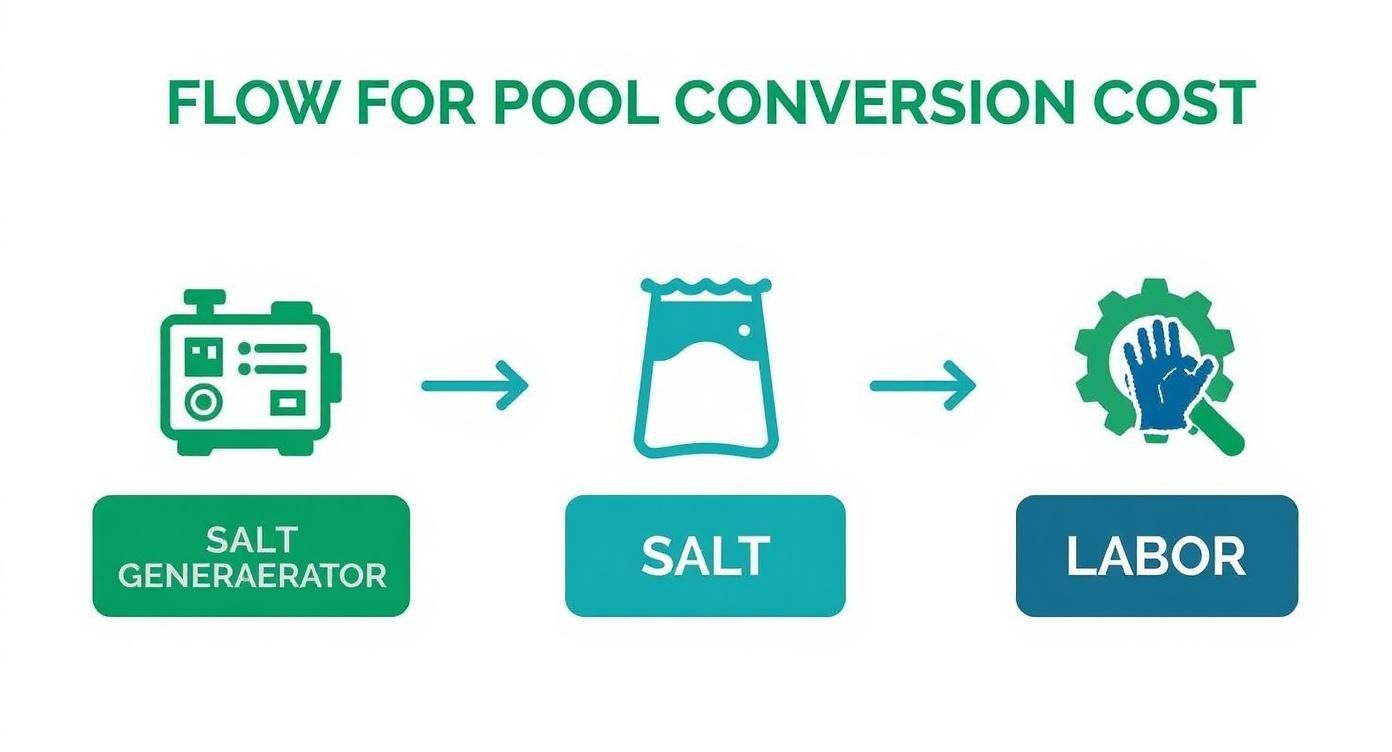
As you can see, it’s a combination of the right equipment, the initial salt, and the skilled labor needed to bring it all together for a flawless result.
Dialing in the Perfect Water Chemistry
Once the hardware is installed, our focus turns to the water. You can't just dump salt in and call it a day. The water chemistry has to be perfectly balanced for the new system to work correctly and to give you that soft, silky water you're looking for. This is where our experience with Southwest Florida's unique water conditions really shines.
We test and adjust several key levels. We'll balance the total alkalinity to act as a buffer for the pH, then get the pH itself dialed in. But the most critical part, especially here, is adjusting the cyanuric acid (your stabilizer).
Think of stabilizer as sunscreen for your chlorine. In the intense Florida sun, UV rays can burn off chlorine in a matter of hours. The right stabilizer level protects it, so your new salt system doesn't have to work itself to death just to keep up.
Finally, we add the precise amount of high-purity, granulated pool salt. We only use top-quality salt that dissolves quickly and won't leave behind impurities that can damage your equipment. We're aiming for a salt concentration of about 3 parts per thousand (ppt). The technology is pretty slick: the system uses electrolysis to turn that salt into pure, fresh chlorine, making your pool its own little chlorine factory. Depending on your pool's size, our systems can generate anywhere from 2 to over 12 grams of chlorine an hour.
The best part? We can get this entire process done in a single day. Our team takes care of every last detail. If a hands-off approach to a better pool experience sounds good to you, learn more about our professional saltwater pool services in Cape Coral.
Taking Care of Your New Saltwater Pool
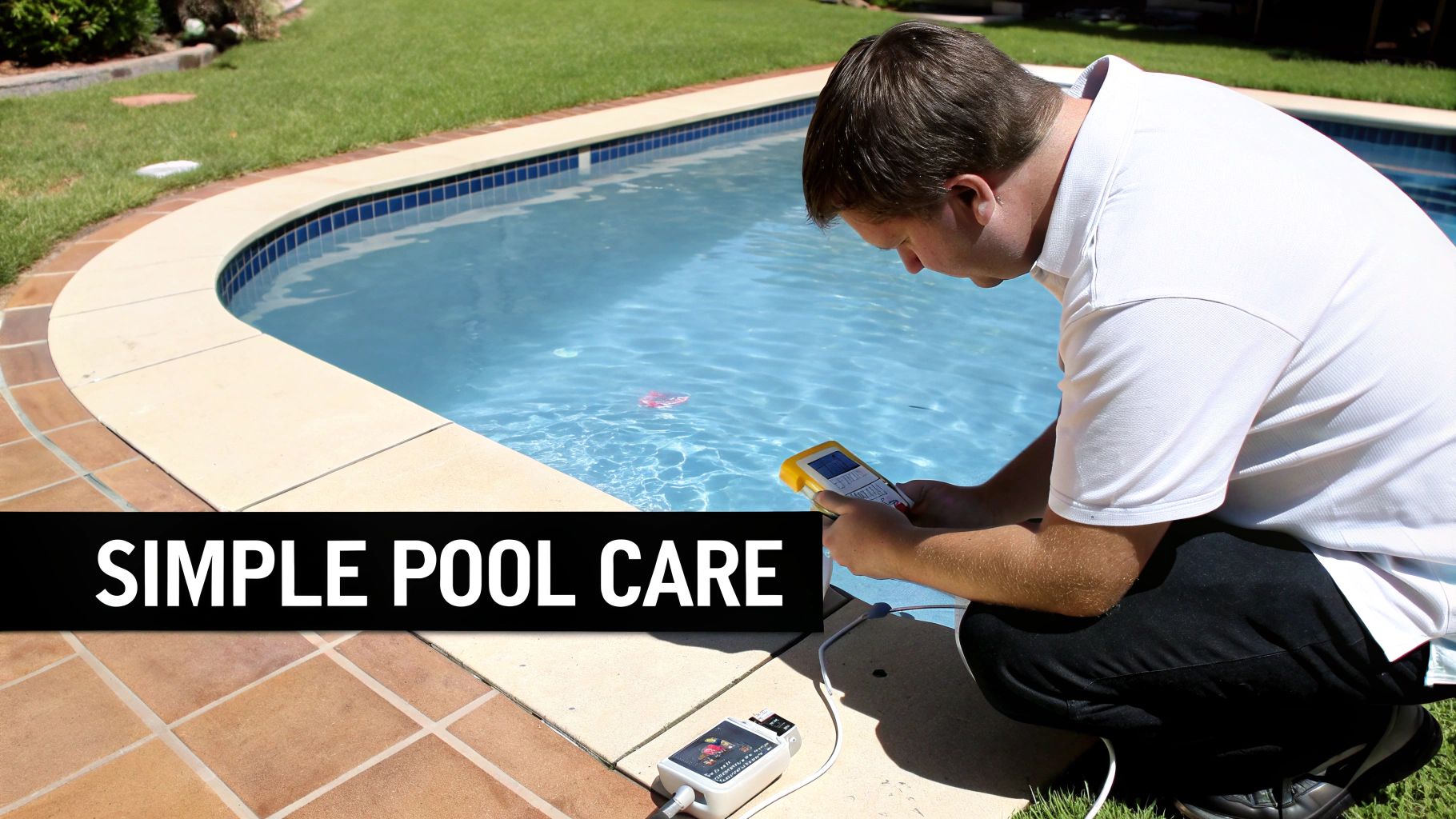
Congratulations! The conversion is done, and you're officially a saltwater pool owner. While you can finally say goodbye to the daily grind of adding chlorine, keeping that silky-smooth water perfect isn't a completely hands-off affair. The great news? The new routine is simpler and far less demanding than what you're used to.
Think of it less like constantly putting out fires and more like making small, proactive tweaks to keep your pool in perfect balance. A few minutes each week is all it takes to protect your investment and ensure it's always ready for a swim.
Your New Weekly Routine
At the heart of your new maintenance schedule is simple water testing. You'll still want to check the free chlorine and pH levels at least once a week, especially when the pool is getting a lot of use in the summer. This quick check confirms your salt chlorine generator is doing its job and the water is safe and comfortable.
If your chlorine reading is a bit low, there's no need to run out for a bucket of shock. Just walk over to your generator's control unit and adjust the output. Bumping it up from 50% to 60% for a day or so is often all you need. On the flip side, if the chlorine is too high, just dial it back down. This not only balances the water but also helps conserve the life of your salt cell.
Stabilizer: Your Pool's Best Friend in Southwest Florida
If you own a pool in Southwest Florida, Cyanuric Acid (CYA), or stabilizer, is your most important chemical. Our intense sun is brutal, and it can burn off unprotected chlorine in just a few hours. Stabilizer is basically sunscreen for your chlorine, shielding it from UV rays so it can last longer and work more effectively.
Keeping your stabilizer level at a minimum of 30 parts per million (ppm) is non-negotiable. If it drops below that, your salt system will run and run but won't be able to keep up with the sun. You'll end up with cloudy water and a prematurely worn-out salt cell.
Those heavy summer downpours we get can seriously dilute your pool water, washing away your stabilizer. It’s a good habit to test your CYA levels after a big storm and add more if you need to. This one simple step can save your salt cell from a lot of unnecessary stress.
The Salt Cell: The Heart of the System
Your salt cell is the workhorse of the whole operation, turning simple salt into fresh chlorine. Over time, calcium and other minerals can build up on the cell's internal plates, forming a white, flaky crust. This scale buildup kills the cell's efficiency and can cause permanent damage if ignored.
Plan on giving the cell a quick visual inspection every two to three months. Most modern systems have a clear housing, so you can see right in. If you notice a significant amount of white buildup, it’s time for a cleaning.
Cleaning the cell is a pretty straightforward process:
- Always start by shutting off all the power to your pool equipment at the breaker.
- Unscrew the unions on either side of the cell to remove it from the plumbing.
- Use a hose with a strong nozzle to spray off any loose debris.
- For the really stubborn scale, you'll need to soak the cell in a mild acid solution. A good rule of thumb is to soak it just until the fizzing stops.
A well-maintained salt cell can last anywhere from 3 to 7 years, but a neglected one might not even make it two. Regular check-ups are the secret to getting the most life out of it. And to get the most out of your pool, consider using the best solar pool covers to help hold in heat and cut down on water evaporation and energy costs.
We know life gets busy, and not everyone wants to handle the upkeep themselves. If you'd rather just enjoy the perfect water without the work, we've got you covered. Check out our professional monthly pool maintenance plans where we handle everything from water chemistry to equipment checks, so your pool is always swim-ready.
Let's Clear the Air: Saltwater Pool Myths and Troubleshooting
It’s easy to get tangled up in myths when you’re thinking about making the switch to a saltwater pool. Let's cut through the noise and address the common questions and problems that come up. This way, you can make an informed decision and feel confident managing your new pool.
One of the biggest misconceptions is that saltwater pools are "chlorine-free." They're not. They just have a much smarter way of making it. Your salt system uses a process called electrolysis to create pure, fresh chlorine right in your plumbing. This steady, low-level production is what gives you that silky, sanitized water without you ever having to handle harsh liquid chlorine or tablets.
Another common worry? That your pool will taste like the ocean. Not even close. Ocean water has a salinity of around 35,000 parts per million (ppm), whereas your pool will be kept at a mild 3,000 ppm (or 3 ppt). Most people can't even taste it. What they do notice is how soft and gentle the water feels on their skin and eyes.
Let's dive into some of the most common myths and troubleshooting steps I see out in the field.
- The idea that "salt" means zero chlorine.
- The fear of swimming in an ocean-like pool.
- Confusion over the "inspect cell" light.
- What to do when chlorine readings are low.
The "Chlorine-Free" Myth
A salt system is really a mini chlorine factory. Most residential salt cells generate between 2 to 12 grams of chlorine per hour by splitting the salt (sodium chloride) in the water into its basic components. The result is pure, effective chlorine (sodium hypochlorite) that keeps your pool sparkling clean. The magic is that it’s all done automatically and in a controlled manner.
If you want a professional installation that ensures your generator and plumbing work together perfectly, take a look at our saltwater pool services at Water Medic of Cape Coral. We handle the entire switch, making it seamless.
That "Salty" Taste Concern
Again, with salinity levels about 10 times lower than the ocean, the salt is barely perceptible. It's actually less salty than human tears. Instead of a salty residue, you'll find the water leaves your skin feeling softer. A quick rinse with a hose after your swim is all you need.
Getting the salt level just right is crucial, and it’s something we dial in perfectly during the conversion. If you want to learn more about how we handle the entire conversion process, just let us know.
What to Do When the "Inspect Cell" Light Comes On
Nine times out of ten, that Inspect Cell light is just telling you it's time for a quick cleaning. Minerals, primarily calcium, can build up on the cell's metal plates over time, which reduces its efficiency.
It’s a good habit to visually check the cell every 2 to 3 months. Just turn off the power to your pool equipment, unscrew the cell, and give the plates a gentle rinse with a garden hose. If the buildup is stubborn, a mild acid solution might be needed, but a simple rinse is often enough.
If that light stays on after a good cleaning, it's time to give us a call. Our team can run a full diagnostic and get your chlorine production back on track.
Fixing Low Chlorine Readings
If your test kit shows chlorine has dipped below 1 ppm, the fix is usually simple. Go to your salt system’s control panel and increase the output setting by 10%. Let it run for a full 24 hours, then retest the water. Keep making small adjustments until your levels are stable in the ideal range.
Remember, things like a big pool party, a heavy rainstorm, or a lot of direct sun can burn through chlorine faster. During these times, you might need to temporarily "boost" or "shock" the pool using your generator's super-chlorinate function. Our monthly maintenance plans take all this guesswork off your plate.
A little bit of routine attention goes a long way. Regular inspections and quick adjustments will keep your saltwater pool crystal clear and safe all year round.
Here’s a quick-glance guide for common issues:
| Issue | Possible Cause | Quick Solution |
|---|---|---|
| Inspect Cell Light | Calcium scale on salt cell | Rinse plates or schedule a service |
| Low Chlorine Levels | Generator output too low | Boost production by 10% |
| Cloudy Water | Stabilizer level too low | Add cyanuric acid to 30 ppm |
| Salt Taste Detected | Excess salt added accidentally | Dilute with fresh water |
Knowing these simple fixes can empower you to keep your pool in perfect shape. And for anything that seems too complex, our technicians are always ready to help. With over 25 years of experience here in Southwest Florida, we've seen it all.
When to Call a Professional
While many issues are simple DIY fixes, some things definitely need an expert eye. Give us a call if you see:
- The inspect cell light won't turn off, even right after you've cleaned it.
- You're dealing with electrical faults or breakers tripping at the generator panel.
- Chlorine readings are all over the place and don't respond to adjustments.
- You can see visible corrosion or damage on the cell or control box.
Our certified technicians carry the right diagnostic tools and genuine replacement parts to solve these problems quickly, often in a single visit.
Real-World Example
Just last month, a client in Fort Myers called us because his pool turned cloudy right after a big summer storm. A quick on-site test showed his stabilizer (Cyanuric Acid) was nearly zero and his salt cell was clogged with debris from the storm runoff.
We rebalanced the CYA, gave the cell a thorough cleaning, and had his water crystal clear again by that evening.
Fast, expert service not only solves the immediate problem but also protects your equipment from long-term damage and extends the life of your salt cell.
Making the switch to a saltwater pool should be an exciting upgrade, not a source of stress. When you partner with Water Medic of Cape Coral, you get the peace of mind that comes with professional support.
Ready to start your journey from a traditional chlorine pool to a saltwater oasis? Visit our conversion services page or give us a call for a free consultation.
Your Top Questions About Saltwater Pool Conversions, Answered
Is switching from chlorine to a saltwater system really worth the upfront cost? It’s a question we hear all the time. After handling over 500 pool conversions right here in Southwest Florida, we’ve learned what matters most to homeowners like you.
Here are straight answers to the most common questions we get. Think of this as the quick-start guide—if you want to go deeper, just follow the links back to our main sections.
How Long Will My Pool Be Out of Commission?
This is probably the number one concern, and the answer is usually a pleasant surprise. A standard conversion is a one-day job. We can typically get the entire installation done in just 6 to 8 hours.
That means we can start in the morning and you’ll be swimming by the late afternoon. The process involves a few key stages, like assessing your pool's volume, plumbing and wiring the new salt chlorine generator, and then balancing the water with the initial dose of salt.
Minimal downtime is our goal. We aim to get you back to enjoying your pool the very same day.
What's the Real Cost and When Do I Start Saving Money?
Let's talk numbers. A professional saltwater conversion generally costs between $1,200 and $3,000. The final price tag depends on your pool's size and the specific features of the salt system you choose.
While it's an investment, most people see a full return in about 2 to 4 years. That's when the savings from not having to buy jugs of liquid chlorine or bags of shock really start to add up.
| Cost Component | Range (USD) | ROI Timeline |
|---|---|---|
| Salt Chlorine Generator | $800 – $2,000 | Immediate quality upgrade |
| Professional Installation | $400 – $700 | 2–4 years |
| High-Purity Salt | $15 – $30 per bag | One-time startup cost |
For a more detailed look at the numbers, check out our section on Budgeting for Your Saltwater Pool Conversion.
Will My Pool Feel Like I'm Swimming in the Ocean?
Not at all. This is a common misconception. A saltwater pool has a salinity level around 3,000 parts per million (ppm), which is only about one-tenth the saltiness of the ocean. Most people can barely taste it.
What you will notice is how soft and silky the water feels. The harsh, drying effects of a traditional chlorine pool are gone.
Here are some of the benefits swimmers love:
- It's much gentler on skin and hair.
- No more red, stinging eyes.
- You won't smell that strong "chlorine" odor (which is actually from chloramines).
- Swimsuits don't fade nearly as fast.
Many of our clients tell us they've noticed fewer skin rashes and their hair feels much healthier after making the switch.
What Changes with Maintenance and Troubleshooting?
Saltwater pools are lower-maintenance, but not no-maintenance. The day-to-day work is much simpler. Instead of constantly adding chlorine, you'll just need to do quick weekly checks of your free chlorine and pH levels.
The main new task is inspecting the salt cell every 2 to 3 months for any calcium scale buildup.
Here are a few pro tips to keep everything running smoothly:
- Maintain your cyanuric acid (stabilizer) between 30–50 ppm. This is crucial for protecting the chlorine your generator produces from being burned off by the Florida sun.
- If you see white, flaky deposits on the cell, clean it with a mild acid solution.
- Always check your stabilizer levels after a big storm, as heavy rain can dilute it.
| Issue | Common Cause | Quick Fix |
|---|---|---|
| "Inspect Cell" Light On | Calcium scale has built up on the cell plates. | Gently clean the cell or call for service. |
| Low Chlorine Reading | The generator's output setting is too low. | Turn up the output by about 10% and re-test later. |
| Cloudy Water | Stabilizer level has dropped too low. | Add the correct amount of cyanuric acid to reach 30 ppm. |
Get the full scoop in our guide to Maintaining Your New Saltwater Pool.
Will Salt Corrode My Pool Equipment?
It's a valid concern, but with a modern system, the risk is extremely low. Today's salt chlorinators are built with highly corrosion-resistant materials, like titanium plates coated with precious metals.
As long as your pump, filter, and plumbing are made from standard PVC or fiberglass, they'll be perfectly fine.
A couple of best practices we always follow:
- We can install a sacrificial anode, which is a piece of zinc that corrodes over time to protect any other metals in your system.
- We always ensure the control box is properly grounded to prevent any stray electrical currents.
With a professional installation and the right equipment, corrosion is something you really don't have to worry about.
How Do I Handle Heavy Rains and Storms?
Living in Southwest Florida, we know a thing or two about downpours. A heavy storm can dilute your pool's salt and stabilizer levels. It's not a big deal—you just need to test the water afterward and rebalance as needed.
Can I Do This Myself, or Should I Hire a Pro?
While DIY kits are available, this is one job where hiring an experienced professional really pays off. It's not just about plumbing two pipes together; it involves electrical work and a precise understanding of water chemistry.
Hiring a pro ensures:
- The right size system: We'll match the generator to your pool's exact volume.
- Safe electrical work: All connections will be up to code, safe, and reliable.
- Perfect initial balance: We'll dial in the chemistry from day one so your system works efficiently from the start.
Read more about our Professional Saltwater Conversion Process or discover our Monthly Pool Maintenance Plans.
Investing in a professional installation protects your equipment and ensures you get all the benefits of saltwater for years to come.
Ready to learn more or book your conversion? Our experts at Water Medic of Cape Coral are here to help with every step.
Contact Water Medic of Cape Coral: https://watermedic.com