
Best Whole House Water Filtration Systems Guide
The "best" whole-house water filtration system isn't a one-size-fits-all product. It’s the one specifically chosen to tackle your home's unique water problems. For some, that might be an activated carbon filter to get rid of that swimming pool chlorine taste. For others, it could be a reverse osmosis system for near-total purity or a UV purifier for well water safety.
The only way to know for sure is to start with a professional water test. This pinpoints the exact contaminants coming out of your tap, ensuring the system you choose is actually solving the right problems. It’s the only way to guarantee clean, safe water throughout your entire home.
Choosing Your Whole House Water Filtration System
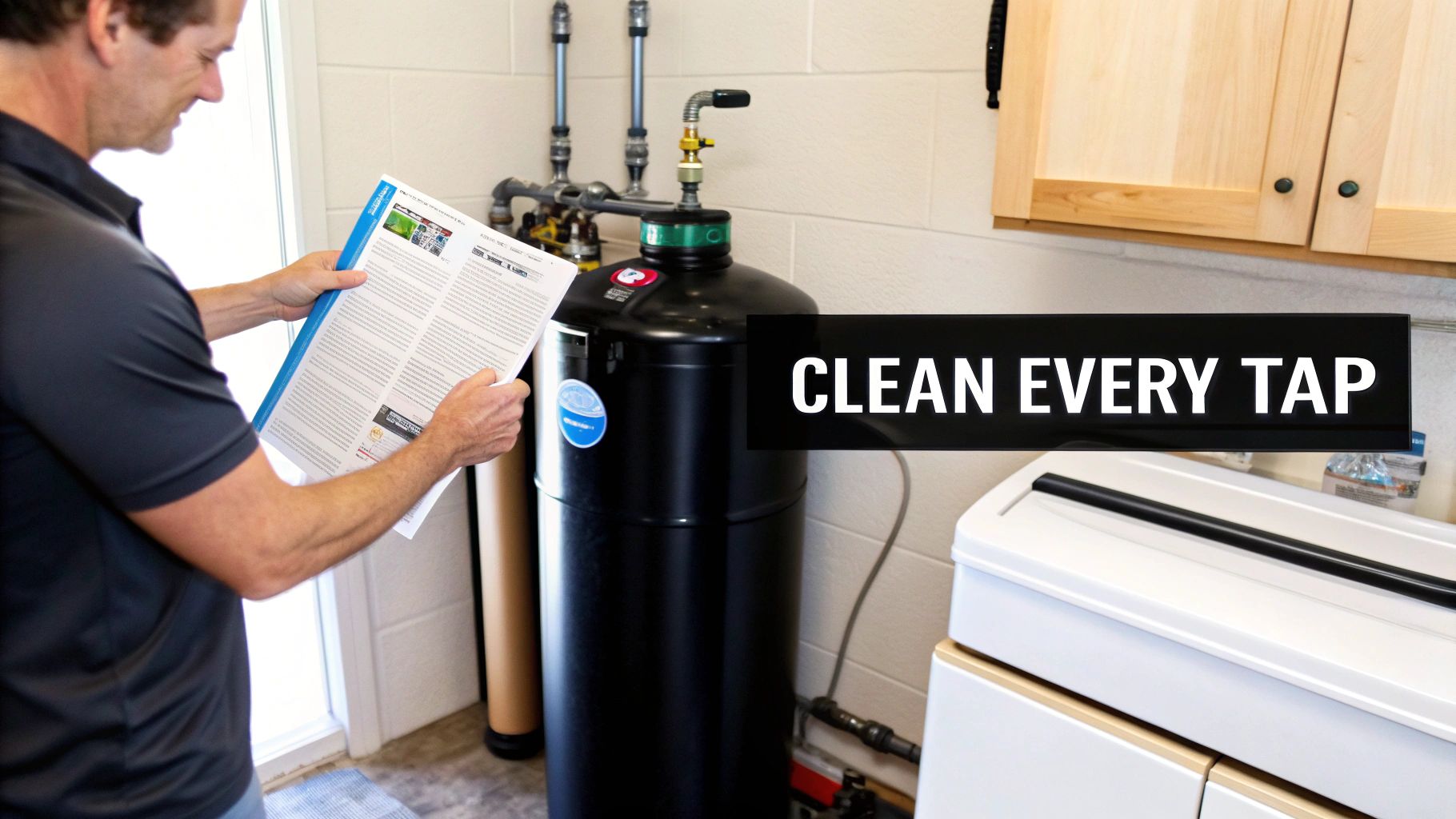
Picking the right whole-house water filtration system is a game-changer. It’s about making sure every drop of water in your home—from the kitchen sink to the shower—is clean and safe. Unlike those little filters you attach to a single faucet, a point-of-entry system acts as a shield for your entire house.
What does that mean for you? Better-tasting water for drinking and cooking, for starters. It also means softer skin and hair after you shower, and your pipes and appliances are protected from the damaging effects of scale and sediment buildup. It’s a complete solution that addresses contaminants before they even get inside, whether you're on city water or a private well.
Why Every Home's Water Is Unique
The first thing to understand is that water quality is incredibly local. It can be completely different from one neighborhood to the next here in Southwest Florida, and sometimes even from one house to its neighbor. Your water might be loaded with chlorine from the municipal treatment plant, full of sediment from aging infrastructure, or contain microbiological contaminants common to well water.
A professional water analysis is your roadmap to perfectly clean water. It moves beyond guesswork, identifying the specific contaminants in your supply so you can invest in a solution that truly works.
Trying to choose a system without this data is like throwing darts in the dark. You might end up with a filter that doesn't touch the real problem, or you could overspend on technology you simply don't need. Our local experts provide a free water test to figure out exactly what’s going on with your water, making sure you get a setup that's just right.
Comparing Key Filtration Solutions
To find the best whole-house system, you need to know the core technologies. Each one is designed to solve a different set of problems, which is why a "one-size-fits-all" filter rarely works well. As you explore the different home water treatment options, you'll see how various technologies can be combined to create a comprehensive solution.
Here’s a quick breakdown of the main players:
| Filtration Type | Primary Function | Ideal Use Case |
|---|---|---|
| Activated Carbon | Removes chlorine, chemicals, and odors | Improving taste and smell of city water |
| Reverse Osmosis | Ultimate purification of most contaminants | Homes needing the highest purity level |
| UV Purifier | Neutralizes bacteria and viruses | Essential for homes with well water |
| Water Softener | Removes hard minerals like calcium | Preventing scale buildup in appliances |
The demand for clean water solutions is surging. The global market, valued at USD 31.3 billion in 2025, is projected to hit USD 53.8 billion by 2031. This isn't just a trend; it's a clear sign that homeowners everywhere are getting serious about their water quality. By working with a local professional, you’re not just buying a product—you're making a smart, effective investment in your home and health.
Comparing Top Water Filtration Technologies
Figuring out which whole house water filtration system is right for you can feel overwhelming, but it gets a lot simpler once you understand the core technologies. Each system is designed to tackle a specific set of problems. The "best" one isn't a one-size-fits-all solution; it's the one that perfectly matches the water coming into your home. A house on city water dealing with chlorine needs a completely different setup than a rural property on a well battling sediment and bacteria.
Let's break down the most common technologies and see how they stack up. We'll go beyond basic feature lists to look at what each system actually does, where it shines, and what you can expect day-to-day. This is the practical knowledge you need to pick a system that delivers genuinely clean, safe water from every single tap.
Activated Carbon Filters: The Taste and Odor Solution
For most homes on municipal water, the biggest complaints are about the distinct taste and smell of chlorine. This is where activated carbon filters come in—they are the gold standard for fixing this problem. The magic happens through a process called adsorption, where chemical contaminants like chlorine, chloramines, and volatile organic compounds (VOCs) literally stick to the massive surface area of the carbon media.
This simple process makes a world of difference in the sensory quality of your water. Showers are more enjoyable without that chemical fog, and a glass of water from the tap tastes crisp and clean. Carbon filters are a foundational piece in many of the best whole house water filtration systems and are often the first line of defense for city-supplied water. To see how they can dramatically improve your water, take a look at the specifics of our professional-grade activated carbon filters.
Sediment Filters: The Unsung Hero
They're often overlooked, but sediment filters are critically important. Think of them as the gatekeepers for your entire plumbing system, designed to trap physical gunk like sand, silt, rust, and other debris that can make water cloudy and wreak havoc on your appliances.
While they don't touch chemical or biological contaminants, their job is non-negotiable. By filtering out these larger particles first, they protect more sensitive (and expensive) equipment downstream, like water softeners or UV purifiers. This prevents them from clogging up and failing prematurely. For any home with older pipes or, especially, one on well water, a sediment pre-filter isn't just a nice-to-have—it's a necessity.
Water Softeners: The Hard Water Eliminator
See that white, chalky buildup on your faucets? Spots on your glassware? Struggling with dry skin and dull hair? You've got hard water, caused by high levels of calcium and magnesium minerals. A water softener tackles this problem head-on using a process called ion exchange.
In a salt-based softener, tiny resin beads grab onto the hard minerals as water flows past, swapping them out for sodium ions. This doesn't just eliminate the scale buildup that destroys water heaters and dishwashers; it also helps soap lather better, leaving your skin feeling smoother and your clothes looking brighter.
Some people worry about adding sodium, but the amount is actually quite minimal. If it's still a concern, salt-free conditioners are an option. Just know that they work differently—they crystallize the minerals to keep them from sticking to surfaces, rather than removing them from the water completely.
Whole House Reverse Osmosis: Ultimate Purity
When your goal is the absolute highest level of purity, nothing beats a whole house reverse osmosis (RO) system. This technology uses a semipermeable membrane, forcing water through it under high pressure and leaving an incredible range of contaminants behind. It's exceptionally good at removing dissolved solids, heavy metals like lead and arsenic, fluoride, nitrates, and so much more.
Whole house RO is often seen as the peak of residential water treatment, delivering water from every faucet that's purer than most bottled brands. It's no wonder that RO technology is a major player in the global market, accounting for about 36% of the market value because of its power to remove up to 99% of dissolved salts and other contaminants. As more homeowners demand total water security, point-of-entry systems like whole house RO are becoming more and more popular in North America.
UV Purifiers: The Microbiological Guardian
For anyone on well water, the threat of microbiological contamination is a serious one. Nasty things like bacteria, viruses, and cysts (like Giardia) can cause major health problems but are completely invisible. A UV purifier is the most effective, chemical-free way to neutralize them.
The system works by exposing water to a powerful ultraviolet lamp inside a chamber. This UV-C light scrambles the DNA of microorganisms, making it impossible for them to reproduce and cause illness. It's a purely physical disinfection method that adds nothing to your water, preserving its taste while providing an essential safety net against waterborne pathogens.
Filtration Technology At a Glance
To give you a clearer picture of how these systems fit different needs, here’s a quick-reference comparison. Keep in mind that for many homes here in Southwest Florida, the best solution is often a combination of these technologies, custom-configured by a professional.
| Filtration Type | Primary Function | Best For Removing | Ideal Scenario |
|---|---|---|---|
| Activated Carbon | Adsorbs chemicals & improves aesthetics | Chlorine, chloramines, VOCs, bad tastes, and odors | Homes on municipal water with chemical smells or tastes. |
| Sediment Filter | Captures physical debris | Sand, silt, rust, and other suspended particles | Essential first stage for well water or homes with aging pipes. |
| Water Softener | Removes hardness minerals | Calcium and magnesium that cause scale buildup | Households with hard water stains, soap scum, and appliance damage. |
| Reverse Osmosis | Provides ultimate purification | Dissolved solids, heavy metals, fluoride, salts, and more | For homeowners seeking the highest possible water purity. |
| UV Purifier | Disinfects water | Bacteria, viruses, cysts, and other microorganisms | A critical safety measure for any home using a private well. |
Choosing the right technology always starts with knowing what’s actually in your water. Once you identify the specific challenges, you can work with a water treatment expert to design a system that will deliver clean, safe, and great-tasting water for years to come.
How to Select the Right System for Your Home
Choosing the perfect whole-house water filtration system isn't about buying the most expensive gadget on the shelf. It’s about matching the right technology to your home’s specific water profile. Think of it as a custom solution, because what works for your neighbor might not be what you need. The goal is to make a smart, informed decision that guarantees clean, safe, and great-tasting water from every single tap.
The entire process hinges on one critical first step: understanding what’s in your water.
You can't fix a problem you don't know you have. Many of the most concerning contaminants—things like lead, arsenic, or certain bacteria—are completely tasteless, odorless, and invisible. That's why a professional water quality test is non-negotiable. This analysis gives you a detailed breakdown of your water's chemistry, revealing everything from simple nuisances like chlorine and hardness minerals to hidden threats.
Don't guess, test. A professional water analysis is your roadmap to perfectly clean water.
Here at Water Medic of Cape Coral, we make this crucial step as easy as possible. We provide a free water test for homeowners across Southwest Florida, giving you the hard data you need to choose a system that actually targets your specific issues. This scientific approach takes all the guesswork out of the equation and ensures your investment pays off.
Water Quality Is Your Starting Point
The results from your water analysis will point you directly to the right type of filter. For example, if your test shows high levels of chlorine and chloramines from the city’s treatment plant, an activated carbon system is a must. If it uncovers a lot of sand, silt, or rust, then a sediment pre-filter is essential to protect the more complex components of your system down the line.
For those on well water, a test is even more critical. Wells can be susceptible to microbiological contaminants like E. coli or other bacteria, which absolutely require a UV purifier for proper disinfection. Your well might also have high iron that stains your fixtures or a level of dissolved solids that can only be tackled by more advanced purification. If you’re looking for the highest level of purity for these kinds of contaminants, exploring an option like a whole house reverse osmosis system becomes the next logical step.
This simple decision tree shows how your water source is a primary factor in determining the right filtration technology.
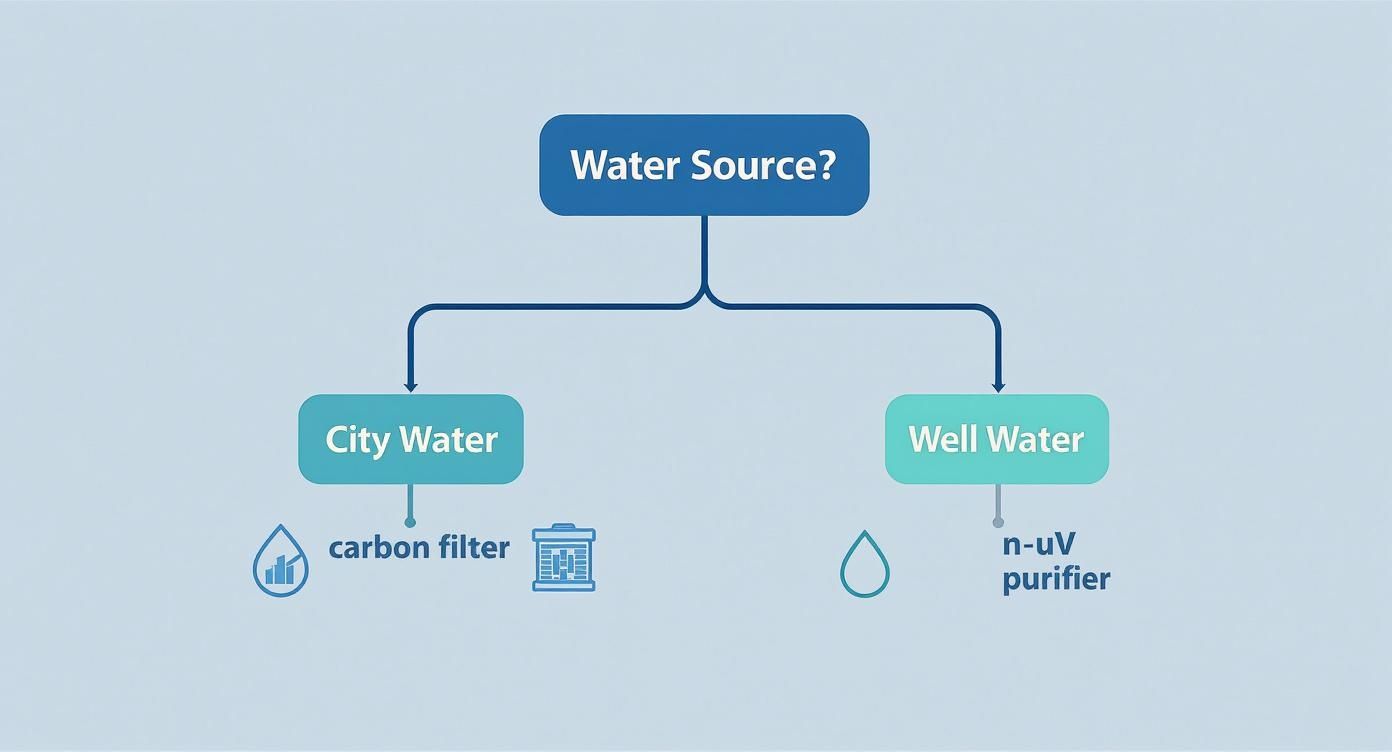
As the graphic shows, city water issues often revolve around chemicals added during treatment, while well water concerns frequently start with the need for microbiological safety.
Calculating Your Home's Flow Rate
Once you know what you need to filter out, the next piece of the puzzle is figuring out how much water your family uses at any given time. This is called the flow rate, and we measure it in gallons per minute (GPM). If you choose an undersized system, it won't be able to keep up with your household's demand, and you'll experience a frustrating drop in water pressure every time someone flushes a toilet while the dishwasher is running.
To get a rough idea of your GPM needs, think about your family's daily routine:
- Showers and Faucets: A standard showerhead uses about 2.5 GPM.
- Appliances: A dishwasher typically uses 2 GPM, and a washing machine can pull 3-5 GPM.
- Outdoor Use: Don't forget sprinklers or garden hoses, which can add a significant load.
A professional can help you accurately calculate your home’s peak demand. This ensures the system we recommend can handle your busiest mornings without missing a beat, which is a key part of finding the best whole house water filtration systems for your real-world needs.
Evaluating Maintenance and Long-Term Costs
The sticker price is just the beginning. To get a true picture of the investment, you have to consider the ongoing maintenance requirements and long-term costs. Different systems have very different upkeep needs.
For instance, sediment and activated carbon filters require you to swap out the cartridges periodically, usually every 6 to 12 months. A UV purifier's lamp needs to be replaced annually to maintain its germ-killing effectiveness. Water softeners, of course, need a steady diet of salt. Knowing these recurring tasks and expenses ahead of time helps you budget properly and keeps your system running at peak performance for years.
Finally, always look at the manufacturer's warranty. A solid warranty is a great sign of a well-built product and gives you peace of mind that your investment is secure. Our experts at Water Medic will walk you through all of these details, helping you land on a system that’s not just effective, but also practical for your budget and lifestyle.
Getting a Handle on System Costs and Installation

Putting in a whole-house water filtration system is a major upgrade for your home and health. Naturally, you're going to have questions about the price tag and what the installation actually involves. Getting a clear picture of the costs helps you budget properly and feel good about the decision you're making. The price isn't just a number—it’s a reflection of the technology inside, the system's capacity, and the long-term value it offers.
The upfront investment can be anywhere from a few hundred dollars for a simple sediment filter to several thousand for a top-tier, multi-stage unit like a whole-house reverse osmosis system. The final cost really depends on the complexity of the filter, its size and flow rate, and the brand's reputation for building things to last.
Breaking Down the Investment
The cost of the equipment itself is just one piece of the puzzle. To really grasp the value, you have to look at it as a long-term investment in your home's plumbing and your family's health. It’s a trend we're seeing everywhere—the global water treatment systems market was valued at about USD 45 billion in 2025 and is expected to nearly double to USD 91.4 billion by 2034. This boom is driven by homeowners looking for a single, reliable solution to guard against contaminants from aging city pipes and tricky well water.
When you invest in a quality system, you're buying more than just clean water; you're buying protection. A professionally installed system pays for itself in a few key ways:
- Appliance Protection: It stops the scale buildup that kills water heaters, dishwashers, and washing machines prematurely.
- Reduced Consumables: You'll spend far less on bottled water and those little faucet-mounted filters that need constant changing.
- Plumbing Longevity: By removing corrosive minerals and abrasive sediment, it helps protect your home's entire plumbing network from the inside out.
We know this is a significant home improvement, which is why we offer flexible ways to manage the cost. You can learn more about our straightforward water system financing options to get the best protection for your home without waiting.
The Professional Installation Process
Sure, you might be tempted to go the DIY route, but professional installation is really the only way to ensure your system works correctly and safely from the get-go. A small mistake during setup can cause leaks, a drop in water pressure, or even void the manufacturer's warranty. Our process is designed to be completely seamless and stress-free.
A professional installation isn't just an added expense; it's an investment in your system's performance, longevity, and your own peace of mind. It guarantees your filter is set up specifically for Southwest Florida's unique water challenges.
Our technicians are experts and handle every detail with precision. Here’s a quick rundown of what to expect when we arrive:
- Site Assessment: First, we find the ideal spot for the system—usually where the main water line enters your home—making sure it’s accessible for future filter changes.
- Plumbing Integration: Our licensed plumbers will carefully cut into the main line, installing bypass valves and the right fittings to connect the filtration unit seamlessly.
- System Activation and Testing: Once it’s all hooked up, we'll flush the system, double-check for any leaks, and test your water pressure to make sure everything is flowing perfectly.
- Final Walkthrough: Before we leave, we’ll walk you through how your new system operates, explain the simple maintenance schedule, and answer any questions you have.
This careful approach ensures your system delivers on its promise of clean, safe water for many years. To get a clear idea of what it would cost for your home, just give our team a call for a free, no-obligation quote.
Why Professional Installation Is Essential
Once you’ve picked out the perfect whole-house water filtration system, you’re at the most critical step: installation. It’s tempting to think of it as a weekend DIY project, but this is one job where calling in a pro is non-negotiable. We're not talking about hooking up a simple faucet filter here.
These systems tie directly into your home's main water supply line. One small mistake—a poorly sealed joint or a misaligned pipe—isn't just a minor drip. It can quickly escalate into a full-blown flood, causing thousands of dollars in damage to your floors, drywall, and even your home's foundation.
Avoiding Costly DIY Disasters
We've seen the aftermath of well-intentioned DIY installs, and the problems go far beyond a puddle on the floor. One of the most common complaints is a sudden, dramatic drop in water pressure across the entire house. A strong shower becomes a weak trickle, all because the system was plumbed incorrectly or wasn't sized properly for the home's demand.
There's another catch, too. Nearly every manufacturer's warranty has a clause stating the system must be installed by a licensed professional. If you install it yourself, you’ve likely just voided the warranty. So, if the unit fails down the road because of an installation error, the cost of repair or replacement is entirely on you.
The Professional Advantage: Precision and Peace of Mind
Hiring an experienced team like Water Medic of Cape Coral turns a high-stakes gamble into a sure thing. Our technicians are more than just plumbers; they’re water treatment specialists who understand Southwest Florida’s unique plumbing codes and water quality challenges inside and out.
We make sure your new system is integrated seamlessly, guaranteeing leak-free performance. But just as importantly, we calibrate it specifically for your home’s water chemistry and flow rate needs. This detailed setup ensures your filter works at its absolute best, giving you the clean, safe water you paid for without sacrificing water pressure. To get a better sense of the stakes, it's worth understanding the broader risks of DIY home installations when dealing with complex home systems.
Think of professional installation not as an added expense, but as an insurance policy for your system's performance and your home's safety. It’s about getting it done right the first time.
Our entire process is built around doing things correctly and transparently. From the initial assessment to the final pressure test, we handle every detail so you don't have to worry. That professional oversight is what separates a reliable, high-performing system from a major headache waiting to happen.
Ultimately, choosing a professional installer is about buying peace of mind. It’s knowing that your investment is protected and will work exactly as it should for years, safeguarding both your family’s health and your property. When you're ready to get it done right, we're here to help. Schedule your professional installation with our certified experts today.
Frequently Asked Questions About Water Filtration
It’s completely normal to have a lot of questions when you’re thinking about a big home improvement like a whole-house water filtration system. Getting clear, honest answers is the best way to feel good about your decision. We’ve pulled together the questions we hear most often from our customers right here in Southwest Florida to help you understand the process and the amazing difference clean water can make.
How Do I Know if I Need a Whole House Water Filter?
Sometimes, the signs are obvious. You might see those chalky hard water stains on your faucets, smell chlorine every time you turn on the shower, or notice your water just tastes… off. But the scary truth is that many of the worst contaminants—like lead, certain chemicals, or bacteria in well water—are completely invisible and have no taste or smell.
The only way to know for sure what’s flowing through your pipes is to get a professional analysis. That’s why we offer a complimentary water test; it gives us a precise snapshot of your water quality. From there, we can recommend a system that targets your specific problems, so you’re not paying for something you don’t need.
Will a Whole House Filter Kill My Water Pressure?
This is a huge and very valid concern. The short answer is no—a properly selected and installed system will have a minimal impact on your water pressure, so much so that you likely won't even notice it. The secret is all in the sizing. We carefully calculate your home’s peak demand, measured in gallons per minute (GPM), to make sure your system can handle multiple showers, the dishwasher, and the washing machine all running at once without skipping a beat.
A noticeable drop in water pressure is almost always a red flag for an undersized system or a botched DIY installation. This is exactly why getting an expert to handle the setup is so critical for keeping the water flowing strong.
What’s the Ongoing Maintenance and Cost?
The upkeep and costs really depend on the type of system you choose, but they are generally pretty manageable, especially when you weigh them against the benefits. Here’s a quick breakdown of what to expect:
- Carbon and Sediment Filters: You'll need to swap out the filter cartridges every 6-12 months to keep them working effectively.
- Water Softeners: The main task here is topping off the brine tank with salt every so often.
- UV Purifiers: The powerful UV lamp must be replaced once a year to guarantee it's still neutralizing nasty microbiological threats.
These are all pretty simple tasks, but they are absolutely essential for protecting your investment and ensuring your system performs as it should. When we do a consultation, we’ll lay out a clear maintenance schedule, and we also have service plans that take all the work and worry off your plate.
Can I Just Install One of These Systems Myself?
While it can be tempting to go the DIY route to save a few dollars, we strongly advise against it. Installing one of the best whole house water filtration systems means cutting into your home's main water line—a job that should only be done by a licensed, experienced plumber.
One small mistake can lead to a huge disaster, from major leaks and thousands in water damage to voiding your system's warranty. Our professional installers make sure your system is hooked up correctly, meets all local plumbing codes, and runs at peak efficiency. That professional touch is what guarantees you get the clean water and the peace of mind you're paying for.
Ready to take the first step toward clean, safe water for your entire family? The expert team at Water Medic of Cape Coral is here to give you the straight answers and proven solutions you need. Contact us today to schedule your free, no-obligation water test and find the perfect system for your home. Learn more at https://watermedic.com.