
What Is The Best Water For Baby Formula In Southwest Florida
When it comes to preparing baby formula, the single best choice is purified water, like distilled or reverse osmosis (RO) water. It's the only way to guarantee the water is free from potentially harmful contaminants. While your tap water might be safe enough for you, a baby's developing system is far more sensitive, making purification the most reliable and stress-free option.
The Hidden Ingredient In Your Baby's First Meals
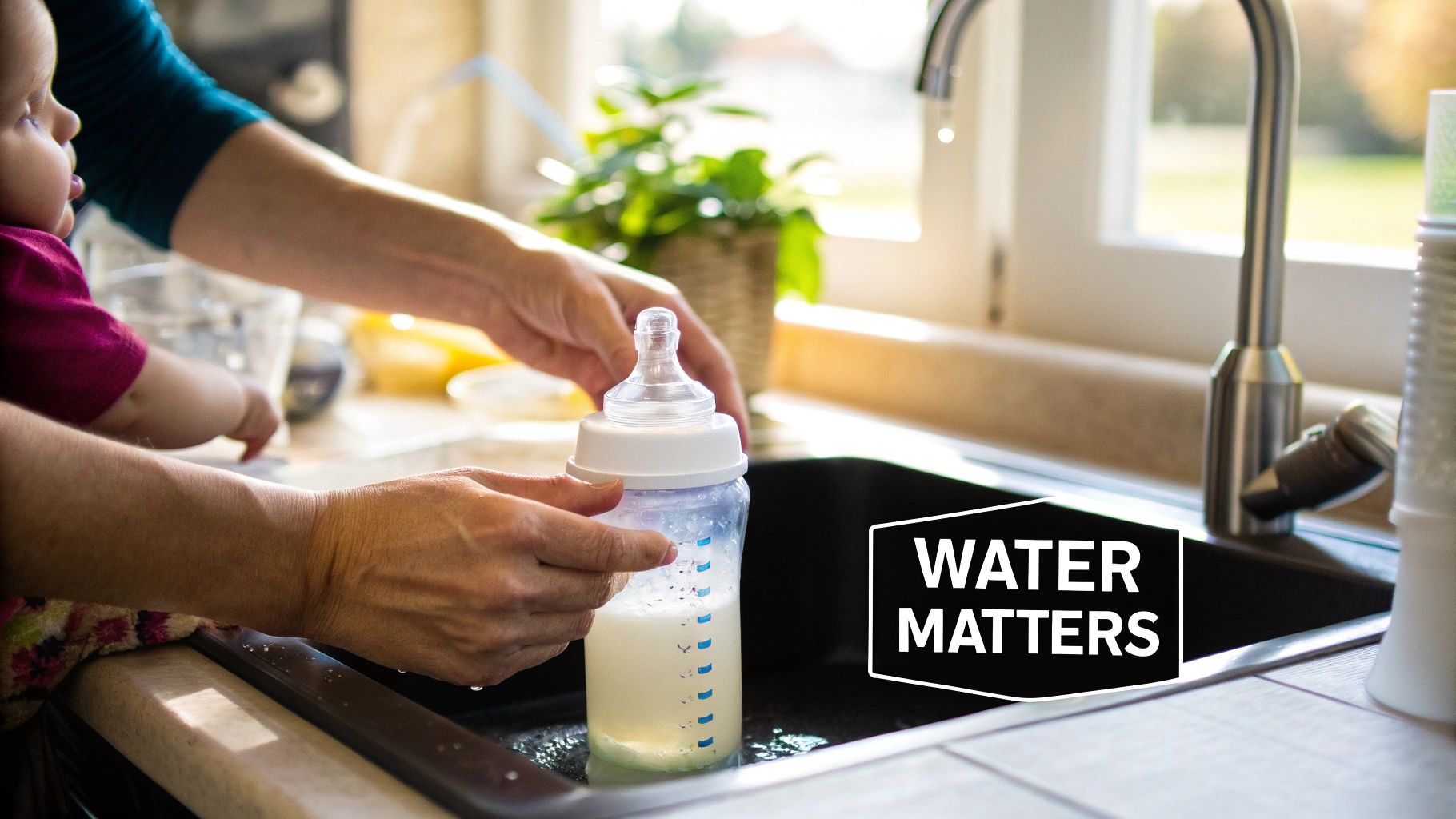
You’ve researched the safest car seat, picked out the perfect crib, and spent hours deciding on the right infant formula. But what about the main ingredient you'll mix it with every single day? For many new parents, the water used for formula is an afterthought, but it's one of the most critical components of your baby's nutrition.
This guide is here to change that. We'll explore why the type of water you choose is so essential for your infant’s health. Of course, this is just one piece of the puzzle, and understanding your feeding choices is the first step. For parents who use formula, ensuring the water is pure is non-negotiable.
Why Your Water Choice Matters
Here in Southwest Florida, our water sources—whether from a municipal supply or a private well—can contain contaminants that pose a hidden risk. Just because your water looks and tastes fine doesn't mean it's safe for a baby. Their tiny bodies and immature immune systems are incredibly vulnerable to substances that adults can easily process.
Peace of mind comes from knowing that every bottle you prepare is made with the purest possible ingredients. This starts with addressing the most foundational element: the water.
Heavy metals like lead and arsenic are a real concern. Even if your city's water meets EPA standards for adults, those levels may not be safe for an infant. This risk is even greater for homes with well water, which isn't regulated by the EPA at all and can have higher concentrations of naturally occurring arsenic, a known issue in some parts of Southwest Florida.
A Proactive Approach to Safety
With so many variables and potential risks, the most secure path forward is to use purified water for every bottle. This simple step removes the guesswork and ensures contaminants are filtered out long before they reach your baby.
At Water Medic, we believe every parent deserves complete confidence in their water. This guide will walk you through why a reverse osmosis system is the gold-standard solution for providing consistently pure, safe water for your entire family, starting with your baby's very first bottle.
Understanding Your Southwest Florida Water Source
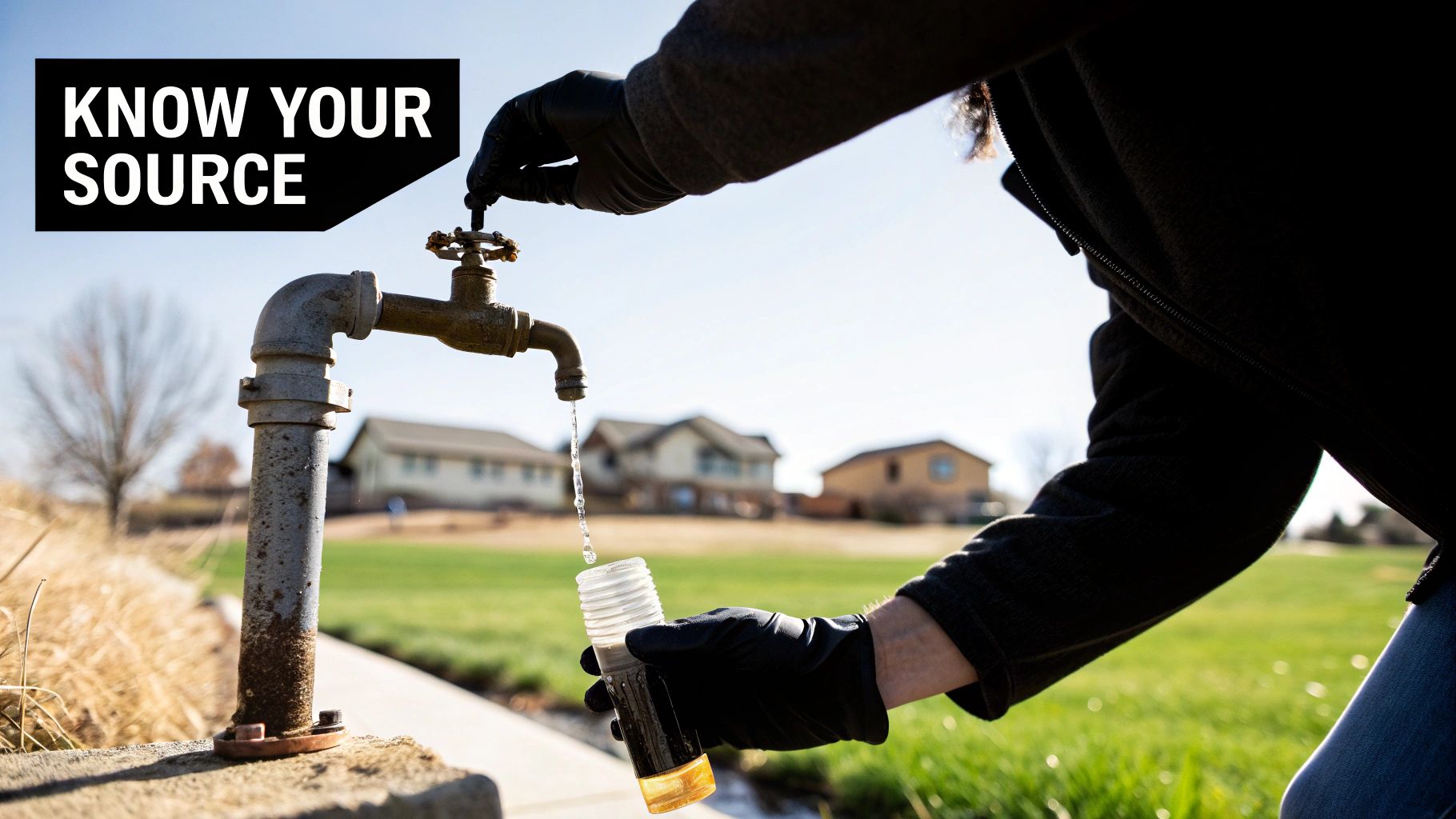
Before you can be confident about the water going into your baby’s formula, you have to know its story. Where does it come from? Here in Southwest Florida, your tap water flows from one of two places: a city’s municipal supply or a private well on your property.
Each source has its own set of challenges, and the path your water takes to the tap is often more complicated than people realize. Pinpointing your water's origin is the first, most important step, because what makes city water safe isn't always enough for well water, and vice-versa.
The Realities of City Water
If you live in a place like Cape Coral or Fort Myers, your water is handled by the city. Public utilities treat it to meet federal standards set by the Environmental Protection Agency (EPA). While that offers a decent baseline of safety, it’s not the whole picture, especially when you have an infant in the house.
The real wild card is the journey from the treatment plant to your home. Water can travel through miles of old pipes, some of which may still contain lead. These aging pipelines can leach contaminants into the water long after it was declared "clean."
Then there are the additives. Municipalities use chemicals like chlorine for disinfection and often add fluoride for dental health. While well-intentioned, many parents want these removed before mixing formula. Too much fluoride, for example, can cause dental fluorosis, a condition that creates faint white marks on developing teeth.
The Responsibility of Private Well Water
Living in a more rural part of Southwest Florida or on a property with a private well puts the responsibility for water safety squarely on you. The EPA doesn't regulate private wells. That means no one is testing your water but you.
This lack of oversight is a huge deal for families with babies. Your well water is a direct reflection of the land around it, which introduces some very local risks.
- Agricultural Runoff: If you're near agricultural areas, runoff from fertilizers can seep into the groundwater, leading to high levels of nitrates.
- Septic System Proximity: In established neighborhoods, especially where homes are closer together, a neighbor's failing septic system can leak harmful bacteria like E. coli right into your water source.
- Natural Deposits: Florida's geology is unique. Naturally occurring elements, including arsenic, can sometimes be found in the groundwater that feeds private wells.
When you have a private well, you are your family's water manager. Regular, professional testing isn't just a good idea—it's essential for your baby's health.
The risks tied to well water are so specific to your location, and understanding them is everything. If you're a well owner, you can find answers to many common questions about maintenance and safety in our guide on frequently asked questions about well water systems.
Ultimately, whether you're on city or well water, you can't see the risks hiding in your tap. The only way to know for sure what’s in your water is to get it professionally tested. A detailed analysis from Water Medic gives you the clarity to make the safest choice for your baby and helps you find a solution that targets the exact contaminants in your supply.
Getting to Know Your Water: What's Really in Your Tap?
Knowing whether your water comes from a city line or a private well is just the first step. The real question is, what’s in that water? For an infant’s developing body, certain contaminants—many of which are common right here in Southwest Florida—pose a serious risk.
These aren't just abstract threats you read about online; they're real, tangible dangers that can have lasting effects. When you're trying to choose the best water for baby formula, understanding these specific contaminants isn't just a good idea, it's essential. Let's break down the four biggest concerns: nitrates, lead, bacteria, and fluoride.
The Threat of Nitrates and Blue Baby Syndrome
Nitrates are tricky. You can't see, smell, or taste them, yet they're one of the most serious risks for infants under six months old. Here in Southwest Florida, with our heavy agriculture and widespread use of septic systems, nitrates can easily seep into the groundwater, affecting both city supplies and private wells.
When a baby drinks water high in nitrates, their tiny body converts it into nitrites. This is where the danger lies. Nitrites mess with the blood's ability to carry oxygen, leading to a frightening condition called methemoglobinemia, often called "blue baby syndrome." The baby's skin can literally take on a bluish hue, and in severe cases, it can be fatal.
Imagine this all-too-common SWFL scenario: you mix formula using water from your well, not realizing it contains nitrates above 10 mg/L. That's the danger level flagged by both the EPA and the American Academy of Pediatrics since the 1970s, when "blue baby syndrome" cases were a major concern in rural areas. The sandy soil here makes it easy for nitrates from fertilizers and septic leaks to contaminate our water, potentially reducing a baby's blood oxygen by up to 50%.
And here's a crucial point most people miss: boiling the water actually makes it worse. It concentrates the nitrates by 20-30%. You can learn more about the science behind safe water for formula and why this risk is so significant.
The only proven way to get rid of nitrates is through advanced filtration. A whole-house reverse osmosis system is designed to specifically target and eliminate them, so you can be confident they never end up in your baby's bottle.
Lead Contamination From Aging Pipes
Lead is a powerful neurotoxin, and its impact on a child's brain and nervous system can be devastating. Let me be clear: there is no safe level of lead exposure for children. Even tiny amounts can contribute to developmental delays, learning disabilities, and behavioral issues.
The surprising truth is that lead contamination usually doesn't come from the water source itself. It comes from the plumbing that delivers the water to your tap. Many older homes across Southwest Florida still have lead service lines, lead-based solder joining copper pipes, or older brass fixtures that contain lead. As water sits in these pipes, lead can leach out.
Because you can't see, taste, or smell lead, you can't just hope it isn't there. Proactive filtration is the only reliable defense. A whole-house reverse osmosis system acts as a final, impenetrable barrier, stripping lead from the water the moment it enters your home. This ensures every single tap—from the kitchen sink to the bathtub—delivers purified, safe water.
Before we move on, it helps to see how these contaminants stack up. This chart gives a clear overview of the common risks we face here in Southwest Florida.
Infant Formula Water Contaminant Risk Chart
| Contaminant | Common Source in SWFL | Risk to Infants | EPA Safe Level |
|---|---|---|---|
| Nitrates | Agricultural runoff (fertilizers), septic tank leakage, animal waste | Methemoglobinemia ("Blue Baby Syndrome"), which severely limits the blood's ability to carry oxygen. Most dangerous for infants under 6 months. | 10 mg/L |
| Lead | Leaching from old pipes (lead service lines, solder), brass fixtures. Common in homes built before 1986. | Neurotoxin. Can cause permanent brain damage, learning disabilities, developmental delays, and behavioral problems. | Zero (Action Level: 15 ppb) |
| Bacteria (Coliform, E. coli) | Fecal contamination from septic systems, agricultural runoff, or compromised well casings. | Gastrointestinal illnesses (diarrhea, vomiting), which can lead to severe dehydration. Can be life-threatening for infants. | Zero |
| Fluoride | Added to municipal water supplies; naturally occurring in some groundwater. | Dental Fluorosis (white spots or streaks on developing permanent teeth) when intake is excessive. | 4.0 mg/L (MCL) |
This table isn't meant to scare you, but to empower you. Knowing exactly what you're up against is the first step toward creating a truly safe home environment for your baby.
Unseen Bacteria in Well Water
For the thousands of families in Southwest Florida who rely on private wells, bacterial contamination is a constant and legitimate worry. Unlike city water, your well water isn't disinfected unless you've installed a system to do it. This leaves it wide open to contamination.
The two main culprits we test for are total coliform bacteria and E. coli.
- Total Coliform: These are common bacteria found in the environment. While not always harmful on their own, finding them in your water is a red flag that more dangerous pathogens could have found a way in.
- E. coli: This is the one you really don't want to see. E. coli comes directly from human and animal waste. Its presence is a clear sign of fecal contamination, meaning your water could be carrying nasty, disease-causing organisms.
Sure, boiling water kills bacteria, but who has time for that every single day? It's an impractical chore for a busy parent. More importantly, boiling does absolutely nothing for chemical contaminants like nitrates or lead. You need a complete solution. A good system not only removes the dangerous chemicals but can be paired with UV sterilization to eradicate 99.9% of bacteria and viruses, offering total protection.
Fluoride and Dental Fluorosis
Many municipal water supplies add fluoride to help prevent cavities. While this is great for older kids and adults, too much fluoride can be a problem for infants, leading to a cosmetic condition called dental fluorosis. It causes faint white streaks or spots to form on a baby’s permanent teeth while they are still developing in the gums.
The issue is that most infant formula powders already contain fluoride. If you mix that with fluoridated tap water, your baby could easily get more than the recommended amount. Even the American Dental Association recognizes this and suggests parents who are concerned about fluorosis can use fluoride-free water for formula.
By choosing the right water, you gain complete control over your baby’s fluoride intake. Reverse osmosis is one of the most effective ways to remove fluoride from water, letting you decide exactly what goes into your baby's body.
Evaluating Your Options For Safe Formula Preparation
Once you understand what might be lurking in your tap water, the next question is obvious: what do you do about it? As a parent, you need a safe, practical, and reliable way to prepare your baby's formula. Let's walk through the most common choices—boiling, buying bottled water, and installing a filtration system—to figure out which one offers true peace of mind.
The Problem with Boiling Water
Many pediatricians and parents have traditionally relied on boiling as the go-to safety measure. It's a method passed down through generations, but it’s crucial to understand what it does and, more importantly, what it doesn't do.
Boiling is fantastic at one thing: killing biological contaminants. If you're concerned about bacteria or viruses, bringing water to a rolling boil for one minute will neutralize them.
Here's the catch: boiling does absolutely nothing to remove chemical contaminants like lead, nitrates, or fluoride. In fact, it makes the problem worse. As some of the water evaporates into steam, the concentration of these harmful chemicals in the remaining water actually increases. This means a well-intentioned safety step could accidentally make the water more dangerous for your baby.
The Hidden Costs and Hassles of Bottled Water
Frustrated with the uncertainty of tap water, many families simply switch to bottled water. It seems like a pure, simple solution, but this path comes with its own significant drawbacks that really add up over time.
First off, there's the relentless cost. A family can easily spend hundreds of dollars a year on bottled water just for making formula. Then there’s the environmental toll, with countless plastic bottles ending up in our landfills and oceans.
But the biggest issue is that not all bottled water is the same. Many popular brands are just filtered municipal water, and their quality can vary. If you go this route, you have to become a label detective. Look for water that is explicitly labeled as distilled or purified through reverse osmosis to ensure it's truly free from the contaminants we've discussed.
Relying on bottled water is a short-term fix. It’s expensive, wasteful, and still requires you to be vigilant about checking labels to get the quality your baby deserves.
Beyond knowing your water source, it's always a good idea to seek out expert advice on water quality to better understand the bigger picture for your home. This can help you move from temporary fixes to a lasting solution.
The flowchart below breaks down the initial questions you should ask, whether your water comes from a city supply or a private well.
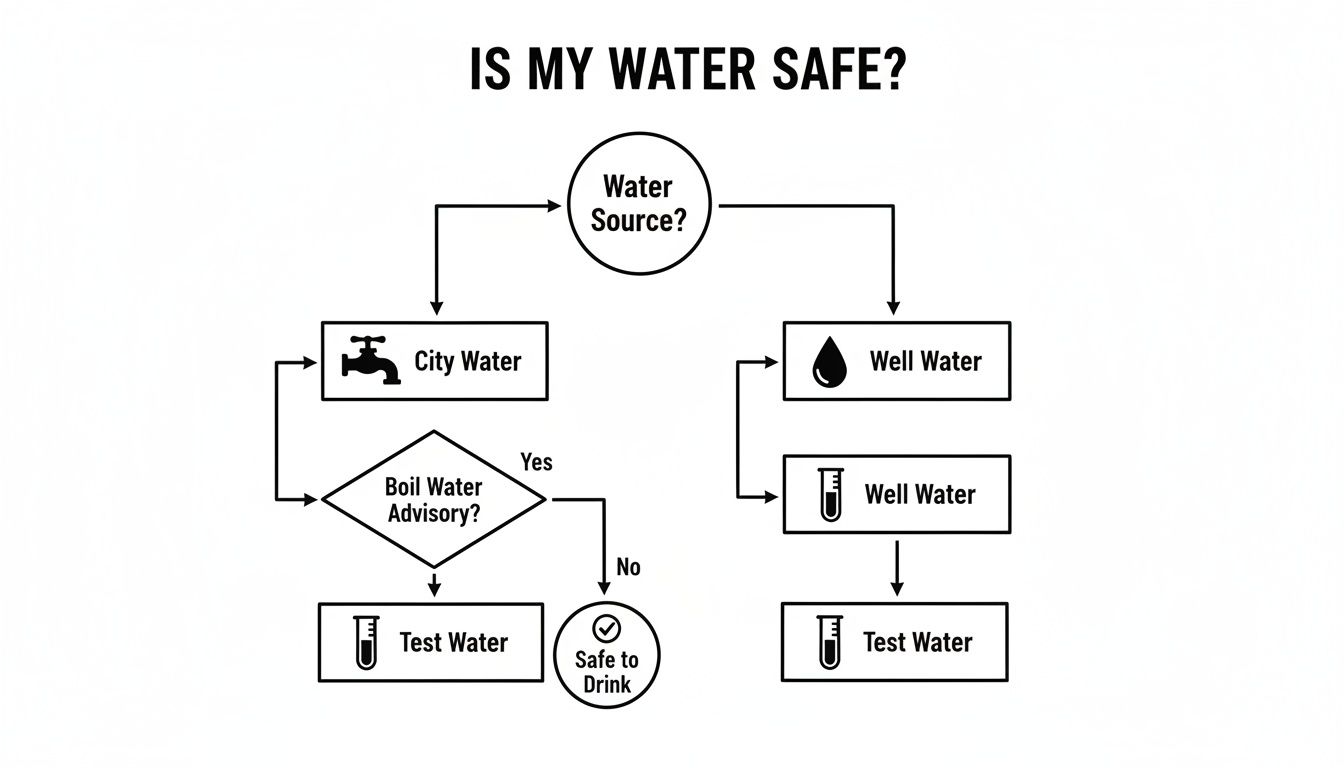
This visual guide drives home a critical point: no matter where your water comes from, the only way to be 100% certain of its safety is to have it professionally tested.
The Gold Standard: Water Filtration
When you stack up the options, in-home water filtration quickly emerges as the most reliable, cost-effective, and convenient long-term solution. It puts control back in your hands, ending the daily guesswork and worry.
Among the different filtration methods, Reverse Osmosis (RO) is widely considered the gold standard for preparing baby formula. An RO system works by pushing water through a semi-permeable membrane that has microscopic pores, filtering out impurities at a molecular level.
This process is incredibly thorough, capable of removing over 95% of total dissolved solids. This includes the very contaminants that pose the biggest risks to infants:
- Lead from aging pipes
- Nitrates from fertilizer runoff
- Excess fluoride from municipal treatment
- Harmful bacteria and viruses
- Arsenic and other heavy metals
Investing in an RO system is really an investment in your child’s health and your own peace of mind. Instead of the daily ritual of boiling water or lugging home cases of plastic bottles, you get pristine, purified water on demand, right from your kitchen tap.
Here at Water Medic, we install advanced RO systems designed to handle the specific water challenges we see in Southwest Florida. We offer two main solutions to fit your family’s needs. One is a point-of-use system installed right under your kitchen sink, which is perfect for providing purified water for drinking and cooking. You can learn more about the convenience of an under-sink reverse osmosis system on our website. The other is a whole-house system that delivers purified water to every faucet in your home, offering total protection for your family.
The Ultimate Solution: A Whole-House Reverse Osmosis System
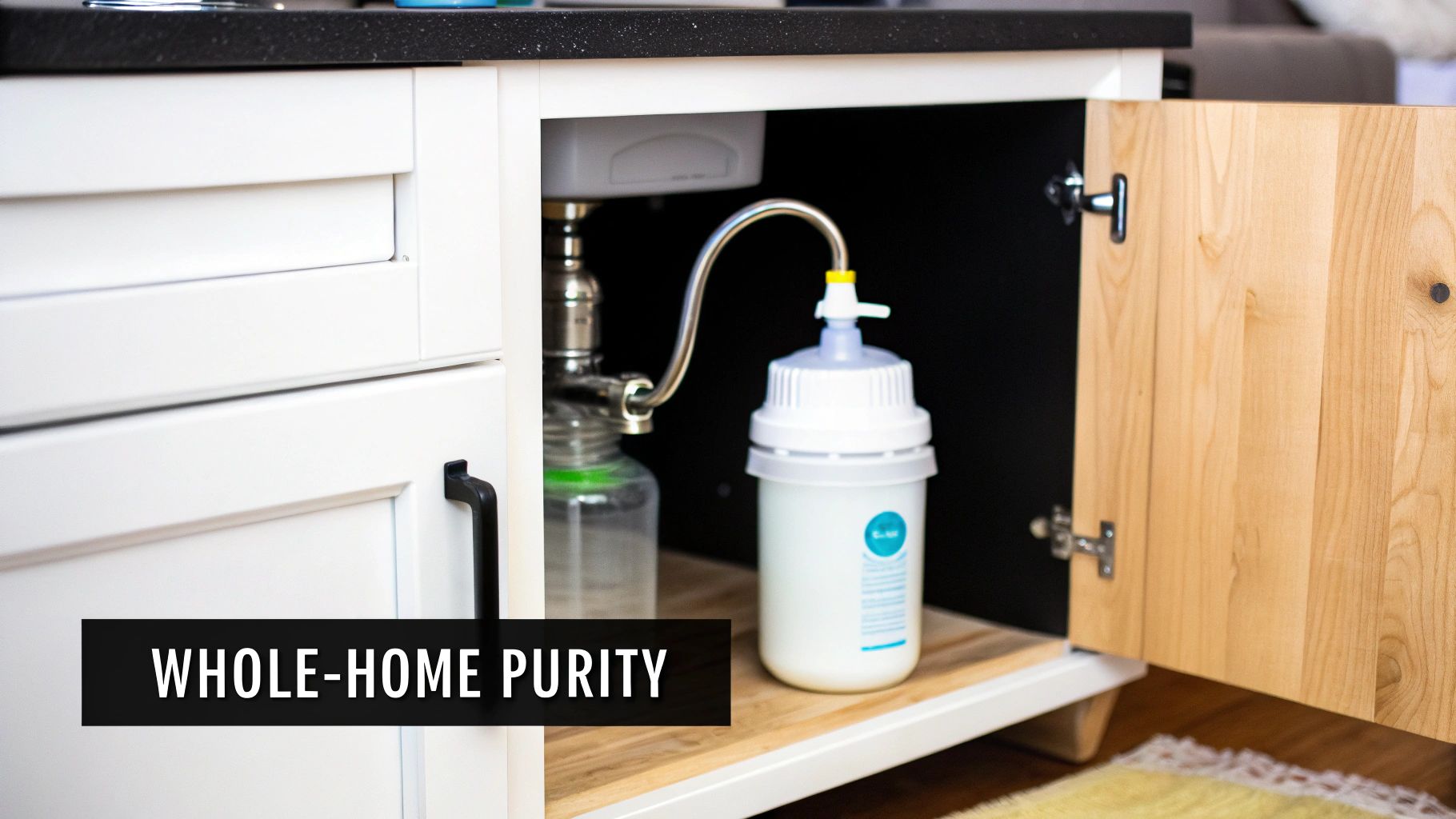
While a filter at the kitchen sink is a great start for drinking water and formula, a whole-house reverse osmosis (RO) system takes your family’s protection to a whole new level. It’s the definitive answer for parents who want to ensure that every single drop of water coming into their home is pure, safe, and clean. This approach isn't just about finding the best water for baby formula; it's about creating a healthier living environment for everyone you love.
Think about the peace of mind you’d have knowing the water you use to bathe your baby is completely free from harsh chemicals that can irritate their delicate skin. When you wash their bottles, toys, and clothes, you can trust that no contaminants are left behind. This is the comprehensive security that a professionally installed whole-house system from Water Medic of Cape Coral provides.
Beyond The Baby Bottle: Total Home Protection
The benefits of purifying your entire water supply are immense, touching nearly every part of your daily life. It’s a genuine investment in your family’s well-being and the longevity of your home’s infrastructure.
When you cook, the pure water lets the natural flavor of your food shine through, free from any hint of chlorine or other chemicals. Even your morning coffee tastes cleaner. On top of that, a whole-house RO system is one of the best lines of defense for your plumbing and appliances.
Here are just a few of the advantages we see every day:
- Healthier Skin and Hair: Bathing in purified water can significantly reduce skin irritation and dryness, a common frustration for infants and anyone with sensitive skin.
- Appliance Longevity: Hard water minerals and sediment are notorious for causing scale buildup in water heaters, dishwashers, and washing machines, which kills their efficiency and shortens their lifespan. An RO system eliminates these damaging elements.
- Spotless Dishes and Fixtures: Say goodbye to those frustrating water spots on your glassware and the chalky mineral buildup on your faucets and shower doors.
A whole-house system is more than just a water filter; it’s an upgrade to your family's quality of life. It delivers a constant, reliable source of pure water to every tap, eliminating worry and ensuring safety throughout your home.
A Seamless Process, Tailored For Southwest Florida
We get it—the idea of installing a major system can feel overwhelming. That’s why we’ve spent years refining our process to be as straightforward and transparent as possible. With over 25 years of experience tackling the unique and often challenging water conditions here in Southwest Florida, our team knows exactly how to design and install the right system for your home.
It all starts with a simple conversation. We listen to your concerns, then conduct a free, comprehensive water analysis to pinpoint the specific contaminants in your supply. This data-driven approach means we can recommend a solution that’s perfectly matched to your needs, ensuring you get maximum protection and value. Our technicians aren’t just installers; they are local water quality experts dedicated to impeccable service. To see how the technology works, you can get detailed information on our whole-house reverse osmosis systems and their benefits.
Your Invitation To Pure Water
Don’t spend another day wondering about what’s in your water. Securing the best water for baby formula is an important first step, but a whole-house RO system can offer so much more. It’s about building a foundation of health and security for the people who matter most.
Contact Water Medic of Cape Coral today to schedule your complimentary water analysis. Let our family help protect yours with a solution that brings pure, safe water to every single faucet in your home.
Common Questions About Water For Baby Formula
Even after you've done your research, a few lingering questions are completely normal. When it's about your baby's health, you want absolute certainty. Here are some of the most common questions we hear from families across Southwest Florida, answered with our hands-on experience.
Is Nursery Water Really Necessary For My Baby's Formula?
Many new parents reach for "nursery water" because it feels like the safest, most convenient choice. It's essentially purified or distilled water, sometimes with added fluoride, and it's marketed specifically for babies. While it's a perfectly safe option, the cost adds up quickly, and so does the plastic waste.
The real draw of nursery water is its consistent purity. A home reverse osmosis system from Water Medic can deliver that same level of purity—or even better—right from your tap. It's nursery-water quality on demand, without the weekly grocery store runs and for a fraction of the long-term cost.
I'm On City Water In Cape Coral. Do I Still Need To Worry?
In a word, yes. It's smart to be cautious. Municipal water in places like Cape Coral is treated to meet federal safety standards, but that doesn't mean it's perfectly suited for an infant's developing system. The water is treated at a central plant, but it has a long journey through miles of pipes before it gets to you.
Older plumbing infrastructure can leach contaminants like lead into the water well after it leaves the treatment facility. City water also contains disinfectants like chlorine, which you might prefer to keep out of your baby's formula. An RO system acts as that final, critical barrier at your sink.
An in-home purification system is your family’s last line of defense, ensuring that any contaminants picked up between the treatment plant and your tap are eliminated before they ever reach your baby's bottle.
How Often Should I Test My Well Water If I Have An Infant?
If you have an infant in the house, the standard annual well water test just isn't enough. Both pediatricians and the EPA suggest more frequent testing, especially for homes in areas with a lot of agriculture or septic systems—a common scenario here in Southwest Florida.
We strongly advise testing your private well for nitrates and bacteria at least quarterly. Florida’s groundwater can change dramatically with heavy rains, seasonal farming, or other environmental shifts. Consistent testing is the only way to know for sure that your water is safe. Water Medic offers a comprehensive water analysis to give you an accurate, up-to-date picture of your water's safety.
Will A Reverse Osmosis System Remove Beneficial Minerals?
This is a great question, and the answer is yes. The RO process is incredibly thorough and removes nearly everything from the water, including minerals like calcium and magnesium. While that might sound concerning, let's put it in perspective.
Babies get the vast majority of their essential minerals from their food—in this case, the formula itself—not from their water. Water's primary job here is hydration and to act as a safe solvent for the formula powder. The tremendous benefit of removing genuinely harmful contaminants like lead, arsenic, and nitrates far outweighs the removal of trace minerals that are already abundant in your baby's diet. The American Academy of Pediatrics agrees: contaminant-free water is the top priority for preparing formula.
Making sure your baby has the purest water is one of the most important things you can do in their first year. If you have more questions or want to know exactly what's in your water, the experts at Water Medic of Cape Coral are here to help.
Schedule your free, no-obligation water test today. You'll get the clarity and peace of mind your family deserves.