
What Causes Black Algae in Pools and How to Stop It
Picture this: you're ready to jump into your sparkling Southwest Florida pool after a long day, but you spot them—ugly, stubborn black spots clinging to the walls and floor. What are they, and where did they come from?
The primary cause of black algae is often contamination from an outside source, but the problem really takes off when your pool's conditions, like low chlorine levels or poor water circulation, give it a chance to get a foothold. Once this resilient pest establishes itself, it’s notoriously difficult to get rid of. Our professional pool services are designed to eliminate this problem and keep it from coming back.
What Exactly Is Black Algae In Your Pool?
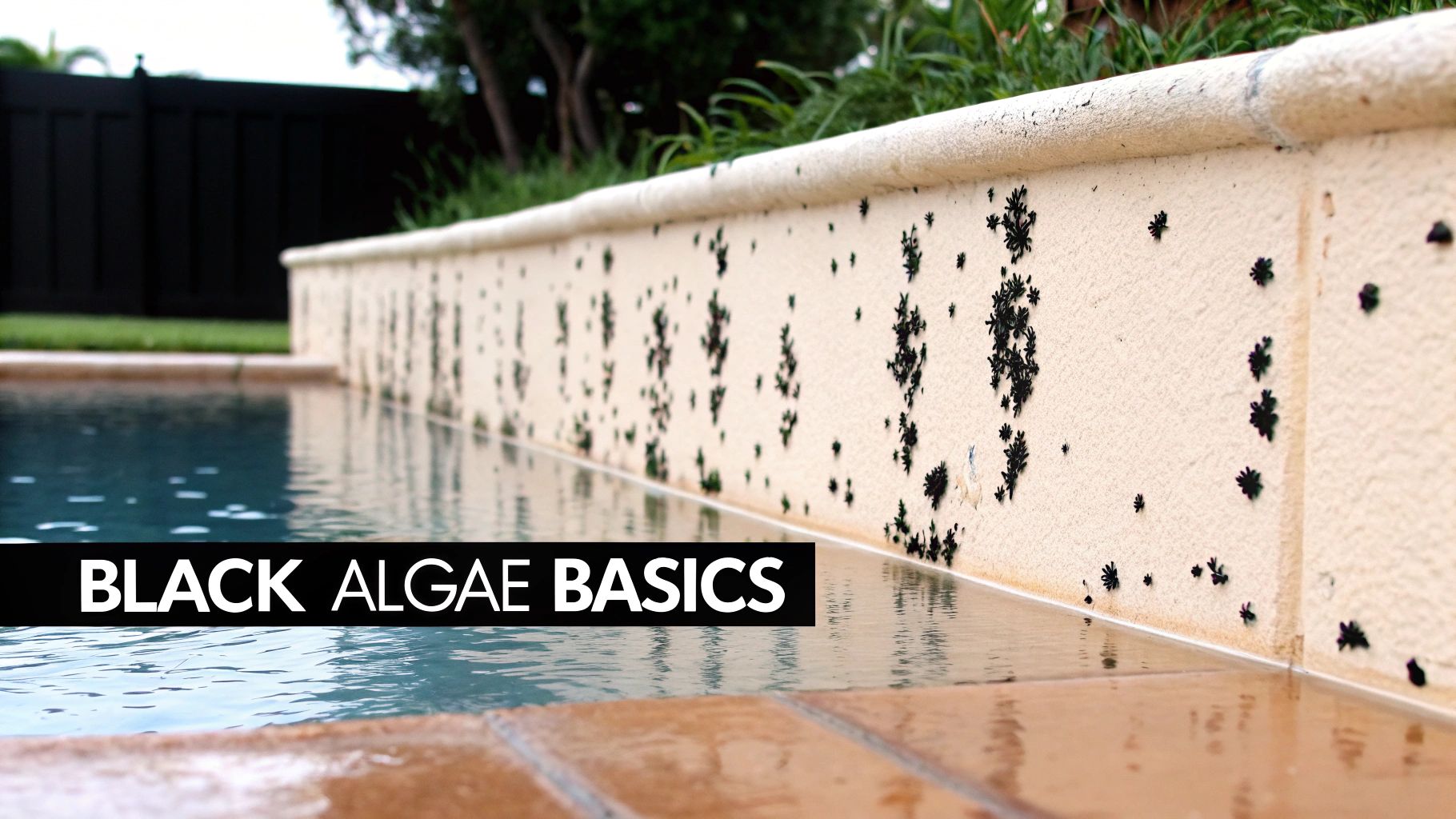
That stubborn, inky spot that refuses to budge isn't really algae at all. It’s actually an ancient and incredibly resilient form of cyanobacteria. This distinction is more than just a science lesson; it’s the key to understanding why it's so tough. Think of it less like a simple plant and more like a weed with deep, tenacious roots.
This is exactly why your usual pool cleaning routine falls short. Unlike the common green algae that floats around in the water, black algae sends out tiny, filament-like growths that dig into porous surfaces. It anchors itself deep inside your pool's finish, especially in materials like plaster, grout, and concrete.
The Biology Of A Stubborn Invader
What makes black algae so formidable is its built-in defense system. Each colony produces a protective, multi-layered slime coat. This slimy shield is highly resistant to chlorine, effectively blocking your sanitizer from getting to the organism's core and killing it.
That’s why simply shocking the pool or giving it a once-over with a soft nylon brush rarely works. You might scrub away the visible top layer, but those roots are still embedded deep in the surface, just waiting for the right moment to regrow. Its entire biology is designed for survival, making a professional strategy not just a convenience, but a necessity for getting rid of it for good.
How Black Algae Enters Southwest Florida Pools
So, how does this unwelcome guest find its way into your pristine pool in the first place? More often than not, it hitches a ride. A major cause is swimmers unknowingly tracking it in from natural bodies of water—think of our local rivers, lakes, or even the Gulf of Mexico.
This bacteria can cling to just about anything:
- Swimsuits and swim trunks
- Pool floats and inflatable toys
- Skimmers, nets, and other cleaning equipment
- Even pets that have been for a swim elsewhere
A fun family trip to the Caloosahatchee River could easily end with spores being transferred into your backyard oasis without anyone realizing it. It’s also worth noting that certain pool types, such as gunite pools, can be more susceptible due to their porous surface textures, giving the algae more to grip onto.
For those of us who have dealt with both, it's clear that black algae is in a league of its own compared to its more common green cousin. Here’s a quick breakdown to highlight the key differences.
Black Algae vs Green Algae At a Glance
| Characteristic | Green Algae | Black Algae (Cyanobacteria) |
|---|---|---|
| Appearance | Free-floating, cloudy green water, or slimy green patches. | Small, hard, dark black or bluish-green spots. |
| Location | Floats in water and clings loosely to surfaces. | Embeds deep into porous surfaces (plaster, grout). |
| Removal | Relatively easy to brush off and kill with chlorine. | Requires aggressive brushing and specialized chemical treatment. |
| Defense | Has a very weak protective layer, easily penetrated. | Forms a thick, chlorine-resistant slime coat. |
| Root System | No true roots; just surface adhesion. | Has deep, filament-like roots that anchor it securely. |
As you can see, tackling black algae requires a completely different mindset and a much more aggressive strategy than you would use for a typical green algae bloom.
The real challenge with black algae is its root system. It doesn’t just sit on the surface; it digs in, making it a structural problem as much as a chemical one. Without addressing the roots, you’re only trimming the weeds, not removing them.
Ultimately, defeating this organism for good requires a deep understanding of its biology and a systematic approach. Our expertise in maintaining a healthy swimming pool means we can tackle these deep-rooted issues effectively, restoring your pool’s health and beauty for the long haul.
What's Really Causing Black Algae in Your Pool?
Black algae doesn't just appear out of nowhere. Think of it like a stubborn weed in your garden—it only shows up and spreads when the conditions are perfect for it. Figuring out what causes black algae in your pool is the first step to getting rid of it for good, and the answer usually points to a few small maintenance slip-ups that have created a perfect storm.
Seeing those stubborn black spots means your pool's natural defenses are down. Your pool is its own little ecosystem, and when it's balanced, it can fight off invaders. But as soon as a few key things go wrong, opportunistic pests like black algae jump at the chance to move in.
It All Starts With a Contaminated Source
Believe it or not, the journey of black algae into your pool almost always starts with a simple transfer from another body of water. Despite its name, what we call "black algae" is actually a tough type of cyanobacteria. It gets a free ride into your pool on contaminated gear and then thrives when maintenance isn't quite right, a problem we see all too often here in Southwest Florida.
Imagine this: someone takes a float out on the Caloosahatchee River for the day, then tosses it straight into the pool without a good rinse. That’s all it takes. Spores hitch a ride, and under the right conditions, they can latch onto your pool’s plaster and start taking root in as little as 48 hours. You can read more on how quickly this invader takes hold.
This is by far the most common way it gets started. It can happen in a few different ways:
- Swimsuits: Spores easily cling to swimwear that’s been in a lake, river, or even the Gulf.
- Pool Toys: Floats, noodles, and toys that have been in natural water are basically transportation for algae.
- Cleaning Gear: Using a brush or net that was in another contaminated pool is a surefire way to spread the problem.
Poor Water Chemistry Is an Open Invitation
If contamination is the spark, poor water chemistry is the gasoline. The single biggest reason black algae gets a foothold is low free chlorine. Chlorine is your pool’s number one bodyguard, and when levels are too low, the door is wide open for bacteria to set up shop.
But it's not just about chlorine levels. A balanced pH is just as critical. When your pool’s pH gets too high (too alkaline), it cripples your chlorine’s ability to work. You could have plenty of chlorine in the water, but a high pH can make up to 50% of it completely useless. You're essentially rolling out the welcome mat for black algae.
A pool with consistently low sanitizer and an unbalanced pH isn't just a pool—it's a petri dish waiting for something to grow. This is exactly why professional weekly water testing isn't a luxury; it's your first line of defense.
Bad Circulation Creates Safe Havens
Are you running your pool pump long enough every day? Good circulation is essential because it makes sure sanitized, clean water reaches every single corner of your pool. When circulation is weak, you get "dead zones"—stagnant spots where chemicals don't mix and the water just sits there.
These areas, usually in corners, around steps, or in the deep end, become the perfect breeding ground. Algae spores settle in these calm pockets, latch onto the surface, and start growing their deep roots without being bothered by treated water. Without that constant flow, you're basically giving black algae a protected hideout to build its colony.
Porous Surfaces Are the Perfect Hiding Spots
Finally, the surface of your pool itself plays a huge part. Black algae needs something to grip onto, and porous surfaces like old plaster, concrete, or tile grout provide the perfect anchor. Those tiny, microscopic cracks and pits are like fortified bunkers for the bacteria.
Once it digs its filament-like roots into those imperfections, it becomes incredibly difficult to just brush away. The algae is literally hiding inside the structure of your pool wall, shielded from your brush and from surface-level chemicals. This is a big reason why our technicians often need specialized tools and a much more aggressive strategy to completely kill it off and make sure it doesn’t come right back. Tackling these deep-rooted infestations is a core part of our comprehensive swimming pool services.
How to Spot Black Algae and Understand Its Hidden Dangers
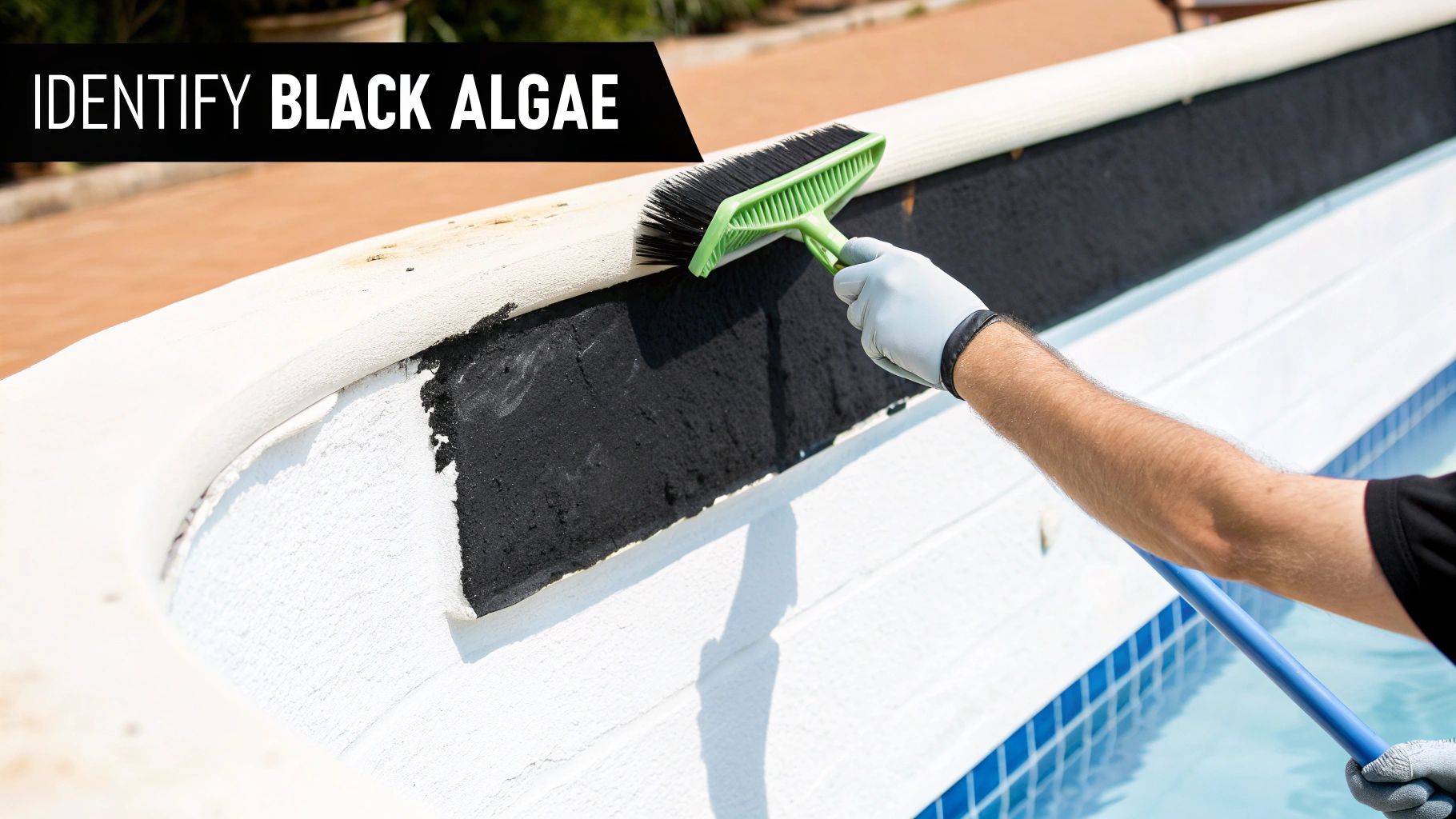
You've probably noticed them—those stubborn dark spots on your pool's steps or walls. It's easy to wonder, is it just a bit of dirt, or something more sinister? Learning to identify black algae is the first crucial step toward understanding the serious threat it poses to both your pool and your family's health.
Unlike that slimy green film most of us have seen, black algae shows up as distinct, clearly defined spots. They’re often black or a dark bluish-green, looking almost like tiny ink stains splattered across your pool’s surfaces. If you were to touch one, you’d feel a raised, almost shell-like texture. That's its protective slime layer, the very thing that makes it so tough to kill.
One of the biggest giveaways is how stubbornly it resists being brushed away. A quick scrub with a standard nylon brush might scrape off the very top layer, but the core of the spot will remain firmly dug in. This is a dead ringer that you're dealing with something far more serious than a simple stain.
The Telltale Signs of a Black Algae Infestation
So, how can you be absolutely sure what you're seeing is black algae? Look for this specific combination of traits that separates it from other common pool problems. If these signs sound familiar, it’s time to take action.
- Distinct Black or Dark Blue-Green Spots: These aren't cloudy patches of color. They are concentrated dots or small clusters.
- Raised, Bumpy Texture: The colonies feel hard and slightly raised, completely different from the slick feel of green algae.
- Deeply Rooted: The spots are nearly impossible to remove with a simple brushing, a clear sign they’ve embedded themselves into the plaster or grout.
- Location, Location, Location: It usually appears first in areas with poor water circulation or on porous surfaces like concrete, plaster, and especially in tile grout lines.
More Than Just an Eyesore: The Health Risks
It's tempting to dismiss black algae as just an ugly blemish on an otherwise beautiful pool. But the danger goes much deeper than looks. Because black algae is actually a type of cyanobacteria, certain strains can produce toxins that create a real health risk for anyone who gets in the water.
These toxins, called cyanotoxins, are some of the most potent natural poisons on the planet. While a tiny colony might not cause immediate problems, a growing infestation significantly increases the risk of exposure. This is especially true for children, pets, and the elderly.
This isn't just about keeping your pool looking good; it's a critical safety issue. The potential for health complications makes swift, professional removal a non-negotiable priority for any pool owner.
Direct contact with the algae or accidentally swallowing contaminated water can lead to a host of unpleasant symptoms. Potential health issues include:
- Skin Irritation: Rashes, itching, and other uncomfortable skin reactions.
- Stomach Illness: Nausea, vomiting, and diarrhea if water is ingested.
- Respiratory Issues: In some cases, even airborne droplets from the pool can cause irritation.
For our pets, especially dogs who love to drink from the pool, the effects can be even more severe and may lead to serious illness within hours. For the safety of your entire family, it's crucial to address a black algae problem right away. If you don't know where to start, you can learn more about professional treatment by checking our pool service FAQs.
The Hidden Damage to Your Pool Investment
Beyond the immediate health concerns, letting black algae fester is a direct threat to the financial investment you've made in your home. Its deep, filament-like roots don't just sit on the surface—they literally dig into it. This relentless burrowing causes permanent damage over time.
These roots can create deep-set stains that even aggressive chemical treatments can't lift. In more severe cases, the organism will physically etch and degrade plaster and grout, creating pits and cracks. This kind of structural damage is expensive to repair and can detract from your property's value. Ignoring a few spots now could mean facing a costly and disruptive pool resurfacing job down the line. Protecting your pool is protecting your investment, and our team is here to help you do just that.
Why Your Weekend War on Black Algae Isn't Working
If you've ever spent an entire weekend scrubbing, shocking, and pouring chemicals into your pool, only to watch those stubborn black spots creep back in, you know the frustration. It’s a common story here in Southwest Florida, and it’s not because you aren’t putting in the effort. The truth is, black algae isn't your average pool pest, and standard DIY methods just don't cut it.
Think of it like this: trying to remove black algae with a nylon brush and a jug of chlorine is like trying to pull out a deep-rooted weed by just snipping off the top. You might clean up what you can see on the surface, but you haven't touched the real problem. Those filament-like "roots" are dug deep into the plaster and grout of your pool. On top of that, its tough, multi-layered slime coat acts like a tiny shield, deflecting the very chemicals you’re counting on to kill it.
This is why even a powerful shock treatment often does little more than clean the water around the algae colony, leaving the core organism completely untouched and ready to regrow.
The Most Common DIY Mistakes
With over 25 years of tackling pool problems, we've seen it all. Homeowners, with the best of intentions, make the same mistakes over and over. These missteps don’t just waste your time and money; they can actually help the infestation dig in deeper, making the eventual professional cleanup even more difficult.
Here are the biggest pitfalls we see:
- Using the Wrong Tools: That soft nylon brush you use for weekly maintenance? It’s useless against black algae. It just glides right over the protective slime coat without ever breaking it open.
- Applying the Wrong Chemicals: Most algaecides you find at the big-box stores are designed for weaker, free-floating algae like green or mustard varieties. They simply don't have the muscle to penetrate and kill a resilient cyanobacterium.
- Brushing Without a Purpose: A quick once-over won't work. Getting rid of black algae requires aggressive, targeted scrubbing with a specialized wire brush. The goal is to physically crack open that protective shell so the chemicals can finally get inside.
- Ignoring Water Balance: This is a huge one. If you pour expensive algaecides into a pool with unbalanced water, you're just throwing money away. For instance, if your pH is too high, your chlorine's power can be slashed by more than 50%. It’s like fighting with one hand tied behind your back.
The Vicious Cycle of Re-Contamination
Here's the mistake that guarantees black algae will return: forgetting to sanitize your equipment. This single oversight is the reason behind countless recurring infestations. After you've spent an hour scrubbing, those microscopic algae spores are now clinging to your brush, your vacuum head, the hoses, and inside your filter.
Failing to sanitize every tool after treatment is like carefully weeding your garden, then shaking the seeds from the pulled weeds all over the clean soil. You're accidentally replanting the problem yourself.
This mistake traps you in an exhausting and expensive loop. You spend money on chemicals, you put in hours of back-breaking labor, and you enjoy a few weeks of a clear pool before the same black spots reappear. It’s this cycle of failure that finally leads homeowners to call for a professional solution that gets it right the first time.
When you bring in Water Medic, you’re not just paying for a service. You're investing in a proven, methodical process that attacks the algae at its root, sanitizes your entire pool system from top to bottom, and finally breaks that cycle of re-contamination for good. We take on the tough chemistry and aggressive labor so you can get back to what your pool is for: relaxation.
The Professional Method For Eliminating Black Algae
Getting rid of black algae for good isn't about a single magic bullet; it's a systematic, aggressive battle plan. Just dumping in some chemicals won't cut it. Here’s a look at the proven, multi-step process our team at Water Medic uses—a process that shows why professional expertise is the only way to guarantee this problem is gone for good.
Our method is designed to dismantle the algae's defenses, attacking it at its very root. We target its entire lifecycle and hit every potential hiding spot in your pool, leaving no room for it to regroup and return.
The flowchart below shows exactly why most DIY attempts fall short.
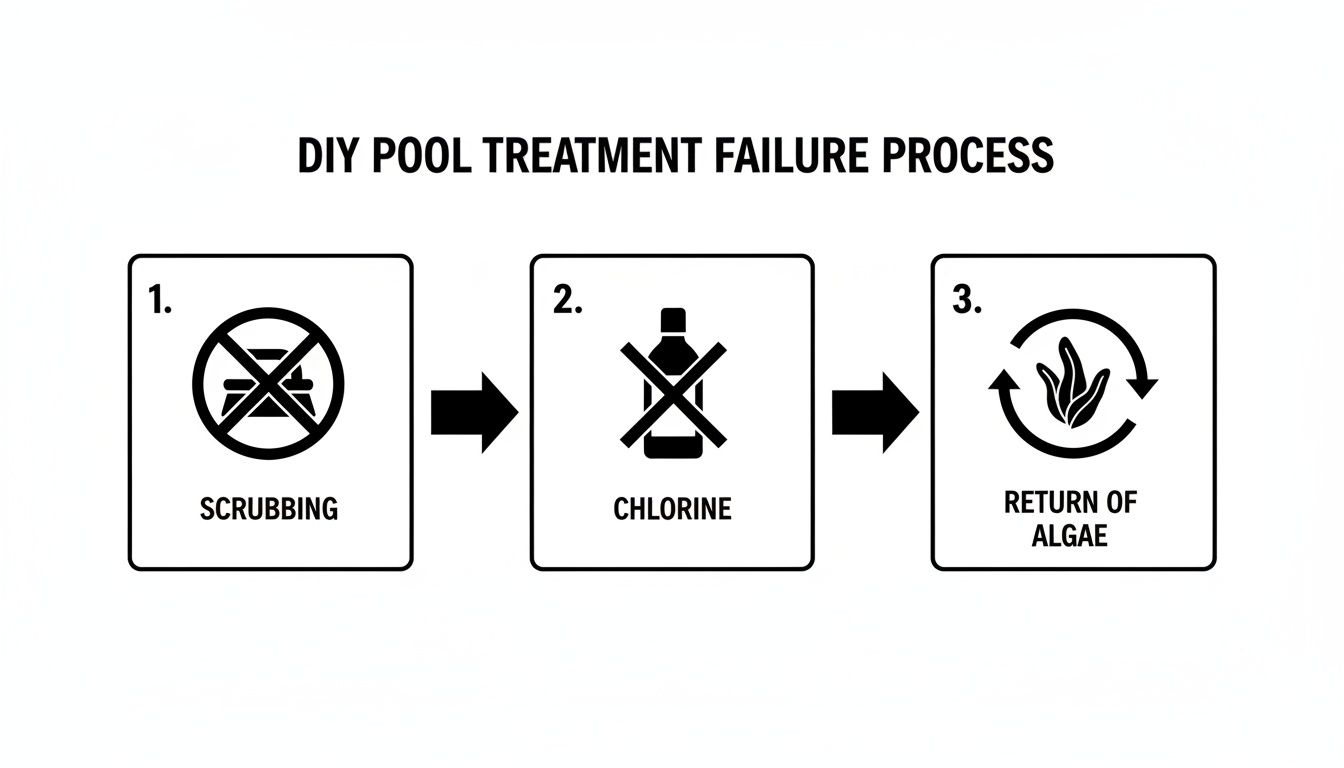
As you can see, a little scrubbing and some store-bought chlorine just can't penetrate the deep-rooted problem, which is why the algae almost always comes back.
Step 1: Pre-Treating The Water Chemistry
Before we launch the main assault, we have to disarm the enemy. The first thing we do is meticulously test and balance your pool’s water, zeroing in on the pH and alkalinity levels. Getting the pH just right—ideally between 7.2 and 7.4—is non-negotiable. It makes the chlorine we’re about to add exponentially more powerful.
Think of this step as weakening the algae from the outside in. By optimizing the water chemistry, we’re setting the stage for every treatment to work at peak effectiveness. It’s a foundational step that many homeowners skip entirely, dooming their efforts from the start.
Step 2: Aggressive Brushing To Break The Shield
Now for the physical assault. Black algae’s biggest strength is its tough, protective slime coat. To have any chance of killing it, you have to physically smash through that shield. Our technicians come equipped with stiff, specialized wire brushes designed specifically for the job on plaster and concrete pool surfaces.
And we don't just brush—we scour. The goal is to aggressively scrape every single black spot, literally cracking open its shell to expose the vulnerable organism hiding underneath. This is intense, detailed work, but it’s what allows the chemicals to penetrate the core instead of just washing uselessly over the top.
Without this aggressive brushing, any chemical treatment is destined to fail. You are essentially pouring expensive algaecide onto a shielded enemy. The physical breach of its defenses is non-negotiable for success.
Step 3: Targeted High-Dose Shock Treatment
With the algae’s defenses shattered, we immediately follow up with a powerful, targeted shock treatment. This is not your typical weekly shock. We use a high dose of granular cal-hypo shock, often three to four times the normal amount, to deliver an overwhelming wave of sanitizing power directly to the now-exposed bacteria.
This massive dose of chlorine floods the cracked-open colonies, killing the organism right down to its roots. The precise amount and application are critical here—enough to ensure a total kill without damaging your pool’s surfaces.
Step 4: The Final Chemical Attack
Right after the shock, we hit it again with a professional-grade algaecide specifically formulated to kill cyanobacteria. Unlike the stuff you find on hardware store shelves, these potent formulas often contain powerful copper or silver compounds that are highly effective against black algae’s unique biology. This application is the final blow, ensuring any stubborn survivors are completely wiped out.
Step 5: Purging The Contaminants
The black algae is dead. Now, we have to get its remains out of the water. We run your filtration system continuously for at least 24-48 hours to trap all the dead particles. Then comes a critical step: we vacuum the entire pool to waste, not back through your filter.
This physically removes the dead algae from your pool's ecosystem entirely, preventing it from decomposing and becoming food for a new bloom. It’s a vital cleanup process that leaves your water crystal clear and truly sanitary.
Step 6: Sanitizing The Entire System
Finally, we attack the source of re-contamination. We thoroughly clean and sanitize your filter—whether it's sand, cartridge, or DE. Every brush, net, pole, and vacuum used during the treatment gets sanitized, too. If anything is missed, the algae can be reintroduced and the whole cycle starts over.
A malfunctioning filter or pump is often the secret ally of black algae. That’s why we always perform a thorough equipment check as part of our process. You can learn more about our comprehensive approach to pool equipment repair to see how we keep systems running flawlessly. Sometimes, the best advice comes from unexpected places; boat owners face similar frustrating battles, and their strategies for winning the battle against stubborn boat mildew offer valuable insights into fighting stubborn organisms.
DIY vs Water Medic Professional Treatment
It’s tempting to try and tackle black algae on your own, but the reality is that DIY methods often cost more in the long run through wasted time, money, and effort. Here's a quick comparison of the typical DIY approach versus our professional, guaranteed method.
| Treatment Step | Typical DIY Approach | Water Medic Professional Method |
|---|---|---|
| Water Balancing | Often overlooked or based on simple test strips. | Precise digital testing to optimize pH & alkalinity, maximizing chemical efficacy. |
| Brushing | A quick scrub with a standard nylon brush. | Aggressive scouring with a specialized wire brush to break the algae's protective shield. |
| Chemicals | Standard chlorine shock and a store-bought algaecide. | A multi-stage attack with a high-dose cal-hypo shock followed by a potent, professional-grade algaecide. |
| Cleanup | Vacuuming back through the filter, which can reintroduce spores. | Running the filter 24/7, then vacuuming all dead algae to waste, completely removing it from the system. |
| System Sanitization | Usually forgotten, leaving contaminated equipment to reinfect the pool. | Meticulous cleaning and sanitization of the filter, pump, and all tools used during the process. |
| Guarantee | None. The algae almost always returns. | A firm guarantee that the black algae will be completely eradicated. |
As the table shows, our process is built on a deep understanding of black algae’s biology. We don’t just treat the symptoms; we eliminate the cause and ensure it doesn't come back.
How to Prevent Black Algae from Ever Coming Back
You've just won the tough fight against black algae, and the last thing you want is a rematch. Keeping it gone for good isn't about a single magic bullet; it's about building a consistent, strong defense. This proactive approach is the heart of our weekly maintenance philosophy at Water Medic, creating a pool environment where algae simply can't get a foothold.
Believe me, preventing a comeback is far easier and cheaper than fighting another full-blown invasion. A few simple, regular habits can make all the difference, protecting your investment and making sure your pool is always ready for you to enjoy. Think of it as building a fortress this stubborn invader can't breach.
Maintain Rock-Solid Water Chemistry
Your first and most important line of defense is consistent sanitizer levels. Black algae sees low chlorine as a wide-open invitation to move in. Your free chlorine needs to stay in the ideal range at all times, ready to zap any spores before they can latch onto your pool walls.
But chlorine can't do the job alone—it needs a balanced pH to be effective. When your pH creeps too high, your chlorine gets lazy and can't work properly. We always recommend testing your water at least once a week and keeping the pH locked in between 7.2 and 7.4. This is the sweet spot where chlorine is at peak fighting power.
Think of your pool's chemistry as its immune system. Consistent sanitizer and a balanced pH keep it strong, ready to fight off infections like black algae before they ever take root.
Enforce a No-Contaminant Zone
Black algae almost always hitches a ride into your pool from an outside source. This makes a strict "clean entry" policy absolutely critical. Anything that's been in a natural body of water—a lake, a river, or even the Gulf—is a potential trojan horse.
Cut off its main travel route by putting these simple rules into practice:
- Sanitize All Toys and Floats: Before pool toys and floats come back in, give them a good cleaning with a mild bleach solution, especially after a trip to the beach.
- Wash Swimsuits: Make sure any swimwear worn in natural waters gets a thorough wash before it goes back into the pool. Spores love to cling to fabric.
- Shower Before Swimming: A quick rinse helps wash away all sorts of potential contaminants, keeping your water cleaner and healthier for everyone.
Create an Inhospitable Environment
Even with perfect water chemistry, algae still needs a place to hide. Your final line of defense is physical maintenance that leaves no safe harbor for spores to settle and grow. A little weekly effort here pays off big time in preventing the nightmare from returning.
Make sure you run your pump long enough every day—usually 8 to 12 hours—to filter the entire volume of your pool's water. This constant movement eliminates the stagnant dead zones where algae loves to start. On top of that, give the entire pool surface a good brushing at least once a week. This physically kicks up any spores before they can anchor themselves in the tiny pores of your plaster or pebble finish.
For homeowners here in Southwest Florida, keeping up with all this can feel like a part-time job. That's why our weekly pool service isn't just a luxury; it's your best bet for a permanently clear, healthy pool and total peace of mind.
Your Top Black Algae Questions Answered
Over the years, we've helped countless homeowners in Southwest Florida tackle this frustrating pool problem. We've heard every question imaginable about this stubborn invader, so let's clear up a few of the most common ones.
Can Black Algae Actually Damage My Pool?
Yes, it absolutely can. This isn't like green algae that just clings to the surface. Black algae grows roots—or rhizoids, technically—that dig deep into porous materials like plaster, pebble finishes, and tile grout.
If you let it go, you're looking at permanent staining and etching on your pool's surface. Getting rid of those marks can be a serious, and expensive, repair job. This is why getting professional help early is so important to prevent that kind of lasting damage.
How Fast Does This Stuff Spread?
Worryingly fast, especially here in Southwest Florida. Our warm, sunny climate is the perfect breeding ground. A single, tiny spot you might not even notice can explode into a full-blown colony in just a few days if conditions are favorable (think low chlorine or dead spots with poor circulation). Acting fast is truly your best defense.
A word of caution: We strongly advise against swimming in any pool with black algae. It’s a form of cyanobacteria that can produce toxins. These can lead to skin irritation or make you sick if you accidentally swallow water, posing a real risk to kids and pets.
Have more questions about keeping your pool in top shape? We've compiled a ton of expert advice in our Pool FAQs section.
Won't Just Shocking the Pool Kill It?
If only it were that simple! While a heavy-duty shock is a critical part of the professional removal process, it won't do the job by itself. Think of black algae as having a built-in shield.
That slimy outer layer is incredibly tough and protects the organism from chlorine. If you don't physically and aggressively scrub that protective barrier away first, the shock chemicals can't penetrate to the core. You'll just be wasting your time and money on chemicals that can't do their job.
Fighting black algae is more of a battle than a simple chore. It demands the right expertise, the right tools, and a lot of persistence. If you're tired of scrubbing only to see those black spots creep back, it’s time to bring in a pro.
The team at Water Medic of Cape Coral has the proven methods to get rid of black algae for good, ensuring your pool is safe and beautiful. Protect your family and your investment.
Contact us today to schedule your professional pool service at https://watermedic.com.