How to Test Well Water for Bacteria: Quick, Safe Testing Guide
If you have a private well, ensuring your water is safe from bacterial contamination isn't a "maybe" task—it's a must. The only way to know for sure what's in your water is to test it, and that means collecting a sterile sample and sending it to a certified lab for analysis. The process focuses on finding indicator bacteria like Total Coliform and E. coli, which act as warning signs for more serious contamination. While DIY kits exist, our professional lab analysis delivers results you can actually trust.
Why You Need to Test Your Well Water for Bacteria

It’s easy to assume the clear, tasteless water coming from your tap is perfectly safe. But with a private well, you're the one in charge of quality control—there’s no municipal body monitoring it for you. Time and again, we've seen families deal with recurring stomach bugs and other health issues, only to eventually trace the source back to the one thing they thought was pure: their own well water.
This is a far more common scenario than you might think. A landmark global study revealed that a shocking 1.8 billion people were using drinking water sources contaminated with fecal matter. While that sounds like a distant problem, private wells can be susceptible to the very same issues. This isn't just an abstract statistic; it's a serious wake-up call for every well owner.
What Are We Actually Looking For?
When a lab tests your water for bacteria, they aren't looking for every single type of pathogen out there. That would be impractical and incredibly expensive. Instead, they look for "indicator bacteria," which signal that your water has likely been contaminated with waste from humans or animals. This is where the real story lies.
To help you understand what your test results mean, here's a quick breakdown of the common culprits we look for in well water.
Common Bacterial Threats in Well Water
| Bacteria Type | What Its Presence Indicates | Potential Health Risks |
|---|---|---|
| Total Coliform | A potential pathway for contamination exists. It's a general "check engine light" for your well system. | Most types are not directly harmful, but their presence suggests more dangerous pathogens could also get in. |
| E. coli | Direct and recent fecal contamination from humans or animals. This is a serious, immediate red flag. | Can cause severe gastrointestinal illness, including cramps, diarrhea, and vomiting. Some strains can be life-threatening. |
| HPC Bacteria | Indicates overall sanitary conditions. High counts suggest an environment where other bacteria can thrive. | Not typically a direct health threat, but high levels can point to biofilm buildup and other system-wide issues. |
The presence of these indicators, especially E. coli, tells us that the protective barriers of your well have been breached, creating a direct path for disease-causing organisms to enter your drinking water. To get a better grasp of the microbial world, it helps to understand the fundamental differences between bacteria and viruses, as both can contaminate water sources but are detected differently.
The discovery of any E. coli in a water sample means the water is unsafe to drink without treatment. It’s not a warning—it’s a clear and present danger that requires immediate action.
Making Testing a Non-Negotiable Routine
It's time to shift your mindset from "maybe I should get around to testing" to "I need to test my water regularly." This is the cornerstone of responsible well ownership. It’s not about checking a box; it’s about protecting your family from potentially severe illnesses like gastroenteritis, dysentery, and other waterborne diseases.
Establishing a routine testing schedule is the single most important step you can take. While it might seem like a hassle, our professional services make it a straightforward process. You just need to know what to test for, how to collect the sample without contaminating it, and who to trust for accurate results. Gambling with your family's health is never worth the risk.
Decoding Your Well Water Test: What to Look For
Getting a lab report back for your well water can be a bit intimidating. It's usually packed with scientific jargon that doesn't mean a whole lot to the average homeowner. To make sense of it all and understand if your water is safe, you really only need to focus on three key bacterial indicators.
Think of these not as specific villains, but as clues. They tell a story about what’s happening inside your well and whether potential pathways for contamination exist. Knowing what they mean is the first step to ensuring your family's water is safe.
Total Coliform: The System's Check Engine Light
The first thing you’ll likely see is Total Coliform. This is a massive group of bacteria found pretty much everywhere in the environment—soil, plants, rivers, you name it. For the most part, these guys are harmless on their own.
So why bother testing for them? Because their presence in your well is like a check engine light for your car. It signals that something, somewhere, has allowed surface contaminants to sneak into your groundwater. It could be a cracked well casing, a faulty cap, or some other breach in the system's defenses.
A positive test for Total Coliform doesn't mean you need to panic. It just means the door is open. If these common, harmless bacteria can get in, it’s a warning that more dangerous pathogens could follow the same path. It's a clear sign that your well needs a closer inspection.
E. coli: The Unmistakable Red Flag
Now, while Total Coliform is a general warning, Escherichia coli (E. coli) is a specific, serious red flag. Unlike its broader coliform cousins, E. coli comes almost exclusively from one place: the intestines of humans and other warm-blooded animals.
If E. coli shows up in your well water, it’s a direct indicator of recent fecal contamination. There's no ambiguity here. It means waste from a nearby septic system, animal pasture, or some other source has found its way into your water supply. This is a real and immediate health threat.
A positive E. coli result means your water is unsafe to drink, period. It can cause nasty gastrointestinal illnesses with symptoms like severe cramps, vomiting, and diarrhea. For young children, the elderly, or anyone with a weakened immune system, certain strains can be life-threatening.
This isn't a DIY situation. When E. coli is present, you need professional help right away to disinfect the system and, more importantly, to find and fix the source of the contamination for good.
Heterotrophic Plate Count (HPC): The Big Picture
The third piece of the puzzle is the Heterotrophic Plate Count (HPC). This test isn’t looking for one specific troublemaker. Instead, it measures the overall population of a wide range of common bacteria living in your water.
Think of the HPC test as a general health check-up for your well and plumbing. High numbers aren't usually an immediate health risk, but they do tell you that the conditions in your system are perfect for bacterial growth. Often, a high HPC points to biofilm—that slimy gunk that can build up inside pipes—creating a breeding ground for other, more harmful bacteria to hide and multiply.
Here's a simple way to look at it:
- A low HPC is a good sign, suggesting your system is clean and well-maintained.
- A high HPC tells you it's time for a cleaning. It can also be the source of unpleasant tastes or odors and indicates a risk for more serious problems down the line.
Trying to piece all this information together can feel overwhelming, but you don't have to figure it out on your own. If you’re staring at a lab report and not sure what to do next, our experts can walk you through it. We’ll explain what your results mean in plain English and lay out a clear, actionable plan. To see how we can help, learn more about our Well Water Treatment Services and let us bring you peace of mind.
How to Collect a Water Sample Like a Pro
The single most critical factor in getting an accurate well water test is the sample itself. We can't tell you how many times we've seen homeowners get a false positive result, sending them into a panic and toward expensive, unnecessary treatments, all because of a simple mistake during collection.
Getting a clean sample isn't hard, but it does require a bit of care. Think of it like a medical procedure—the goal is to keep everything sterile so the lab report reflects what’s actually in your aquifer, not what was lurking on the end of your faucet.
Choosing the Right Collection Point
Your first move is picking the right tap, and this is where many people go wrong. The kitchen sink, with its fancy swivel head and aerator screen, is usually the worst choice. Those features are notorious for trapping gunk and biofilm, which can easily contaminate your sample.
Instead, you want the simplest, most basic tap you can find.
- Your best bet: An outdoor spigot (the kind you attach a hose to) or a plain utility sink faucet is perfect. They're typically just solid metal without any extra parts.
- A good alternative: A bathtub faucet can also work, as long as it doesn't have a shower diverter.
- What to avoid: Steer clear of kitchen sinks with sprayers, bathroom faucets with those little screens (aerators) on the end, and any tap connected to a water softener or filter. The only exception is if you're specifically trying to test how well your treatment system is working.
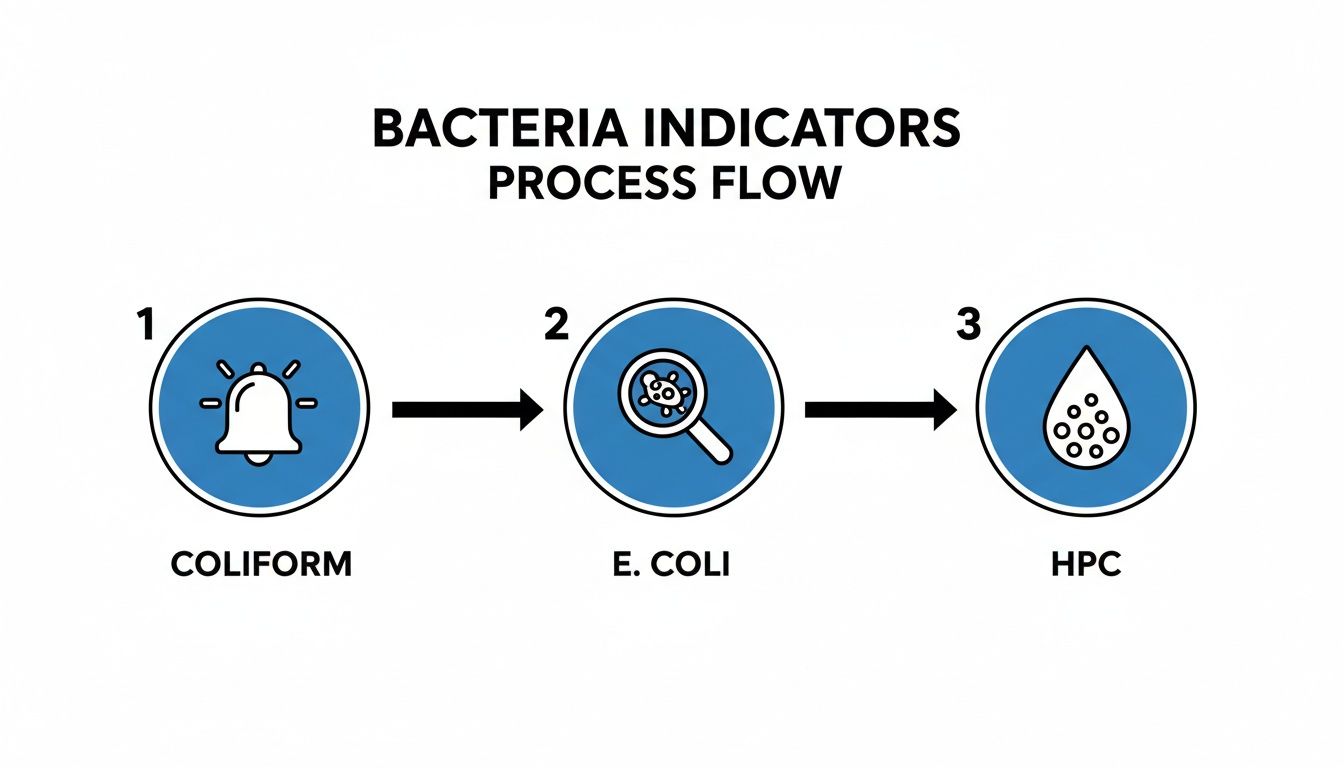
This diagram shows what a lab is looking for. A positive coliform result is just the first step, triggering a deeper look for specific threats like E. coli. That's why a pure, uncontaminated sample is non-negotiable.
Preparing the Faucet and Flushing the Line
Once you've picked your spot, you need to prep it. First, remove any hose or other attachment. Next, wipe down the inside and outside of the faucet spout with an alcohol pad or a cloth with a bit of diluted bleach. This simple step kills any surface bacteria that could fall into your sample bottle.
Now, it’s time to flush the system. Turn on the cold water and let it run as a steady, pencil-thin stream for at least five to ten minutes. This is crucial. You need to clear out all the water that's been sitting in your pipes and pressure tank to ensure you're pulling a fresh sample straight from the well.
Pro Tip: While the water is running, listen for your well pump to kick on. Hearing that click is the best sign that you've flushed the plumbing and are now drawing a true sample directly from the source.
The Final Steps: DIY Kits vs. Professional Labs
This is where you have a choice to make: use a DIY kit from a hardware store or send your sample to a state-certified laboratory.
While at-home kits seem quick and easy, they're often not sensitive or reliable enough for something as important as your drinking water. Most just give you a basic yes/no answer for coliforms and are highly susceptible to user error.
A certified lab, on the other hand, gives you the hard data you need. You won't just know if bacteria are present, but you'll get a specific count (like CFU/100mL), which tells you the scale of the problem and guides the solution.
DIY Kits vs. Certified Labs
| Feature | DIY Home Test Kits | Certified Lab Analysis |
|---|---|---|
| Accuracy | Variable; prone to mistakes and false readings. | High; uses precise scientific equipment. |
| Detail | Usually just a simple "yes/no" color change. | Provides exact bacterial counts (CFU/100mL). |
| Reliability | Low. Very easy to get an inaccurate result. | High. Follows strict, documented protocols. |
| Scope | Typically only tests for total coliform. | Can test for E. coli, HPC, and more. |
| Our Recommendation | Okay for a quick, informal check. | Essential for making real safety decisions. |
For results you can truly bank your family's health on, professional lab testing is the only way to go.
When you're ready to fill the bottle from the lab, be careful. Don't touch the inside of the cap or the rim of the bottle. Let the water run directly into it up to the fill line—don't let it splash up from the sink. Cap it tightly right away, label it, and get it to the lab as fast as you can. Remember to keep it cool on the way.
The whole process is designed to prevent one thing: accidental contamination. If this all sounds a bit overwhelming, you're not alone. For guaranteed accuracy and peace of mind, you can skip the guesswork entirely. Just Contact Us for Professional Water Testing, and our technicians will handle it all for you, ensuring a perfect sample every single time.
What to Do When You Get a Positive Test Result
Seeing the word "positive" on a lab report for your well water can definitely be jarring. But it's not a disaster—it's just your well's way of telling you it needs attention right now. Think of it as a clear signal to take action, and the first step is understanding what the report is actually telling you.
Often, the first flag raised is for Total Coliform. As we covered earlier, this is the general alarm bell. It means there's a potential pathway for surface contaminants to get into your well. While it’s not always a health emergency on its own, consider it your non-negotiable cue to dig deeper and find out what’s going on.
When the Result Is E. coli
If your report comes back positive for E. coli, the situation is much more urgent. This is a clear sign of fecal contamination, and you need to act immediately to protect your family from getting sick. This isn't just a local problem; the WHO reports that a staggering 1.7 billion people worldwide use drinking water sources contaminated with feces. That statistic really drives home why routine testing for well owners is so important.
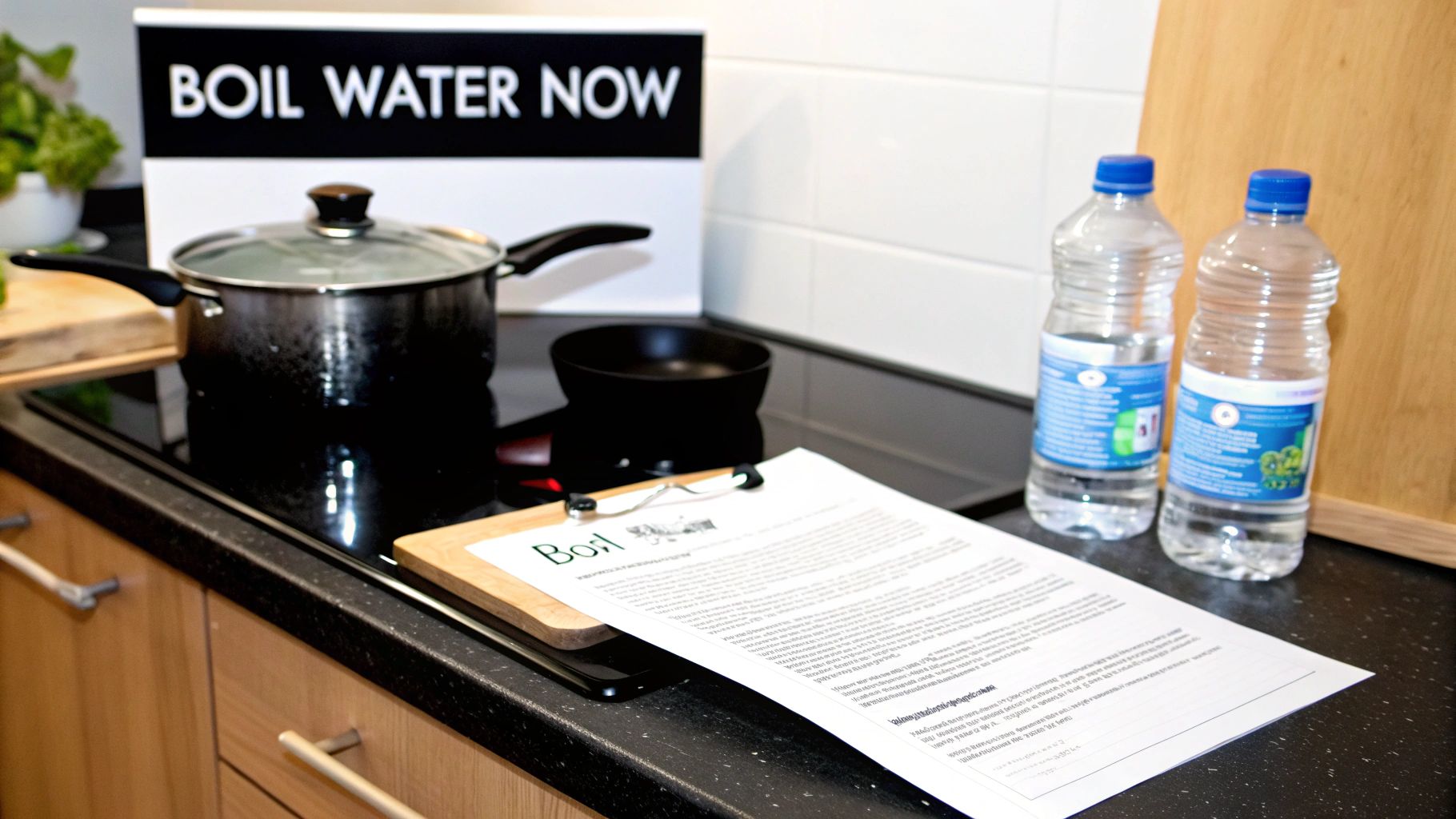
The moment you confirm E. coli, stop using your tap water for anything that involves consumption. Your top priority is safety.
- Switch to Bottled Water Immediately: Use it for all drinking, cooking, making ice, and even brushing your teeth. Don't take any chances.
- Boil Your Water: For things like washing dishes or hands, bring your tap water to a hard, rolling boil for at least one full minute. Let it cool completely before you use it. This kills off the harmful bacteria and viruses.
- Tell Everyone in the House: Make sure every family member and guest understands the water isn't safe to drink and knows what precautions to take.
This is the point where you call in a professional. Trying to fix an E. coli problem yourself can lead to a half-done job or, worse, failing to fix the root cause. That just sets you up for contamination to happen all over again.
A positive E. coli test is not a suggestion; it's an emergency. It's the moment to stop guessing and call for an expert assessment. The health risks are too significant to delay or attempt a DIY fix.
Your Professional Action Plan
Once your family is safely using bottled water, it's time to focus on fixing the problem. Our rapid response team is set up for exactly these situations. We start with a thorough inspection to figure out how the contamination happened in the first place. Is it a cracked well casing? A bad well cap? Could it be runoff from a nearby septic system? Finding the entry point is just as crucial as killing the bacteria.
After we've pinpointed the source, the most common immediate fix is a shock chlorination. This process involves carefully introducing a high concentration of chlorine into your well and plumbing to kill off any existing bacteria. It’s highly effective, but it has to be done right to sanitize the entire system without causing damage. Afterward, we flush the system until the water is completely clear and safe to use again. If we find a damaged component, we can provide expert well water repair services to make sure the problem is fixed for good.
If your test results show bacteria, it's a strong indicator that you may need to implement home water treatment solutions to keep your water safe in the long run.
Ensuring It Never Happens Again
Shock chlorination is the immediate fix, but real peace of mind comes from a permanent solution. A one-time contamination is often a sign that your well system is vulnerable. To prevent future scares and keep your water consistently safe, installing a permanent disinfection system is your best bet.
We specialize in advanced water purification systems that act as a constant shield against bacteria.
- UV Light Purifiers: This is one of the most effective and popular methods out there. Your water flows through a chamber where it’s zapped with ultraviolet light, which instantly neutralizes bacteria, viruses, and other nasty microorganisms. Best of all, it does this without adding any chemicals to your water.
- Whole-House Reverse Osmosis: For the highest level of purity, a whole-house RO system is the ultimate solution. It removes not just bacteria but a huge list of other contaminants, delivering purified, great-tasting water to every single tap in your home.
A positive test result is a serious wake-up call, but it’s one you can handle. By taking immediate safety measures and working with professionals, you can solve the current problem quickly and put a lasting solution in place to protect your family's health for years to come.
Establishing a Proactive Well Testing Schedule
True water safety isn't a one-and-done deal. It’s about building a consistent routine to stay ahead of problems before they start. Once you've gone through the trouble of fixing a contamination issue, the last thing you want is a repeat performance. This is where you shift from reacting to problems to proactively maintaining your well for the long haul.
Think of it like an annual physical for your well. The foundation of any solid maintenance plan is testing at least once a year for bacteria, specifically Total Coliform and E. coli. This yearly checkup gives you a clear baseline, confirming that your well is properly sealed and that no new issues have cropped up over the last twelve months.
But sometimes, waiting a full year is too long. Certain events can compromise your well's integrity almost overnight, creating risks that demand immediate attention. Consider these non-negotiable triggers for an unscheduled water test.
When to Test Immediately
Your well is a dynamic system, and you need to be its first line of defense. Don't wait for your annual appointment if you run into any of these situations. It’s time to test right away if:
- You've had recent flooding near the well. Floodwater is a nasty cocktail of contaminants. If it has surrounded or submerged your wellhead, there's a serious risk that bacteria have been washed directly into your water supply.
- You've recently had plumbing or well work done. Any time a contractor or even you yourself have repaired the well pump, piping, or pressure tank, the system has been opened up. This is a prime opportunity for bacteria to get inside.
- You notice any change in your water's quality. If your water suddenly looks murky, smells strange, or tastes "off," your senses are sending you a clear warning sign. Trust your gut and get it tested.
- A new baby is on the way or has just arrived. Infants have developing immune systems and are far more vulnerable to waterborne illnesses. This is a perfect time to ensure your water is pristine.
This kind of vigilance is more critical than ever. A recent study found antimicrobial-resistant bacteria in a startling 78.6% of household private well samples, with many strains showing resistance to common antibiotics. While standard tests are excellent for detecting fecal contamination, these findings highlight why ongoing, proactive monitoring is so vital. You can read the full research about these emerging water threats to see why a consistent schedule is so important.
Waiting for someone to get sick is not a water quality strategy. Proactive testing is your first and best line of defense against invisible threats lurking in your well water.
Making Proactive Maintenance Effortless
Let's be honest—juggling calendar reminders for annual tests while also trying to remember all the "what-if" scenarios can feel like just another chore. A structured maintenance plan removes all the guesswork and stress from the equation, ensuring this critical task never gets forgotten.
Our Annual Well Maintenance Plans are designed to put your water safety on autopilot. Instead of leaving it up to you to remember, we manage the schedule, handle the professional testing, and deliver a clear, easy-to-understand report on your well’s health every year. It’s one of the most cost-effective investments you can make in your family’s well-being.
Consistent, professional oversight is the secret to preventing contamination before it ever becomes a problem. When you partner with us, you get an expert who knows your system inside and out. This approach not only protects your family from health risks but also helps us spot small issues before they snowball into expensive emergencies. Discover how our monthly maintenance plans can provide complete peace of mind and keep your well water pure and safe, year after year.
Well Water Testing FAQs
It’s completely normal to have questions when you’re responsible for your own water source. After working with countless well owners over the years, we've found that the same handful of questions pop up time and time again. Let's clear them up so you can be confident about your water quality.
My Water Looks and Tastes Fine. Do I Still Need to Test It?
Yes, absolutely. This is probably the biggest and most dangerous assumption a well owner can make.
The reality is, harmful bacteria like E. coli are microscopic—they have no taste, no smell, and no color. Your senses are completely useless for detecting them. Relying on how your water looks is a gamble you can't afford to take with your family's health. Professional testing is the only way to know for sure.
Can I Just Use a Water Filter Pitcher to Remove Bacteria?
No, and this is a critical point. Those standard pitcher filters you buy at the store are designed to make water taste better by removing things like chlorine or sediment. They are not built or certified to remove dangerous microorganisms.
Using one for a bacteria problem creates a false sense of security. If your well tests positive, you need a dedicated system like a UV purifier that can neutralize bacteria at the source, ensuring every tap in your house is safe.
How Often Should I Test My Well Water?
Health officials across the board recommend testing for bacteria and nitrates at least once per year. Think of it as an annual check-up for your well.
That said, some situations call for more immediate action. You should test your water right away if:
- There's been flooding near your wellhead.
- You've just completed repairs on your well pump or plumbing.
- Someone in your family is dealing with unexplained, recurring stomach issues.
- You notice any abrupt change in the water's taste, odor, or appearance.
An annual test is your safety baseline. It's not just a recommendation; it's a core responsibility of owning a private well.
We've gathered even more insights based on our experience in the field. For a deeper dive into other common concerns, check out our comprehensive well water FAQs compiled by our team.
Don't leave your family's health to guesswork. If you're unsure about your water quality or it's been over a year since your last test, contact Water Medic of Cape Coral for professional, reliable testing and treatment solutions.