
Solving Water Pressure Tank Problems
If you've ever been mid-shower when the water pressure suddenly drops to a pathetic trickle, or you're hearing strange noises from the utility room, your water pressure tank might be trying to tell you something. These aren't just minor annoyances; they're early warning signs that your well water system is under serious strain. Catching them early can be the difference between a simple fix from our expert plumbers and a full-blown emergency with no water and a hefty repair bill.
Identifying Signs of a Failing Water Pressure Tank
Think of your water pressure tank as the quiet, hardworking hero of your well system. It holds a reserve of pressurized water, which means your well pump doesn't have to kick on every single time you turn on a faucet. This simple job is absolutely crucial for protecting the pump's motor from burning out and giving you the steady, reliable water flow you expect.
But when this vital piece of equipment starts to go bad, the symptoms can escalate quickly. What starts as a subtle change can soon become a major problem you can't ignore.
The Pump Runs Constantly
One of the most common—and telling—signs is a pump that seems to have a mind of its own, kicking on and off constantly. This is called short-cycling. You’ll notice it when you flush a toilet or run the sink for a few seconds, and you hear the pump immediately fire up and shut down. This is a dead giveaway that the tank has become waterlogged, meaning it has lost the compressed air cushion it needs to function. Without that cushion, the pump is forced to work overtime, risking a costly failure that our pump repair services can prevent.
Fluctuating Water Pressure
Is your shower pressure all over the place, going from a strong blast to a weak drizzle? Do your faucets spit and sputter when you first turn them on? That's not normal. These wild pressure swings happen when the tank can't maintain a stable pressure in your pipes anymore. The sputtering, in particular, often points to a ruptured internal bladder, which is causing air and water to mix in a way they shouldn't.
A healthy pressure tank ensures a smooth, uninterrupted flow. If you're experiencing inconsistent pressure, it’s a direct sign the tank is struggling to perform its core function. Ignoring this can put severe stress on your entire system.
Unusual Noises From the Tank or Pipes
Your well system shouldn't sound like it's falling apart. If you start hearing a rapid click-click-click from the pressure switch next to the tank, that's the sound of short-cycling in action. Banging or hammering noises in the pipes (known as water hammer) can also be a side effect, caused by the abrupt pressure changes from a faulty tank.
These symptoms aren't just isolated quirks; they signal a breakdown in your system's efficiency. When a tank fails, it not only affects your home but also contributes to bigger-picture issues like wasted energy and water. The global impact of water stress is a serious concern, as detailed by WRI.org, and inefficient systems at home only add to the problem.
If any of this sounds familiar, it's time to bring in a professional for reliable well water repair before a small problem becomes a catastrophe.
To help you quickly diagnose what might be happening, here's a quick guide to the most common symptoms and what they typically mean.
Quick Guide to Water Pressure Tank Symptoms
Use this quick reference to identify the most common signs that your water pressure tank needs professional attention.
| Symptom | What It Likely Means | Recommended Action |
|---|---|---|
| Pump short-cycling | The tank is waterlogged (lost its air charge) or the internal bladder has failed. | Check the tank's air pressure; if it's incorrect or won't hold pressure, the tank may need replacement. |
| Sputtering faucets | The tank's internal bladder has likely ruptured, allowing water and air to mix improperly. | This almost always requires a full tank replacement by a professional. |
| Weak or no pressure | Could be a failed well pump, a faulty pressure switch, or a completely failed tank. | Investigate the pressure switch and tank first. If those are fine, the issue may be the well pump itself. |
| Visible rust or leaks | The tank is corroding from the inside out and has reached the end of its lifespan. | Immediate replacement is necessary to prevent a major leak or burst. |
Keep in mind that while this table is a great starting point, a professional diagnosis from our team is the best way to ensure you're fixing the right problem.
Finding the Root Cause of Low Water Pressure
When your shower head sputters and the faucet trickles, it’s more than just an annoyance—it's a clear signal that something is off with your well system. Before you can fix it for good, you need to play detective and figure out exactly what’s causing the pressure drop.
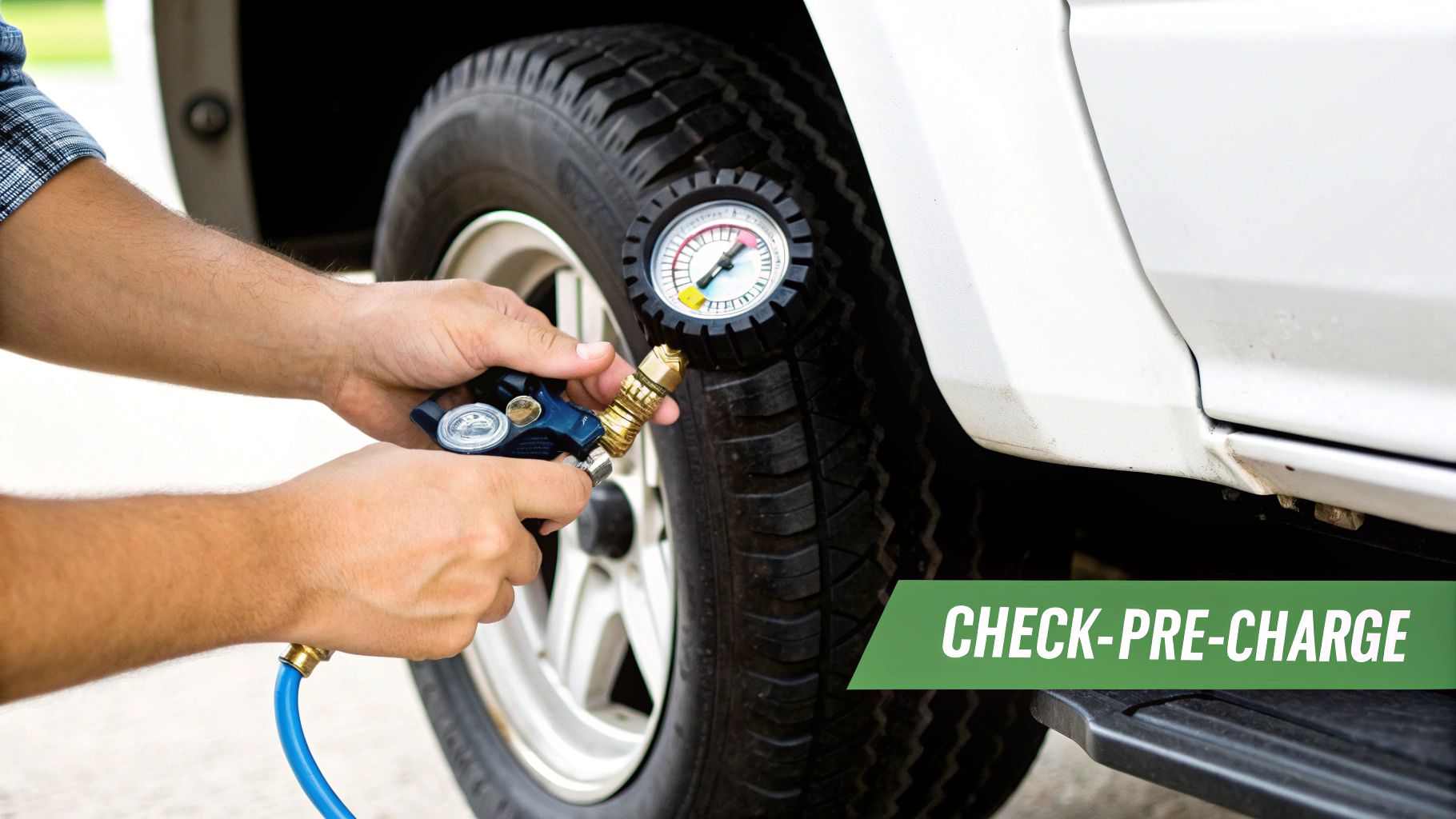
Believe it or not, the first tool you should grab is a simple tire pressure gauge. This quick test is often the most important step in diagnosing water pressure tank problems and will tell you a lot about your tank's health.
How to Check the Pre-Charge Pressure
To get a true reading, you have to isolate the tank's air pressure from the water pressure. Start by shutting off the power to your well pump at the circuit breaker. Next, drain every last drop of water from the tank by opening a nearby faucet.
With the tank completely empty, find the air valve on top—it looks just like the one on a car tire. Unscrew the cap, press your gauge on firmly, and check the reading. This number is your tank’s pre-charge pressure.
Expert Tip: Your tank's pre-charge pressure has to be exactly 2 PSI below the pump's cut-in pressure setting. If your pressure switch is a 40-60 model (it turns the pump on at 40 PSI and off at 60 PSI), the pre-charge must be 38 PSI. Anything else, higher or lower, will cause performance issues.
The Telltale Signs of a Waterlogged Tank
One of the most common culprits behind low pressure is a "waterlogged" tank. This happens when the internal bladder or diaphragm fails, letting water seep into the air side of the tank.
Without that crucial air cushion, the tank can't store pressure effectively. This forces your pump to cycle on and off constantly and leads to those frustrating pressure drops you're experiencing at the tap.
Even a tiny pinhole leak in the bladder can cause this problem over time. If you press the air valve and water spits out, or if you can hear water sloshing around inside a supposedly empty tank, you’ve got a failed bladder. There’s no ambiguity there.
Pressure tanks are built tough, typically rated for 100 to 125 PSI, but they aren't invincible. Things like chemical imbalances in your water or significant pH shifts can degrade the internal components and shorten a tank’s lifespan dramatically.
If weak showers and slow-filling toilets are your reality, this comprehensive low water pressure troubleshooting guide can help you investigate other potential causes beyond the tank itself.
After running these checks, you'll know if you're dealing with a simple fix like adding air or a serious problem like a busted bladder. If the tank won't hold its pre-charge or you've confirmed it's waterlogged, it’s time to call in the pros. Contact our team, and we’ll get your system back in working order before any further damage occurs.
Why Your Well Pump Constantly Runs
Are you hearing your well pump kick on every single time you flush a toilet or even just wash your hands? That constant click-on, whir, click-off sound is a classic sign of a problem called short-cycling. It's not just an annoying noise; it's a huge red flag signaling serious water pressure tank problems.
This relentless on-off action is incredibly hard on your pump's motor and its electrical parts. It's like starting your car engine, driving for ten seconds, then shutting it off, over and over again. All that stress leads to premature failure, and a costly replacement is right around the corner.
The Problem With a Waterlogged Tank
In our experience, the number one cause of short-cycling is a waterlogged pressure tank. When the tank loses its internal air cushion, which usually happens when the internal bladder fails, it can no longer maintain pressure in your plumbing lines. The tank effectively becomes just a wide spot in the pipe.
Without that air charge, the second you open a faucet, the system pressure plummets. This forces the pump to kick on for even the smallest amount of water. It turns on, builds pressure in a matter of seconds, and shuts right back off. This cycle repeats constantly, driving up your electric bill and shortening your pump's lifespan from years to maybe just months. We've seen countless pumps burn out simply because this single issue was ignored.
For a deeper dive into pump-related issues, check out our guide to well pump repair and replacement.
Is It the Tank or a Hidden Leak?
While a waterlogged tank is the usual suspect, there's another possibility: a hidden leak somewhere in your plumbing. A toilet that won't stop running or a slow drip in a pipe under the house creates a constant water demand that can also make the pump cycle more than it should.
So, how do you tell the difference?
- Listen to the cycle time. Short-cycling from a bad tank is almost always very quick—the pump might run for just a few seconds. A leak, on the other hand, often causes the pump to run for longer periods, but it still cycles more frequently than you're used to.
- Shut off the main valve. The easiest test is to turn off the main water valve to your house. If the pump stops cycling completely, you've got a leak somewhere inside. If it keeps short-cycling with the house valve off, the problem is almost certainly the pressure tank itself.
Acting quickly when you first notice short-cycling is the key. You can prevent a minor tank issue from snowballing into a major pump catastrophe. A simple tank replacement is far less expensive and disruptive than having to replace the entire well pump.
If your pump is constantly running, don't just wait for it to fail. Our professional technicians can quickly figure out what's really going on, whether it's a waterlogged tank, a bad pressure switch, or a sneaky leak. We'll give you a clear, reliable solution to stop your well pump from burning out and get your system back to running efficiently.
A Practical Guide to Recharging Your Pressure Tank
So, your troubleshooting has led you to believe the tank is low on air. It’s a common issue, and recharging it can often get things back to normal. But before you jump in, it's crucial to know what you're doing and, more importantly, when to stop. Trying to air up a tank with a busted internal bladder is a waste of time and just kicks the real problem down the road.
First thing’s first: safety. Head to your circuit breaker and kill the power to the well pump. You absolutely do not want that pump kicking on while you're working on the tank—it's incredibly dangerous. With the power off, you need to completely drain the tank. Find a nearby faucet, open it up, and let it run until the water stops entirely. You can't get an accurate pressure reading on a tank that still has water in it.
Setting the Correct Air Pressure
With the tank empty, look for the air valve on top. It’s a Schrader valve, the same kind you'd find on a car or bike tire. Now you can grab a pressure gauge and an air compressor to add air.
The key here is precision. You need to set the air pressure to exactly 2 PSI below your well pump’s cut-in pressure setting. For instance, most homes have a 40-60 PSI pressure switch. This means the pump turns on at 40 PSI and off at 60 PSI. For a 40-60 switch, you’ll want to set the tank’s pre-charge to 38 PSI. That 2 PSI gap is what gives the system its cushion, allowing a small reserve of water to be used before the pump has to cycle on again.
This infographic breaks down the essential steps for getting the recharge right.
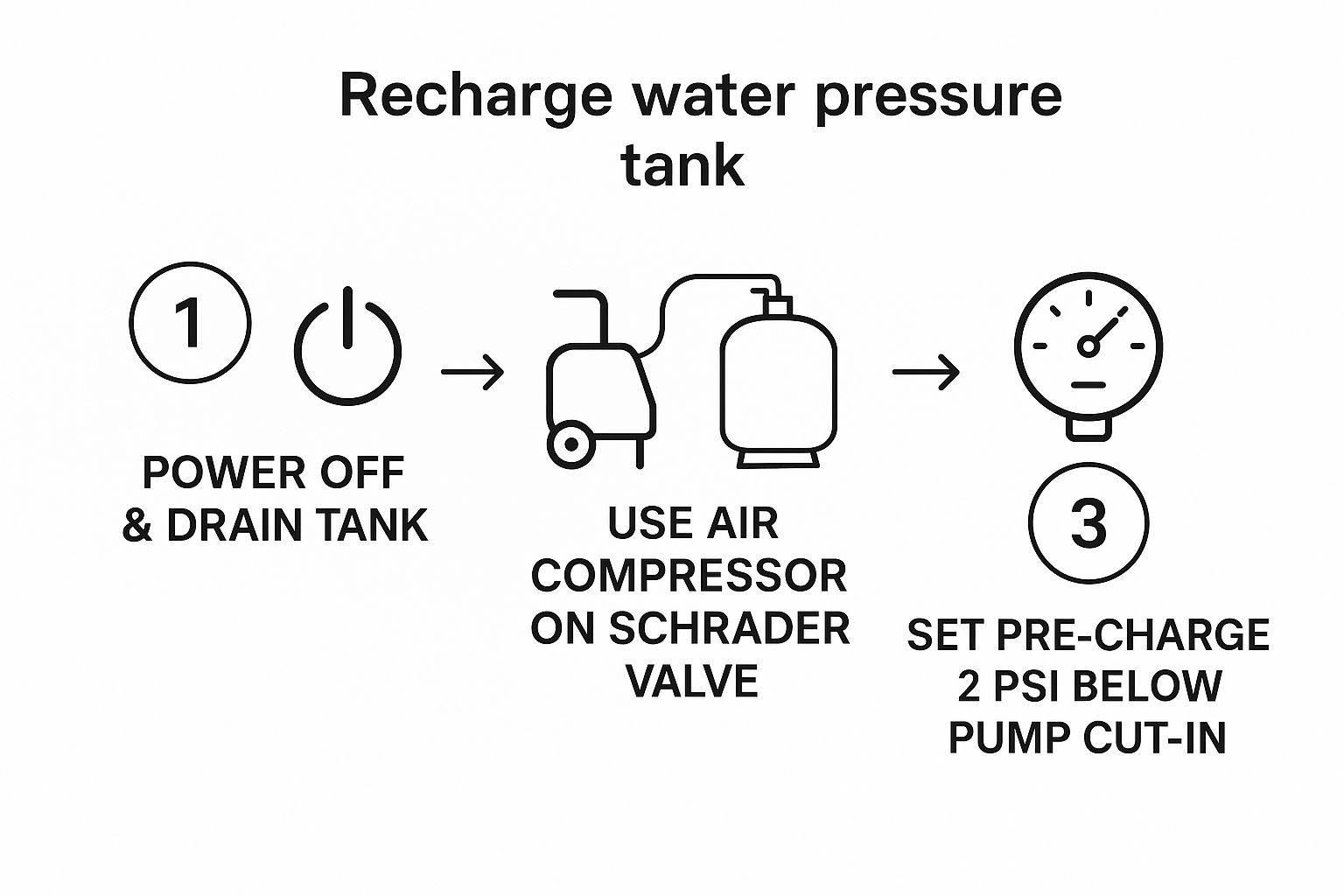
Getting this balance right is everything. The relationship between the pump's switch and the tank's air charge is what keeps your whole water system running smoothly.
Red Flags That Signal a Deeper Problem
This is the moment of truth. As you’re checking the air pressure or starting to pump air in, watch that valve closely.
If water spits out of the Schrader valve when you press the pin, stop right there. The diagnosis is instant: the internal bladder has failed. A ruptured bladder is a fatal flaw. There's no patching it up—the entire tank needs to be replaced.
Another tell-tale sign of failure is a tank that just won't hold air. If you pump it up to 38 PSI, and a few minutes later it’s dropped significantly, the bladder is compromised. It can no longer separate the air from the water. In either of these cases, a simple recharge won't do a thing.
These aren't minor water pressure tank problems; they’re signs that the tank is toast. Trying to make a failed tank work will only lead to a much bigger, more expensive problem: a burned-out well pump. When you see these red flags, the only real solution is to get the tank replaced. Our team can help you get a new tank that's properly sized and calibrated for your well system. And if you want to catch these issues before they become emergencies, our monthly maintenance plans are a great way to stay ahead of the game.
Deciding Between Tank Repair and Replacement
So, you're staring at your water pressure tank, wondering what to do next. This is the big question every homeowner with a well eventually faces: can I get this fixed, or is it time to bite the bullet and get a new one? Getting this right saves you money and a whole lot of future headaches.
Sometimes, the fix is straightforward. If you're dealing with a bad pressure switch, for example, that’s a relatively simple and inexpensive part to swap out. A quick repair can often get your pump cycling correctly without needing to touch the tank itself. But you have to be honest with yourself and recognize when you’re just putting a band-aid on a much bigger wound.
When Replacement Is the Only Option
There are a few tell-tale signs that your tank is truly at the end of its life. If you spot any of these, don't even think about a repair—it's time for a replacement, period.
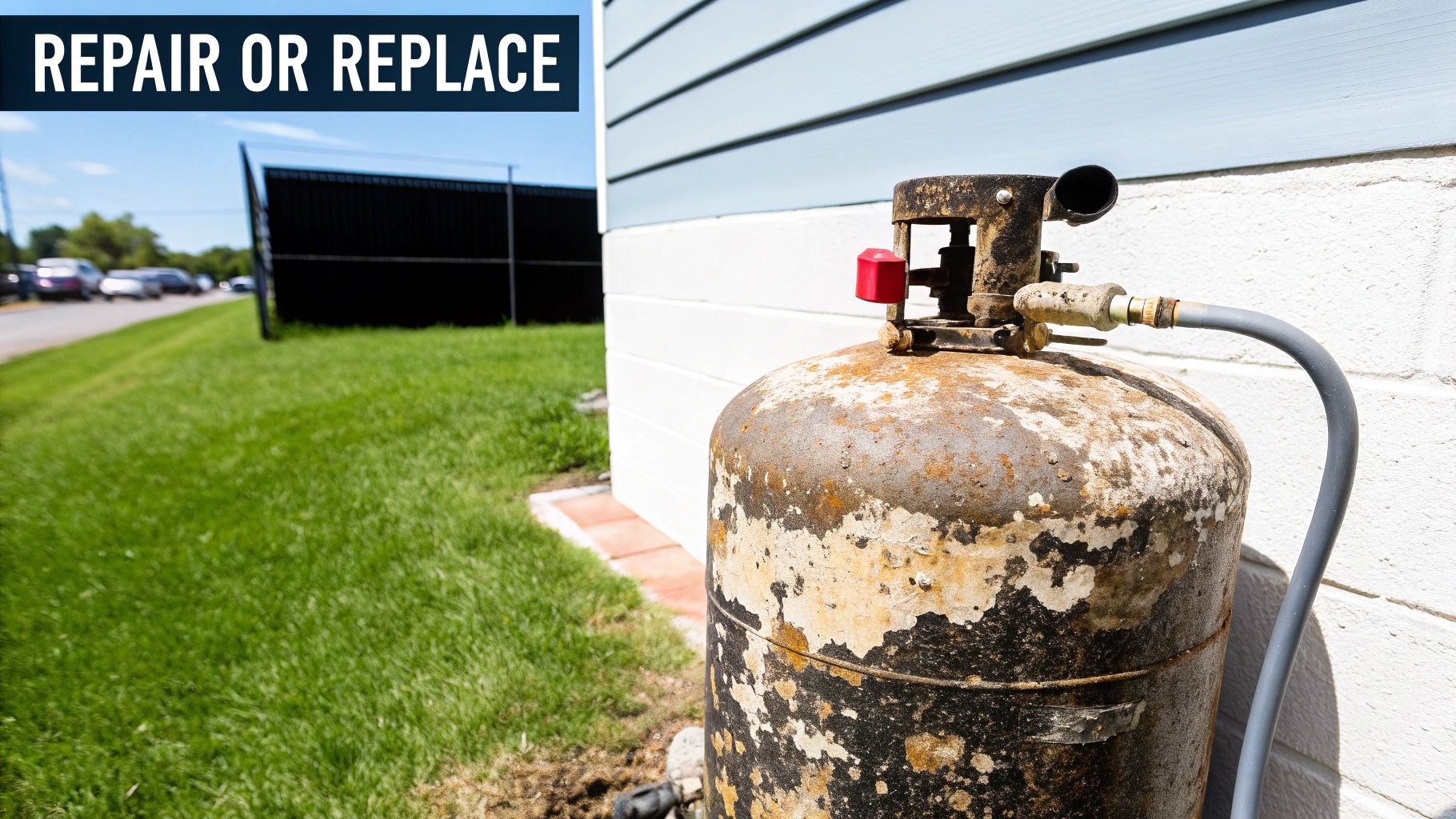
- Obvious Rust or Corrosion: A tank that’s covered in rust on the outside is a sign of deep-seated decay. That metal is getting weak, and it's only a matter of time before it fails completely.
- Visible Water Leaks: Any water, even a slow drip, coming from the body of the tank means it’s structurally compromised. You're basically looking at a flood waiting to happen.
- Confirmed Ruptured Bladder: As we covered earlier, a shot bladder is a fatal diagnosis. If you get a spray of water from the air valve or the tank just won't hold air pressure, the internal diaphragm is torn. That's not a part you can patch up.
Most residential pressure tanks are built to last between 5 and 10 years. If you have poor water quality or the initial installation wasn't quite right, that lifespan can be cut down significantly. A failing tank has often just served its time.
Putting in a new tank isn't just about fixing the immediate problem. It's about protecting your entire well system—especially the pump—from the extra stress a failing tank causes. When you're on the fence, bringing in qualified plumbing services can give you the clarity and professional solutions you need.
A faulty tank isn't just an inconvenience; it can be a genuine safety hazard. Between 1992 and 2001, there were over 23,000 reported accidents involving pressure vessels like water tanks, which really highlights why professional work is so important.
While a DIY replacement might seem tempting, it's a risky job. We see it all the time—improperly sized or calibrated tanks that cause even more problems down the road. For a reliable, worry-free solution, let our experts handle your well water repair and protect your home's water system.
Your Top Water Pressure Tank Questions, Answered
When your water pressure starts acting up, you're bound to have questions. Getting to the bottom of what's happening with your well system is the key to fixing it for good. Here are some of the most common questions we hear from homeowners and our straightforward, expert answers.
How Often Should I Check My Pressure Tank?
Think of it like an oil change for your car. A quick check of your tank's air charge once a year is great preventative medicine. If you have notoriously hard water or an older well, we'd recommend bumping that up to every six months.
You can do this yourself with a standard tire gauge. Catching a little bit of air loss early on can save you from a massive headache and a fried pump motor down the road. But of course, if you suddenly notice your water pressure acting weird, don't wait. Check it out right away. For those who'd rather not worry, our monthly maintenance plans cover a full inspection of the tank and the whole well system, taking the guesswork completely off your plate.
What Size Water Pressure Tank Do I Need?
Getting the tank size right is absolutely critical, and it all boils down to your well pump's flow rate, which is measured in gallons per minute (GPM). One of the most common mistakes we see is an undersized tank, which is a surefire way to cause the destructive pump short-cycling we talked about earlier.
A good rule of thumb: Your tank’s drawdown capacity (how much water it pushes out before the pump kicks on) should match your pump's GPM rating. So, if you have a 10 GPM pump, you'll want a tank with a 10-gallon drawdown.
Just grabbing the cheapest tank or guessing on the size is a recipe for disaster and will almost certainly lead to premature pump failure. Our technicians can come out, properly assess your system's output, and make sure you get the exact right tank for the job—one that will keep things running efficiently for years.
Can a Bad Pressure Tank Make Me Lose All My Water?
You bet it can. While the tank itself doesn't stop the water, a failed one can create a domino effect that does. For instance, if a waterlogged tank makes your pump short-cycle like crazy, the motor can easily overheat and trip a breaker or its own internal safety switch. Just like that, your pump is dead in the water.
Another way this happens is if the pressure switch fails. That's the little device that tells the pump when to turn on and off. If it breaks in the "off" position, your pump never gets the signal to start. A sudden, total loss of water is a big deal, and it’s a sign you need a professional out there immediately to figure out what's wrong before more damage is done.
Is It Safe to Replace a Pressure Tank Myself?
We get the appeal of a DIY project, but this is one we really recommend leaving to the pros. There are just too many risks involved for most homeowners. You're dealing with:
- High-pressure water lines
- Electrical wiring for the pressure switch
- Plumbing connections that have to be perfect
One small mistake—a leaky fitting or a crossed wire—can lead to serious water damage or a dangerous electrical situation. Worse yet, you could set up the new system improperly and end up wrecking your pump. Our licensed and insured plumbers can handle the job safely and correctly, and our work is warrantied. It gives you peace of mind that it's done right the first time.
Don't let a faulty pressure tank disrupt your daily life or put your entire well system at risk. If any of these problems sound familiar, the expert team at Water Medic of Cape Coral is here to help. We provide professional diagnostics, repairs, and full replacements to get your water pressure back to normal and protect your investment. Schedule your service by visiting us at https://watermedic.com today.