Your Guide to a Saltwater System Pool
Picture this: a swimming pool with water that feels incredibly soft and silky, where you can open your eyes underwater without the sting, and you step out without that overpowering chlorine smell clinging to your skin. This isn't a fantasy; it's what a saltwater system pool offers. It’s not about dumping ocean water in your backyard, but rather a clever way to keep your pool sparkling clean automatically.
So, What Is a Saltwater System Pool Anyway?
At its heart, a saltwater pool is still a chlorine pool. The big difference is how the chlorine gets there. Instead of you having to lug around heavy buckets of chlorine pucks or jugs of liquid, a saltwater system creates its own fresh, pure chlorine on-site.
It all starts by adding a small amount of special, highly-refined pool salt to the water. We're talking a very mild concentration—about one-tenth the saltiness of the ocean. Most people can't even taste it, but they definitely feel the difference in the water's soft, smooth texture.
The real star of the show is a device called a salt chlorine generator. As your pool water circulates, it passes through this generator, which uses a safe, low-voltage electrical process called electrolysis to split the salt (sodium chloride) into its basic components. This action instantly creates the purest form of chlorine to sanitize your pool. The result is a consistent, steady stream of sanitizer, getting rid of the harsh chemical spikes you often get with traditional methods.
Why Are They So Popular?
It’s this hands-off, more comfortable approach that has made saltwater systems a top choice for pool owners. The global market for these systems was valued at around $2.5 billion in 2025 and is expected to climb by about 7% annually through 2033. Homeowners simply want a better, lower-maintenance swimming experience. You can discover more insights about saltwater chlorinator market growth if you're curious about the trend.
A saltwater pool doesn't eliminate chlorine; it just changes how it's made and delivered. Think of it as a miniature, on-demand chlorine factory for your pool, keeping the water perfectly sanitized around the clock.
This simple, repeating cycle is what makes the system so brilliant.
As the diagram shows, the salt cell turns dissolved salt into chlorine. That chlorine does its job cleaning the water and, once it’s used up, it naturally reverts back into salt, ready to start the cycle all over again. Our team specializes in making sure this entire system is installed and fine-tuned for your pool, making the switch completely seamless. Explore our professional swimming pool services to see how we can upgrade your swimming experience.
How a Saltwater System Creates Its Own Chlorine
Ever wondered how a saltwater pool stays clean without you dumping in chlorine all the time? It’s not magic; it’s actually a pretty clever bit of science. Think of a saltwater system as a miniature chlorine factory, working 24/7 right in your pool's plumbing.
This automated setup gets rid of the hassle of buying, storing, and manually adding chlorine. The whole operation relies on two main pieces of equipment: the control box (the brains) and the electrolytic salt cell (the heart). We professionally install the salt cell right into your pool’s plumbing, just after the filter, so every drop of water returning to the pool gets sanitized.
The Science Behind That Silky-Smooth Water
First things first, you add special, highly refined pool-grade salt directly into the water. We’re not talking ocean-level salty here. The target concentration is only about 3,000 to 4,000 parts per million (ppm)—roughly one-tenth the saltiness of seawater. This is why the water feels so soft and silky, not sticky like an ocean swim.
As your pump circulates the water, this mildly salty solution flows through the salt cell. Inside this cell is a stack of metallic plates coated with special metals like ruthenium and iridium. The control box sends a safe, low-voltage electrical current across these plates, triggering a process called electrolysis.
Electrolysis is just a fancy word for using electricity to split molecules apart. In this case, it splits the salt (sodium chloride, or NaCl) in your water into its basic components. This action instantly generates pure chlorine—specifically, hypochlorous acid—which is the most effective sanitizer for your pool.
This freshly made chlorine then flows into your pool to kill algae, bacteria, and other unwanted stuff. Here’s the really cool part: once the chlorine has done its job, it naturally reverts back to salt, and the whole cycle starts over again. It’s a closed loop that keeps your pool consistently sanitized.
This infographic breaks down the simple, three-step journey.
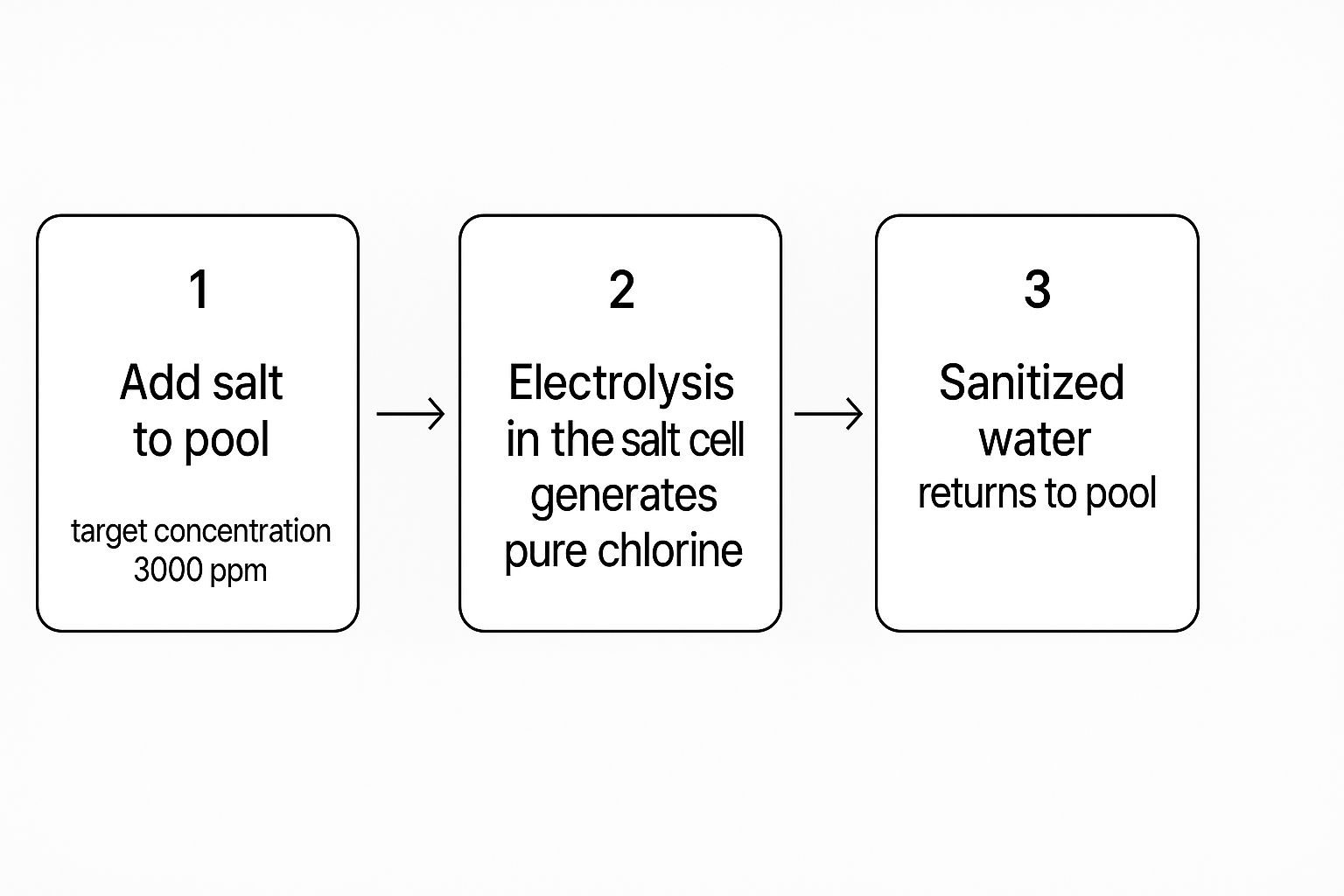
As you can see, it’s a straightforward, continuous cycle—no more of the harsh chemical spikes and dips you get from adding chlorine manually.
Why This Automated Process is a Game-Changer
That steady, low-level chlorine production is what makes saltwater pools feel so different. Traditional pools get a big dose of chlorine once a week, which can be harsh. A salt system keeps the sanitizer level stable and consistent.
Here’s what that means for you:
- So Much More Comfortable: The constant low level of chlorine prevents the buildup of chloramines—the nasty culprits behind that "chlorine smell," red eyes, and itchy skin.
- Way Less Work: Forget lugging heavy buckets of chlorine from the store. Your main jobs will just be checking the salt level every now and then and cleaning the cell periodically.
- Saves Money in the Long Run: Yes, there's an upfront cost. But over time, you’ll save a ton on chlorine tablets and liquid shock. We can even help you run the numbers to see the long-term savings for your pool.
It's no surprise that this technology is taking off. The global market for salt chlorine generators was valued at around USD 318 million in 2024 and is expected to hit USD 482 million by 2032. North America is leading the charge, making up over 40% of that market.
This isn't just a trend; it's a clear signal that homeowners are moving toward smarter, more enjoyable ways to keep their pools clean. You can read more about the global market trends for salt chlorine generators to see why it's becoming the new standard. And with our professional installation services page, you can be sure every part is set up perfectly, so you can just kick back and enjoy your incredible pool.
Saltwater Systems vs. Traditional Chlorine Pools
So, you're trying to decide how to keep your pool sparkling clean. The classic debate almost always boils down to saltwater systems versus traditional chlorine. Here's the interesting part: both methods use chlorine to sanitize the water. The real difference lies in how that chlorine is produced and what that means for your wallet, your free time, and your swimming experience.
Let's break down what you can expect as a pool owner with each system. This isn't just about a simple list of pros and cons; it’s about the day-to-day reality of living with each choice.
The Swimmer Comfort Factor
The first thing anyone notices is how the water feels. We’ve all been there with traditional chlorine pools—the stinging red eyes, itchy skin, and that potent chemical smell that follows you around for hours. That's not from the chlorine itself, but from byproducts called chloramines, which form when chlorine attacks sweat, oils, and other gunk.
A saltwater system pool, on the other hand, is a game-changer. It creates pure chlorine on-site, in a steady, controlled way, which dramatically cuts down on those irritating chloramines. The result? Water that feels incredibly silky, soft, and smooth. You can open your eyes underwater without the burn, and you won’t feel like you need to shower the moment you get out.
The Maintenance Reality Check
Owning a traditional chlorine pool means you're on a constant chemical treadmill. Every week, it's the same routine: test the water, then haul out and handle harsh chlorine tablets or liquid shock. You are the system, and if life gets busy and you miss a week, you could be dealing with a nasty algae bloom.
Switching to a saltwater system automates the most demanding part of that job. The salt cell becomes your personal chlorine factory, working around the clock. Your to-do list gets a whole lot shorter and simpler:
- Test your water balance for pH and alkalinity, which you’d do with any pool.
- Glance at the salt cell a few times a year to check for mineral scale and clean it if needed.
- Toss in a bag of salt once in a while, usually just to top things off after a big rainstorm or a lot of splashing.
This is a massive upgrade in convenience. You get to spend more time swimming and less time playing amateur chemist. If this sounds appealing, our saltwater pool service can make your life even easier.
A Transparent Cost Analysis
Okay, let's talk money. This is where you have to look past the sticker price and think about the long run.
-
Traditional Chlorine: The startup cost is minimal, but the bills never stop. You’re constantly buying buckets of chlorine, shock treatments, and other chemicals. It feels like a subscription you can't cancel, and those costs add up to hundreds of dollars every single year.
-
Saltwater System: Yes, the initial investment is bigger because you have to buy the salt chlorine generator. But after that, your chemical expenses plummet. A few bags of inexpensive pool salt a year is usually all you need. The salt cell will need to be replaced every 3-7 years, but most owners find that the long-term savings on chlorine easily cover that cost, making the saltwater system the more budget-friendly option over time.
Over a five-year period, many homeowners find that the savings from not buying chlorine have completely paid for their initial investment in a saltwater system. From that point forward, you're saving money every season.
To help you see the differences at a glance, we've put together a simple comparison.
Saltwater System vs. Traditional Chlorine Comparison
This table breaks down the key distinctions between the two most popular pool sanitation methods.
| Feature | Saltwater System Pool | Traditional Chlorine Pool |
|---|---|---|
| Water Feel | Silky, soft, and gentle on skin and eyes. | Can be harsh, causing dry skin, red eyes, and a chemical smell. |
| Maintenance | Largely automated; less frequent chemical handling. | Requires weekly manual testing and adding of chlorine/shock. |
| Upfront Cost | Higher, due to the purchase of a salt chlorine generator. | Low; minimal initial equipment needed. |
| Ongoing Costs | Low; occasional salt additions and cell replacement every 3-7 years. | High; continuous purchase of chlorine, shock, and other chemicals. |
| Chemical Handling | Minimal; no need to store or handle concentrated liquid/tablet chlorine. | Regular handling and storage of caustic chemicals is required. |
Ultimately, the choice comes down to weighing the higher initial investment of a saltwater system against the long-term convenience, comfort, and cost savings it offers.
When you think about the environmental side of things, it’s worth understanding green cleaning principles. A saltwater system aligns well with this by reducing the need to transport, store, and handle concentrated chemicals at home. If you’re ready to make the switch, our team offers a seamless saltwater pool conversion service to help you enjoy all these benefits without any of the guesswork.
The Real Bottom Line: What Does a Saltwater Pool Actually Cost?
Let's talk money, because that's what it all comes down to, right? A saltwater pool feels amazing and cuts down on daily chores, but what’s the real investment? To make a smart decision, you need to look at the full financial picture—from day one to years down the road.
The biggest number you'll see is the upfront cost. This covers the salt chlorine generator, which is the heart of the whole system, plus the professional installation. It might be tempting to try a DIY install to save a few bucks, but that's a gamble we don't recommend. A botched installation can lead to an inefficient system, damage your other pool equipment, and rack up repair bills that dwarf any initial savings.
That's why having an experienced technician handle it is so important. We'll make sure the generator is the right size for your pool, hook it up correctly to your plumbing and electrical, and get it running at peak performance. Getting it right the first time is the best way to protect your investment.
Breaking Down the Ongoing Expenses
Once the system is installed, this is where you start to see the financial upside. Compared to a traditional chlorine pool, your regular running costs are surprisingly low.
Here’s a realistic look at what you’ll be spending:
- Annual Salt: You're not constantly dumping in salt. You only add more to replace what gets diluted from backwashing, a heavy downpour, or a big splash-out from a cannonball contest. For most people, this is just a few cheap bags of pool salt a year.
- Electricity: The salt generator does need electricity to work its magic, but modern units are incredibly efficient. The impact on your power bill is usually pretty small, often about the same as running a small appliance.
- Salt Cell Replacement: This is your main recurring expense. The salt cell is the component that actually generates the chlorine, and it wears out over time. Expect to replace it every 3 to 7 years, depending on how much you use your pool and how well you maintain it.
This different way of spending is catching on. The global market for pool salt is already a $2 billion industry and is set to keep growing. People are recognizing the long-term savings and health benefits of moving away from constantly handling harsh chemicals.
A Clear Look at Long-Term Value
When you put the numbers side-by-side, the choice becomes pretty clear. A traditional chlorine pool means you're on a constant treadmill of buying chlorine tablets, liquid shock, and algaecides. Those weekly trips to the pool store add up fast and can take a serious bite out of your annual budget.
With a saltwater system, you trade that constant drip of chemical purchases for one larger, predictable expense every few years. Over the life of the system, this almost always leads to significant savings.
When you look at the total cost of ownership, saltwater pools frequently come out ahead. You can finally stop the endless cycle of buying buckets of chlorine that are gone in a few weeks. While it's crucial to understand the costs specific to saltwater systems, it helps to see how they stack up against the general annual cost of maintaining a pool for a complete picture.
We want to show you exactly how a saltwater system can be the smarter, more convenient choice for your wallet and your lifestyle. To get a detailed financial breakdown tailored to your specific pool, just ask.
Converting Your Pool to a Saltwater System
So, you're thinking about ditching the weekly chlorine grind for the silky-smooth feel of a saltwater pool? You're not alone. Making the switch is one of the most common upgrades pool owners ask for, and it's probably more straightforward than you imagine.
The heart of the conversion is installing a salt chlorine generator. This is the clever piece of tech that automatically creates its own chlorine. While it sounds simple, getting the details right is where experience really counts. A proper conversion is about more than just hooking up a new box; it’s about building a balanced, efficient system that will last for years.
Getting the Size and Setup Right
First things first: you have to choose the right gear. A salt chlorine generator that’s too small for your pool will be working overtime just to keep up, which often leads to cloudy water and algae problems. On the other hand, a unit that's way too big is just a waste of money.
Our technicians always start with a detailed assessment to match the generator to your pool's exact volume. This ensures you get consistent, effective sanitization day in and day out. It’s a simple calculation, but getting it wrong is a costly mistake.
We also take a hard look at your current pool setup. Your plumbing and electrical systems need to be able to handle the new equipment. A professional check ensures everything is compatible and up to code, giving you a safe and reliable saltwater system pool from the get-go.
Handling Compatibility and Water Chemistry
Older pools can sometimes throw a few curveballs. Saltwater is a bit more corrosive than traditionally chlorinated water, so we need to make sure your existing equipment can handle it.
We pay close attention to a few key areas that can have compatibility issues:
- Older Pool Heaters: Some heaters have internal parts that aren't designed to resist salt corrosion.
- Metal Fixtures: Things like ladders, handrails, and light rings might need extra protection depending on the metal they're made from.
- Certain Types of Coping: Porous stone or unsealed concrete can absorb salt, which can cause pitting and damage over time.
A crucial part of our process is installing a sacrificial zinc anode in the plumbing. It’s a simple, inexpensive part that acts like a magnet for corrosion, protecting your expensive heater and other metal components from the effects of salt.
Once all the hardware is in, the final step is getting the water chemistry dialed in perfectly for the startup. This means adding just the right amount of high-purity pool salt and carefully balancing the pH, alkalinity, and stabilizer. Nailing this initial balance is the secret to a hassle-free transition and beautiful, clear water from day one.
Switching to a saltwater system is an investment in your comfort and convenience. Our team has the hands-on experience to handle every detail, from sizing the system to protecting your existing pool equipment. We make the entire process smooth and worry-free. To see how we can transform your pool, take a look at our dedicated installation services page.
Keeping Your Saltwater Pool Sparkling Is Easier Than You Think
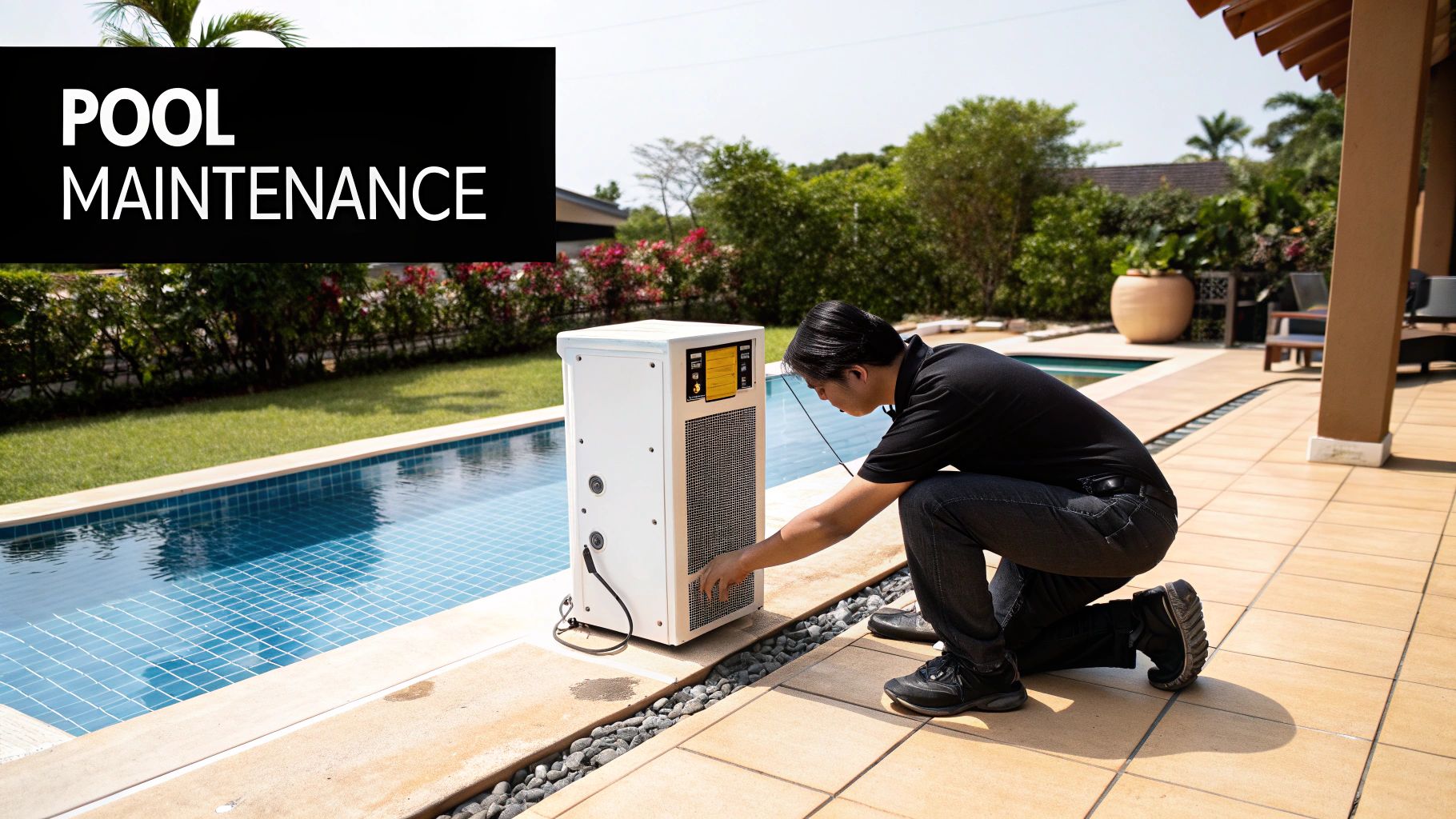
Let's clear the water on a common myth: saltwater pools are not "no-maintenance." While they are certainly less work than a traditional chlorine pool, they do need a little regular attention to keep the water feeling great and looking crystal clear.
Think of it less as a demanding chore and more as a simple routine. This low-key approach is a major perk, but ignoring the basics can cause bigger issues down the road. A little upkeep goes a long way in protecting your saltwater system pool and making sure it's always ready for a swim.
Your Simple Upkeep Schedule
The best way to stay on top of pool care is to get into a simple rhythm. Breaking tasks down into a weekly, monthly, and occasional checklist makes everything feel manageable and prevents small problems from turning into costly headaches.
Here’s a straightforward plan you can follow.
Weekly Tasks
- Test the Water: Your salt system is making chlorine automatically, but you still need to keep an eye on your pH, alkalinity, and free chlorine levels. Balanced water is the secret to a happy, healthy pool.
- Skim and Brush: Scoop out any leaves or debris floating on the surface. Then, give the pool walls a quick once-over with a brush to stop algae before it even thinks about starting.
Monthly Responsibilities
- Check Salt Levels: Grab a salt test strip to make sure your concentration is in that sweet spot, usually between 3,000 and 4,000 ppm. If you've had a lot of rain or had to add a bunch of fresh water, you might need to toss in a bag of salt.
- Inspect the Salt Cell: Take a quick look at your salt cell for any crusty, white mineral buildup. This is calcium scaling, and it can clog up the cell, making it less effective and wearing it out faster.
Don't let your investment go unprotected. Consistent, professional maintenance is the single best way to ensure the longevity of your salt cell and the health of your entire pool system.
Annual and As-Needed Care
- Clean the Salt Cell: Roughly every three to four months, it's time to give the salt cell a proper cleaning. This usually just involves a gentle soak in a mild acid solution to dissolve any gunk that's built up.
- Check Stabilizer Levels: A few times a year, test your cyanuric acid (CYA), also known as stabilizer. This is a crucial chemical that acts like sunscreen for your chlorine, protecting it from being zapped away by the sun's UV rays.
Let the Experts Handle It for You
Does that schedule still sound like more than you want to add to your to-do list? We get it. Your time is valuable, and you bought a pool to enjoy it, not work on it.
That's where we come in. Our professional pool maintenance packages are built for the unique needs of saltwater systems. We take care of everything on this list and more, from dialing in the water chemistry to expertly cleaning the salt cell. When you hand the keys over to us, you can just kick back and enjoy a perfectly clean pool, no work required.
Learn more about how our dedicated saltwater pool service can give you a perfectly maintained pool without any of the work.
Common Questions About Saltwater Pool Systems
Even with all the benefits laid out, it's completely normal to have some lingering questions. We get these all the time from homeowners who are on the fence about making the switch. Getting straight answers is the best way to feel confident you're making the right move.
Let’s tackle the most common questions we hear, one by one.
Will My Pool Taste Salty Like the Ocean?
This is probably the biggest myth out there, and the answer is a firm no. A saltwater pool has a salt concentration of around 3,000 parts per million (ppm). That might sound like a lot, but it’s actually about 10 times less salty than the ocean.
In fact, that level of salinity is closer to what you’d find in human tears. Most people can't even taste it. What they do notice right away is how incredibly soft and silky the water feels on their skin. It’s a completely different, much more pleasant sensation than swimming in a traditional chlorine pool.
Is a Saltwater System Bad for My Pool Equipment?
It's true that salt can be corrosive over time, but modern pool equipment is built to withstand it. The key is proper installation from the start.
To prevent any issues, we almost always install a sacrificial zinc anode. Think of it as a small "magnet" for corrosion—it draws the corrosive elements away from your expensive metal components like ladders, rails, and heater parts. For any porous stone or decking, a good sealant creates a protective barrier. With these simple, professional steps, your pool and all its parts will stay in great shape for the long haul.
The longevity of your pool equipment in a saltwater environment is directly tied to the quality of the initial installation and consistent maintenance. Expert setup is the best defense against potential corrosion.
Can I Switch My Existing Chlorine Pool to Saltwater?
Absolutely! Converting chlorine pools to saltwater is one of our most requested jobs. For a seasoned pro, the process is surprisingly straightforward. It mainly involves integrating a salt chlorine generator into your existing plumbing and electrical setup.
Before we do anything, our technicians will give your pump, filter, and heater a thorough check to make sure everything is compatible. Once the generator is installed, we'll add the right amount of pure, pool-grade salt and get your water chemistry balanced perfectly. We take care of every last detail to make your switch to a superior saltwater system pool totally hassle-free.
If you have more questions, our comprehensive pool FAQs page offers even more answers from our experts.
Ready to experience the soft, silky water of a saltwater pool for yourself? Water Medic of Cape Coral has over 25 years of experience ensuring flawless installations and conversions. Contact us today for a personalized quote and discover the ultimate upgrade in swimming comfort and convenience. https://watermedic.com