
Brown Water in Tub: Causes and Fixes
There's nothing quite like the shock of turning on the faucet for a relaxing bath and seeing murky, brown water in tub fixtures instead of clear, clean water. Your first reaction is probably a mix of disgust and panic, but don't worry—it’s usually not as bad as it looks. While our team at Water Medic can provide a permanent solution, understanding the cause is the first step.
Most of the time, that ugly brown color comes from harmless minerals like iron or a temporary stir-up in the local water supply. That said, it's definitely a sign that something in your water system needs a closer look, and professional intervention is often the best way to ensure the problem is solved correctly.
What's Really Going On With That Alarming Brown Water?
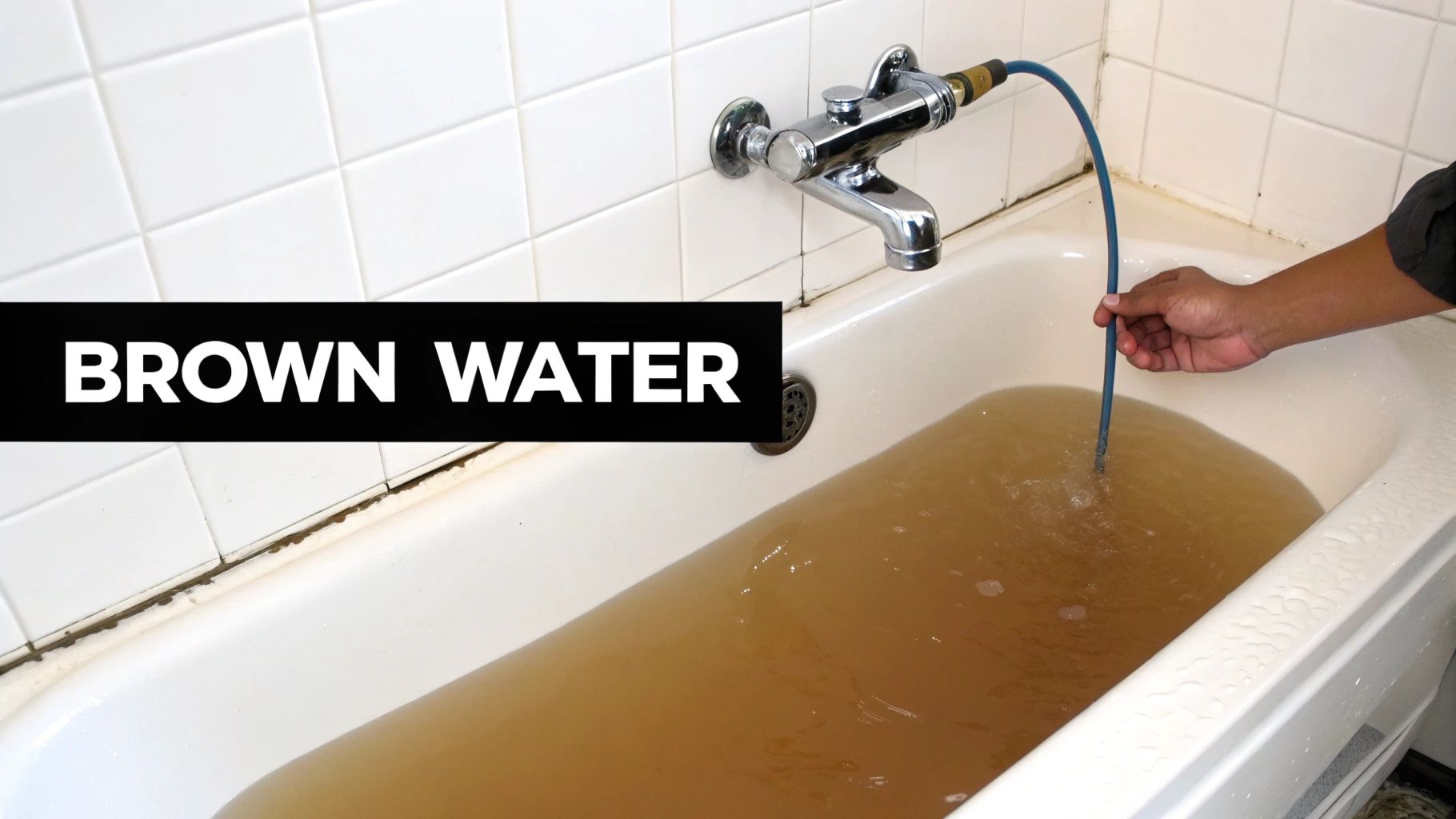
The second you see that brownish-yellow water pouring into your tub, your mind probably jumps to the worst-case scenario. Is it contaminated? Is a pipe about to burst? These are totally fair questions, and you shouldn't just ignore them. This is a pretty common issue, especially here in Southwest Florida where we have a lot of older homes and private wells, but figuring out the cause is key to implementing the right fix.
Think of your pipes like the arteries of your home. Over the years, rust and sediment can build up on the inside walls. When you suddenly get a blast of brown water in tub and sinks, it's usually because something has disturbed those deposits. The cause could be minor, but it could also point to a more serious problem that requires a professional solution from Water Medic.
Common Reasons for Discolored Water
So, where is this stuff coming from? The problem could be starting right inside your own home, or it might be a neighborhood-wide issue. Pinpointing the source is the first step to getting things back to normal.
Here are the usual suspects we run into:
- Rust from Old Pipes: If your home has older galvanized iron pipes, they can start to corrode from the inside out. This rust breaks free and mixes with your water, often looking its worst first thing in the morning after water has been sitting in the pipes all night.
- Mineral Buildup: The water here in Southwest Florida is often high in minerals like iron and manganese. These can settle at the bottom of pipes or in your water heater, and any change in water pressure can kick that sediment up and send it straight to your tub.
- City Water Main Work: Ever notice your water looking funky after seeing crews working on a fire hydrant down the street? When the city flushes the main lines for maintenance, it stirs up all the sediment in the system, which can temporarily discolor the water for everyone on the block.
- Water Heater Problems: Is it only your hot water that’s brown? If so, the culprit is almost certainly your water heater. Sediment builds up in the bottom of the tank over time, and not only does it discolor your water, but it also makes your heater work harder and less efficiently.
While that brown water is often harmless, it's a clear signal that something in the delivery system—whether it’s the city main, your well, or the pipes in your walls—has an issue. Getting a professional diagnosis is the only sure way to fix it right the first time.
Knowing what might be causing the problem is a good start, but it doesn't get you clear water. Your top priority is making sure the water your family uses is safe and clean. Here at Water Medic, we’ve been diagnosing and fixing this exact problem for homeowners all over Southwest Florida for years. As you can see on our About Us page, we’re local experts with over 20 years of experience dedicated to making sure your water is perfect.
What's Behind That Sudden Brown Water in Your Bathtub?
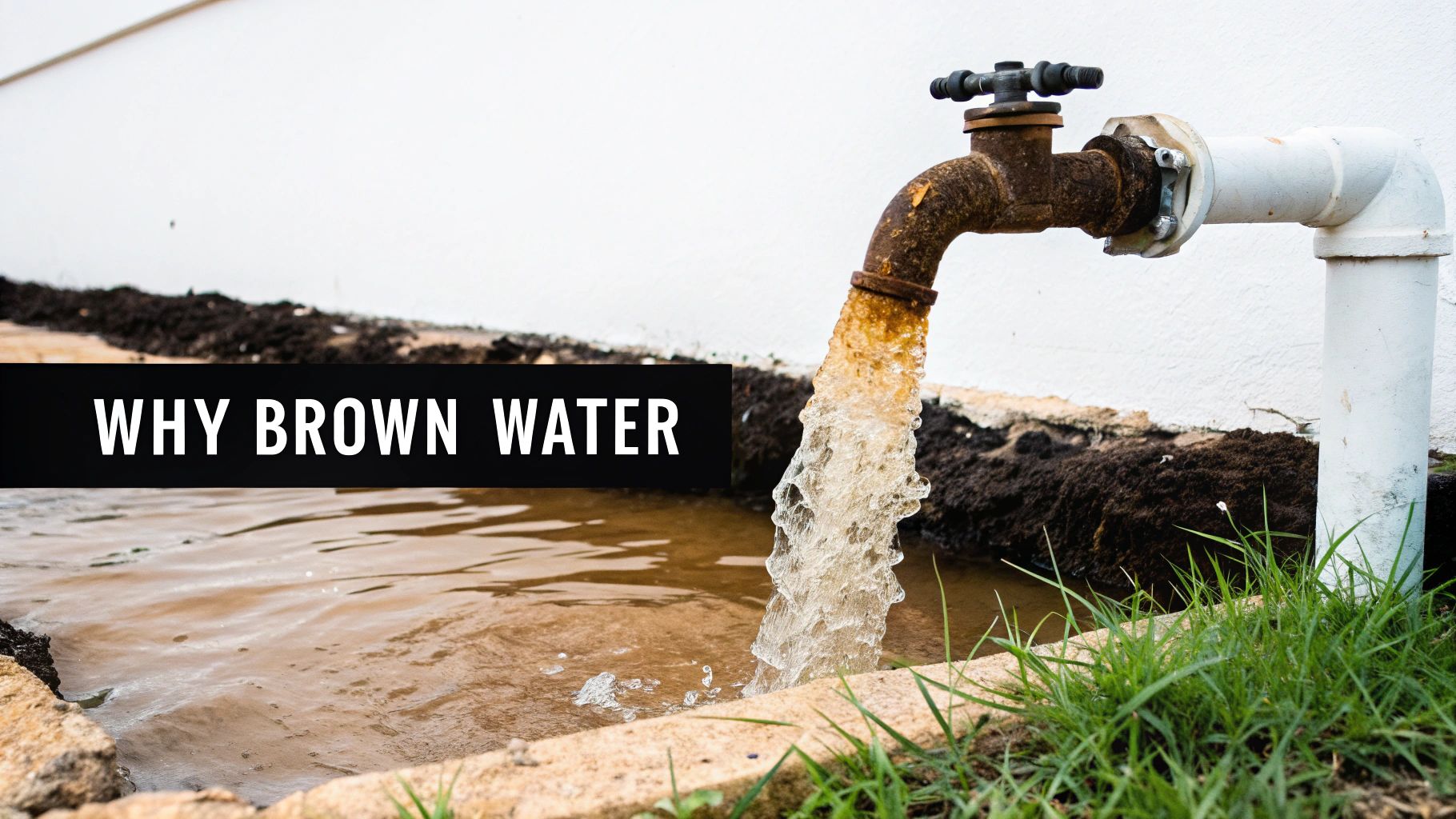
Think of your home's plumbing as its circulatory system. Day in and day out, clean water flows through these "veins," but over time, mineral and rust deposits can build up on the inside walls of your pipes. When you suddenly see brown water in your tub, it's usually a sign that something has knocked these deposits loose.
Sometimes, this discolored water is just a temporary inconvenience that clears up on its own. Other times, though, it’s a red flag pointing to a bigger issue that needs a professional eye. Finding the source is the first and most important step to getting your clear water back for good.
The Usual Suspects: Where Is It Coming From?
Several common culprits are likely responsible for turning your water from clear to a murky brown. The problem could be starting with the city's water supply, your own private well, or somewhere in the pipes running through your home.
Often, the cause is as simple as rust. If you live in an older home, you might have galvanized iron pipes. After decades of use, these pipes start to corrode from the inside out. Tiny rust particles flake off and get carried along with your water, giving it that familiar brownish hue.
Another big factor, especially here in Southwest Florida, is mineral sediment. Our water is naturally high in minerals like iron and manganese. While they aren't harmful in small amounts, they can settle at the bottom of your pipes and water heater, forming a sludge that gets stirred up when water pressure changes.
Playing Detective: How to Pinpoint the Problem
So, where do you start? A few simple questions can help you narrow down the source of the discoloration. Is the brown water coming from every faucet, or just one? Does it only show up when you turn on the hot water?
- Hot Water Only: If you only see brown water when you run the hot tap, your water heater is almost certainly the culprit. Over time, rust and sediment build up in the tank. When that gunk gets stirred up, it flows out with your hot water, not only looking nasty but also making your heater less efficient.
- Cold Water Only (or Both): When you see discolored water from both the hot and cold taps, the issue is further up the line. It's likely in your main plumbing lines, your well system, or even the municipal supply, pointing to a more widespread problem.
For a deeper dive into what could be going on, it can be helpful in understanding the nature of various water issues. Just remember, even if the water clears up on its own, the underlying problem that caused it is still there.
Special Headaches for Well Owners
If your home gets its water from a private well, you're dealing with a completely different set of rules. Wells pull groundwater directly from the aquifer, which can be packed with high concentrations of iron and other minerals. This is a recipe for chronic brown water problems that can leave stubborn stains on your laundry, sinks, and tubs.
A frequent issue we see in local well systems is iron bacteria. These are naturally occurring microorganisms that literally feed on the iron in your water. While they aren't harmful to drink, they create a disgusting, slimy, reddish-brown residue inside your well, pump, and pressure tank.
This bacterial slime can break off in clumps, causing sudden and dramatic bursts of brown water in your tub and faucets. The stains it leaves are incredibly tough to get out and are a dead giveaway that your well needs professional attention. If you let it go, the bacteria will just keep multiplying, eventually clogging your pipes and potentially damaging your expensive well pump.
For well owners, a simple water filter from the hardware store just won't cut it. You need specialized solutions that can tackle both the high mineral content and the living organisms causing the problem. If you suspect your well is the source of your brown water, it’s time to call in an expert. Our team provides dedicated well water repair services to diagnose and fix these exact issues, ensuring your water is clean, clear, and safe.
That moment you turn on the faucet and see a murky, brown stream gushing into your tub is jarring. It's an unsettling sight, and your first thought is probably, "Is this safe?"
While it's often just harmless rust, you can't be sure just by looking at it. Instead of panicking, the best thing you can do is take a few calm, methodical steps. This will help you figure out what's going on, keep your family safe, and decide if it's time to call in a professional.
Your Immediate Brown Water Action Plan
When you first spot discolored water, follow these steps right away. This simple plan helps you assess the situation quickly and protects your home and family from potential contaminants.
| Action Step | Why It Matters | Contact Resource |
|---|---|---|
| Don't Drink or Cook | Your first priority is safety. Switch to bottled water immediately, as you can't confirm the cause is harmless without testing. | Use bottled water for all consumption. |
| Check With Neighbors | A quick text or call can tell you if the problem is just your house or the entire neighborhood. This is a critical clue. | Your next-door neighbor. |
| Call Your Utility | If your neighbor also has brown water, the issue is likely with the municipal supply. Reporting it helps them fix it faster. | Your local water utility's service line. |
| Run Cold Taps Only | If it's just your home, go to a sink and run only the cold water. This helps isolate the problem. | Perform this test at a bathroom or kitchen sink. |
| Test the Hot Water | If cold water runs clear, try the hot water tap. If it comes out brown, the issue is almost certainly your water heater. | This points directly to your water heater tank. |
Taking these steps gives you control and crucial information. Now you can move on to figuring out the why behind the brown water.
What Do These First Steps Tell You?
If your neighbors' water is running clear, you know the problem is somewhere on your property. That's when your own little investigation comes in handy.
Running the cold water tap is your first test. If it starts out brown but clears up after a minute or two, you’re likely just flushing out some loose sediment that settled in the pipes. No big deal. But if it stays consistently brown, you’ve got a more persistent issue on your hands.
Next, a hot water-only test tells a different story. If the brown water only shows up when you turn on the hot tap, you’ve basically found your culprit: it’s almost certainly rust and sediment that has built up inside your water heater tank.
Keep in mind, these are just initial diagnostic steps. They’re incredibly useful for narrowing down the problem, but they can't replace a professional diagnosis to confirm exactly what's in your water.
Discolored water can sometimes be a red flag for more serious contamination issues. The World Health Organization highlights that at least 1.7 billion people worldwide rely on drinking water sources that are contaminated. You can discover more about global water safety standards and understand why clean water is so essential for your family's health.
Ultimately, seeing brown water in tub fixtures is your plumbing system’s way of telling you something is wrong. If the water doesn't clear up quickly or if you have any doubt about its safety, don't wait. For fast, reliable help and professional water testing here in Southwest Florida, contact Water Medic of Cape Coral and get your peace of mind back.
Finding The Real Source: DIY Checks vs. Professional Diagnosis
So, you've got a tub full of murky brown water. The first step is to play detective. Before you can even think about a fix, you have to find out where it’s coming from. A few simple checks you can do yourself will give you some valuable clues, helping you narrow down the list of suspects from your entire plumbing system to a single appliance.
These initial tests are all about a process of elimination. By checking different faucets and water temperatures, you can start to pinpoint the origin of the problem. This arms you with real information, so if you do need to call a professional, you can give them a clear picture of what’s happening.
Your At-Home Water Investigation
Think of this as your first line of defense. The goal is to figure out if this is a localized issue inside your home or a bigger problem coming from outside.
First, run only the cold water in your bathtub for a few minutes. Does it start out brown and then run clear? If so, it's likely just loose sediment that was sitting in the pipes. No big deal. But if that cold water stays consistently brown, the problem is probably further upstream—in your main water line or even your well.
Next, turn off the cold water and run only the hot. If the brown water in tub fixtures suddenly appears only when the hot tap is on, you’ve likely found your culprit: the water heater. Over time, sediment and rust build up at the bottom of the tank, and this is a classic sign that it needs a good flushing or some professional attention.
When DIY Isn't Enough
These home-brewed tests are great for gathering initial evidence, but they don't tell you the whole story. You might correctly guess you have a rusty water heater, but you can’t see the invisible contaminants that might be hitching a ride with that rust. Is it just iron, or are you dealing with something more serious like lead or bacteria?
A DIY check might tell you where the problem is, but only a professional diagnosis can tell you exactly what the problem is. Guessing is just a good way to waste time and money on the wrong solution.
This is where a professional diagnosis isn't just a good idea—it's essential. It's an investment in getting a real, long-term fix. Without a precise understanding of your water’s chemistry, any solution is just a shot in the dark. You might fix the color but completely miss a more significant health or plumbing issue lurking beneath the surface.
This decision guide gives you a simple, visual roadmap for your first response when you see brown water.
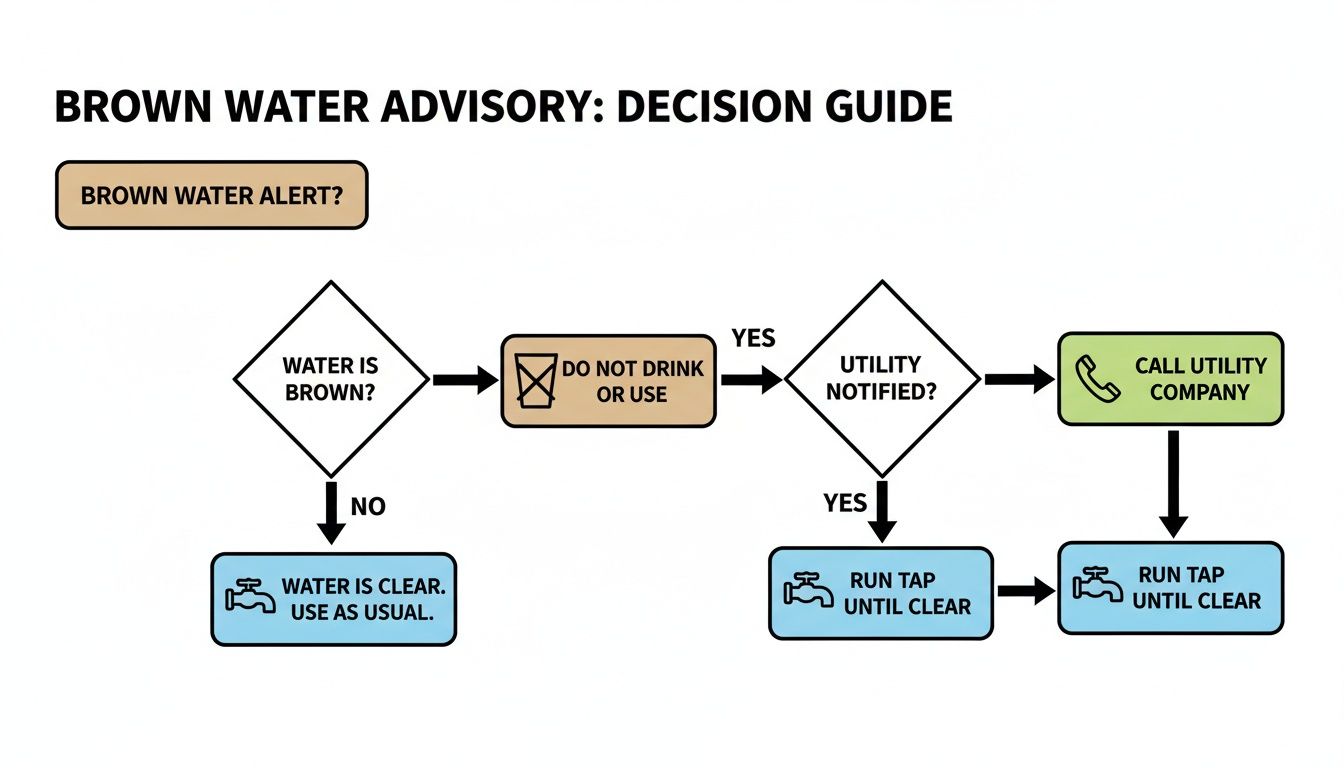
As the guide shows, your first actions should always put safety first. After that, it’s all about gathering information before you jump to any conclusions or fixes.
The Power of a Professional Water Analysis
A comprehensive water analysis from Water Medic goes far beyond what your eyes can see. Our technicians use advanced testing to create a detailed profile of your water, identifying the exact contaminants causing the discoloration and flagging any others that may be present.
Our professional water testing looks for:
- Minerals: We measure the precise levels of iron, manganese, and other minerals that are notorious for causing stains and buildup.
- Tannins: Common in well water, these organic compounds can give your water a yellow or brownish tint, almost like weak tea.
- Bacteria: We test for harmful bacteria, including specific iron-loving bacteria that can thrive in wells and plumbing systems.
- Corrosivity: We also check the pH and other factors that could be causing your pipes to corrode from the inside out. This is a crucial part of our specialized leak detection services, because corrosive water is a leading cause of pinhole leaks.
The results of this analysis give us a clear, scientific roadmap. Instead of guessing, we can recommend a specific, targeted solution—whether that’s an iron filter, a water softener, or a whole-house filtration system—that is guaranteed to solve your brown water problem for good.
Lasting Solutions For Permanently Clear Water
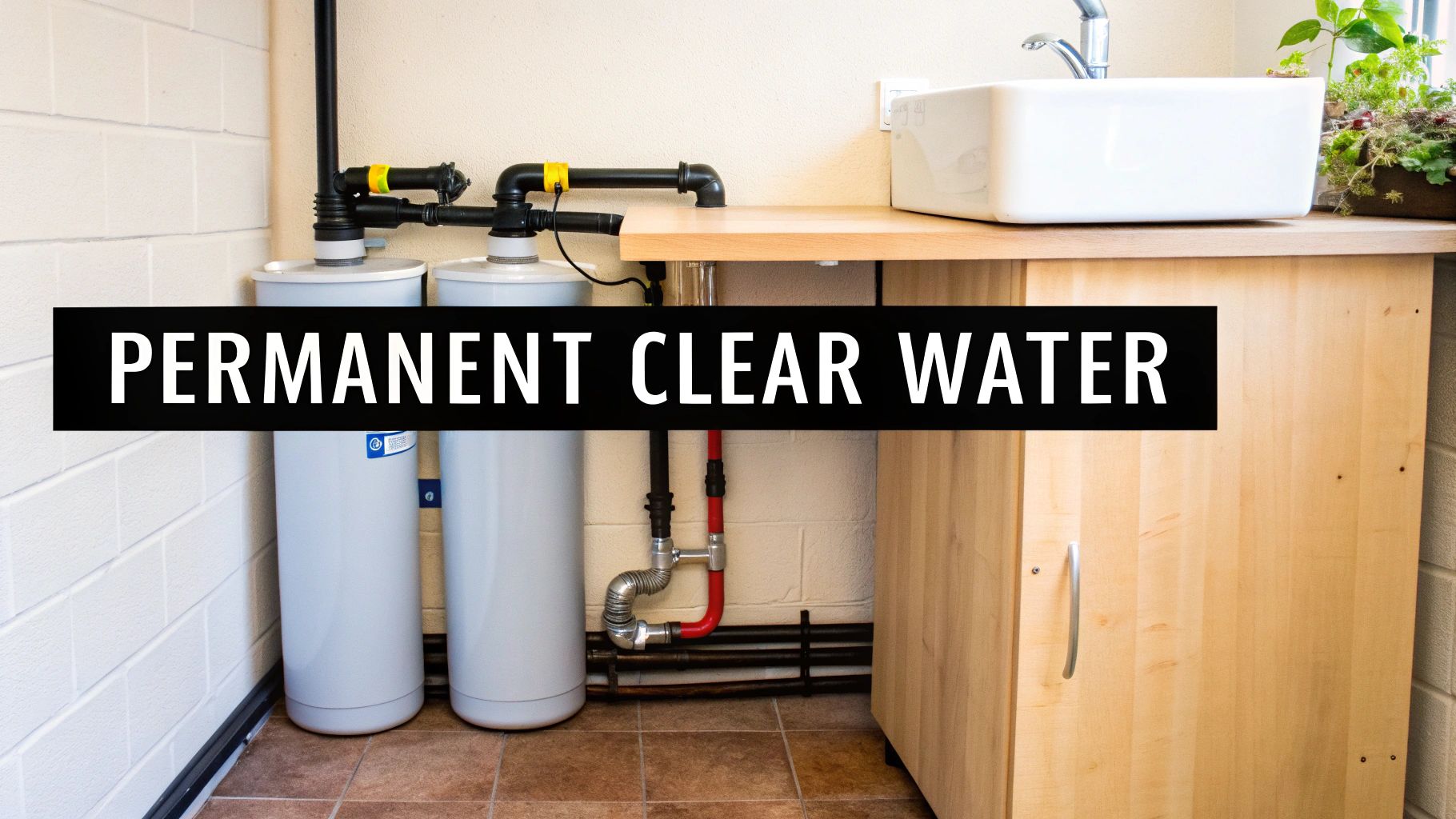
Once our professional water analysis pinpoints exactly what’s causing the brown water in your tub, we can finally move past the guessing game. This is where we stop diagnosing and start designing a permanent solution. Here at Water Medic, we know that a one-size-fits-all approach just doesn't work for water quality. We build systems that are tailored to your home’s specific water profile, guaranteeing you get crystal-clear water from every tap.
And let’s be clear: this is about more than just looks. It’s about protecting your entire home, from the pipes hidden in your walls to expensive appliances like your dishwasher and water heater. Getting it right saves you a fortune in future repairs and gives you complete confidence in the water your family uses every single day.
Tailored Treatments for Mineral and Rust Issues
If your water test comes back showing high levels of iron, manganese, or hardness minerals, that discoloration you’re seeing is just the tip of the iceberg. These minerals are surprisingly abrasive, building up inside your plumbing, choking off water flow, and causing your appliances to fail years before they should. A simple screw-on faucet filter won’t make a dent in this kind of problem.
To really tackle this, we install specialized filtration systems right where the water enters your home, stopping these contaminants in their tracks.
- Advanced Iron Filters: Think of these as the frontline defense against rust-colored water. They use a special media that essentially forces iron particles out of the water and traps them, so they never have a chance to stain your tub.
- High-Efficiency Water Softeners: Hard water minerals are a major contributor to sediment and cloudy water. A water softener removes them, which not only clears things up but also prevents that crusty scale buildup, helps your soap lather up properly, and leaves your skin feeling much softer after a shower.
These systems are the essential tools for defeating the most common culprits behind discolored water in Southwest Florida. For older buildings where the problem is deeply rooted in aging pipes, a lasting fix might even involve looking into professional condo remodeling services to bring the entire plumbing system up to date.
Specialized Systems for Well Water Challenges
If you're on a well here in Southwest Florida, you’re dealing with a whole different ballgame. Well water can be loaded with tannins, iron bacteria, and other organic compounds that municipal water users just don't encounter. This calls for a much more robust treatment plan.
For well owners, simply treating the symptoms is never enough. You need a system that addresses the source of the contamination to ensure your water is not only clear but also safe and free of unpleasant odors and tastes.
Our approach to well water is strategic and multi-layered. We'll often start with sediment filters to catch the big stuff, then bring in specialized oxidation systems to knock out iron and sulfur. From there, we might recommend our powerful activated carbon filters, which are fantastic at absorbing the organic compounds and other contaminants that mess with the taste and smell, basically polishing your water to perfection.
The Ultimate Investment: Whole-House Reverse Osmosis
For homeowners who want the absolute gold standard in water purity from every single faucet, a Whole-House Reverse Osmosis (RO) system is the definitive answer. It’s like having your own personal bottling company right in your utility room. This system uses pressure to force your water through a microscopic membrane, stripping out up to 99% of dissolved solids, minerals, bacteria, and pretty much any other contaminant.
This isn't just another filter; it's a full-blown purification powerhouse. A Whole-House RO system delivers total peace of mind, knowing that the water for bathing, cooking, and drinking is as pure as it gets. It's a serious investment in your family's health and your home's value.
No matter what’s turning your water brown, there is a permanent fix. Schedule your free water analysis today with Water Medic of Cape Coral, and let our experts design the perfect system to bring clear, clean water back to your home for good.
Answering Your Top Questions About Discolored Water
Even when you know the potential causes, seeing that murky brown water in your tub can still leave you with a lot of questions. It's totally normal to wonder what the right next step is. Let's tackle some of the most common questions we hear from homeowners to help you get some clarity.
"Can't I Just Use A Simple Faucet Filter?"
It's a fair question, and one we get all the time. While screwing on a faucet or showerhead filter might make the water look better coming out of that one tap, it’s really just a band-aid. It’s not solving the root problem.
Think of it this way: that filter does nothing for the rest of your home. All that rust, iron, and sediment is still flowing through your pipes, building up in your expensive water heater, and getting into your dishwasher and washing machine. It’s a temporary fix that leaves your most valuable appliances vulnerable to long-term, costly damage.
"Will The Brown Water Just Go Away On Its Own?"
Sometimes, yes. If the city is flushing hydrants or doing work on the water mains in your neighborhood, the issue is often temporary and should clear up in a few hours.
But—and this is a big but—if the problem is coming from inside your own plumbing system or your private well, it’s not going anywhere. In fact, ignoring it is the worst thing you can do. Persistent brown water is a clear signal that something like pipe corrosion or heavy mineral buildup is happening, and that problem will only get worse and more expensive to fix over time.
Ignoring the problem is a gamble that rarely pays off. A persistent issue will lead to more significant staining, reduced water pressure, and eventual appliance failure.
"Is A Whole-House System Really Worth The Investment?"
Absolutely. Investing in a whole-house water filtration system is one of the smartest moves you can make for your home's health and your own peace of mind. It’s a permanent solution that cleans the water the moment it enters your house, so every single tap delivers fresh, clear water.
This approach stops the problem at the source. It protects your entire plumbing network and saves your water heater, washing machine, and other appliances from being destroyed by sediment and mineral buildup. It's the only way to truly fix the problem for good.
Don't let brown water problems linger. The experts at Water Medic of Cape Coral have the experience and technology to diagnose the issue accurately and provide a lasting solution. Get a free consultation today.