Is reverse osmosis distilled water Really The Purest Choice?
The short answer? No. Reverse osmosis (RO) water is not the same as distilled water, even though both are fantastic purification methods. It’s a common point of confusion, but they get to that incredibly pure end result through two completely different paths.
Getting this right from the start is key to picking the best water solution for your home, especially here in Southwest Florida where our water has its own unique set of challenges. At Water Medic, we specialize in custom solutions that deliver pure, great-tasting water from every tap.
The Difference Between Reverse Osmosis and Distillation
It's easy to see why people think reverse osmosis and distillation are interchangeable. Both give you exceptionally clean water. The real difference, and what matters for your home, is how they remove all the unwanted stuff.
At its core, think of it this way: Reverse osmosis is a physical filtration process, while distillation is a thermal one. One pushes, the other boils. Understanding this is the first step toward choosing the ideal whole-home water treatment system for your family.
Core Purification Methods
Distillation is one of the oldest purification methods around. You simply boil water, which turns it into steam and leaves virtually all contaminants—like heavy metals, minerals, and bacteria—behind. That steam is then collected and cooled, condensing back into incredibly pure liquid water. This process is a powerhouse, achieving removal rates of over 99% for inorganics like lead and arsenic.
On the other hand, a modern RO system uses pressure to force water through a very fine, semi-permeable membrane. This high-tech filter is so small that water molecules can pass through, but larger dissolved solids cannot. It effectively strips out over 95% of total dissolved solids (TDS), including common Florida concerns like nitrates, salts, and even PFAS chemicals.
RO vs Distilled Water At A Glance
To really see the differences side-by-side, this quick comparison breaks it down. It’s a great way to grasp the core distinctions between these two powerful water purification methods.
| Feature | Reverse Osmosis (RO) | Distilled Water |
|---|---|---|
| Process | Pushes water through a membrane | Boils and condenses water |
| Energy Use | Low; uses water pressure | High; requires electricity to boil |
| Speed | On-demand, continuous flow | Slow, batch process |
| Installation | Point-of-use or whole-house | Countertop appliance |
As you can see, the methods and practical applications are quite different. While both produce pure water, their day-to-day usability in a home setting varies significantly.
For most households, an under-sink reverse osmosis system is simply the more practical and efficient solution. It delivers a continuous flow of purified water right from your tap, ready whenever you need it.
How Each Purification Process Really Works
To get to the bottom of whether reverse osmosis is the same as distilled water, we need to look at how each one actually purifies water. While both give you incredibly pure results, they get there in completely different ways. One is a high-tech filtration method, and the other mimics a natural, heat-based cycle. For homeowners here in Southwest Florida, understanding this distinction is crucial for picking the right solution for your home.
The Multi-Stage Reverse Osmosis Method
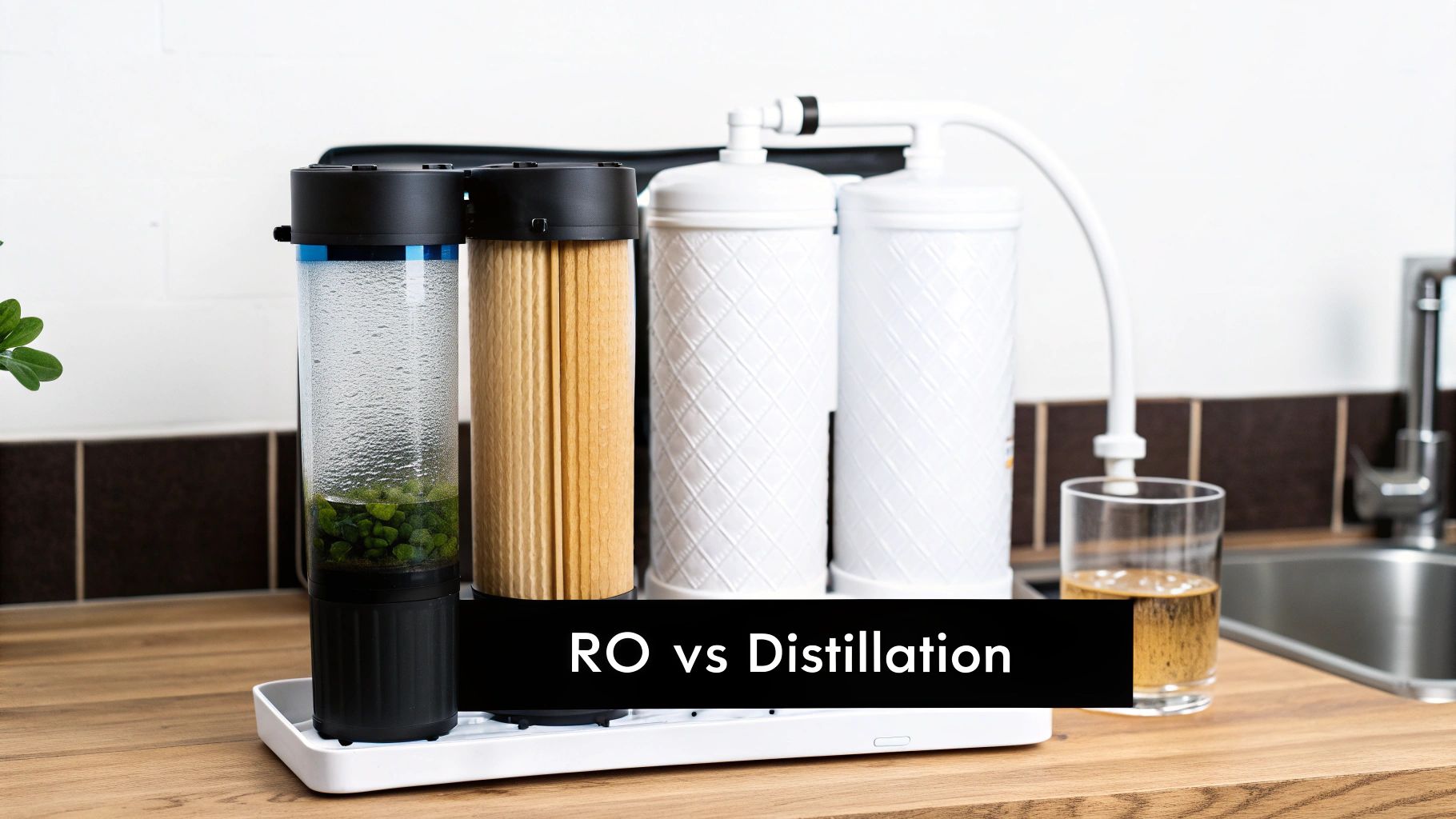
Picture a reverse osmosis (RO) system as a sophisticated, multi-layered security checkpoint for your water. It’s not just one filter doing all the work; it’s a coordinated team of filters that systematically strip out impurities. The best part? It delivers a continuous stream of clean water whenever you turn on the tap.
Here’s a breakdown of how it operates, step by step:
- Pre-Filtration: Before your water hits the main filter, it first goes through sediment and carbon filters. These are the workhorses that get rid of the big stuff—sand, silt, rust, and chlorine. This initial step is absolutely essential for protecting the delicate RO membrane and making the whole system last longer.
- The RO Membrane: This is where the magic happens. High pressure forces water molecules through a semi-permeable membrane that has incredibly tiny pores. These pores are so small that they effectively block a massive list of contaminants like dissolved salts, lead, arsenic, PFAS, and nitrates, letting only pure water molecules squeeze through.
- Post-Filtration: After the membrane does its job, the purified water usually gets a final pass through a carbon filter. Think of this as a "polishing" step. It removes any lingering tastes or odors, making sure the water that comes out of your faucet is perfectly crisp and clean.
Because this is an on-demand process, it’s a huge plus for any busy household. You get purified water instantly, no waiting around. That's what makes it the go-to solution we install for everyday drinking and cooking.
The Classic Distillation Process
Distillation is basically nature's water cycle in a machine: evaporation, condensation, and precipitation. It’s a tried-and-true method, but it’s also much slower and uses a lot more energy. The whole concept is based on separating pure water from contaminants by boiling it.
The process itself is pretty simple:
- Boiling: Water is heated in a container until it creates steam.
- Evaporation: When the water turns to steam, it leaves behind things that don't boil, like minerals, heavy metals, and salts.
- Condensation: The pure water vapor is then captured and cooled down in a separate container, where it turns back into liquid water.
Distillation is fantastic at removing minerals and bacteria, but it’s a batch process. You have to wait hours just to produce a single gallon. This makes it far less practical than the instant flow of an RO system for daily use. Also, the use of high-quality carbon filters in RO systems gives them an advantage in catching certain volatile organic compounds (VOCs) that can sometimes evaporate with the steam during distillation.
Purity and Taste: A Head-to-Head Comparison
When you're trying to decide between reverse osmosis and distilled water, it really boils down to what each process takes out—and what that means for your water's quality and taste. For those of us in Southwest Florida, this is a critical question, especially with local concerns like agricultural runoff and emerging chemicals in our water sources.
Both methods give you incredibly pure water, but they get there differently and excel in unique ways. Distillation is the undisputed king of removing non-volatile contaminants. By boiling water and collecting the steam, it leaves behind almost everything—heavy metals, minerals, bacteria, and viruses. What you're left with is water that's about as close to pure H₂O as you can get.
Where Reverse Osmosis Shines
Reverse osmosis, on the other hand, is a more precise tool for tackling the water challenges we face today. An RO system is a powerhouse when it comes to filtering out dissolved solids and a huge spectrum of chemical contaminants.
This is especially important right here in Florida, where we worry about:
- Nitrates and Pesticides: These often find their way into our water supply from nearby agricultural areas.
- PFAS "Forever Chemicals": A growing national concern, these industrial compounds are tough to remove, but RO is one of the best residential solutions available.
- Dissolved Salts: Living in a coastal region means higher salinity, and RO systems are fantastic at reducing that salty taste.
Think of a professionally installed RO system as a chemical bouncer for your home, stopping these specific threats from ever reaching your tap. Our expert technicians can test your water and recommend a system tailored to your specific needs.
The Critical Difference in Taste
For most people, the first thing they notice is the taste. Distillation strips out virtually everything, including all the minerals. The result is a taste many describe as "flat" or even "bland." This is great for appliances that are prone to mineral buildup, but it's not what most of us want in a drinking glass.
While reverse osmosis and distilled water offer distinct purity profiles, exploring the broader implications of water quality reveals how different purification methods, like understanding the impact of water filtration on flavour, can significantly impact the taste of beverages.
This is where our RO solutions really make a difference. We tackle the purity-versus-taste problem head-on by adding a remineralization filter to our systems. This final step puts back healthy, taste-friendly minerals like calcium and magnesium. You get water that's not just impeccably clean, but also has that crisp, refreshing flavor your family will actually enjoy drinking.
Consistency is another key advantage of reverse osmosis for home use. A well-maintained RO membrane will filter out 95-99.9% of contaminants day in and day out. Distillation is consistently pure by nature, but it can struggle with volatile chemicals that can evaporate with the water unless it's paired with a carbon filter. For Southwest Florida homeowners, a professionally maintained Water Medic RO system delivers the ideal balance: consistently pure water that tastes fantastic.
Choosing The Right Water For Everyday Home Use
Okay, let's move past the science and talk about what really matters: which water is right for your home? The best choice isn't just about a purity contest; it's about what fits your family's daily life, from the glass of water you drink to the appliances you need to keep running.
This decision often comes down to a few key priorities.
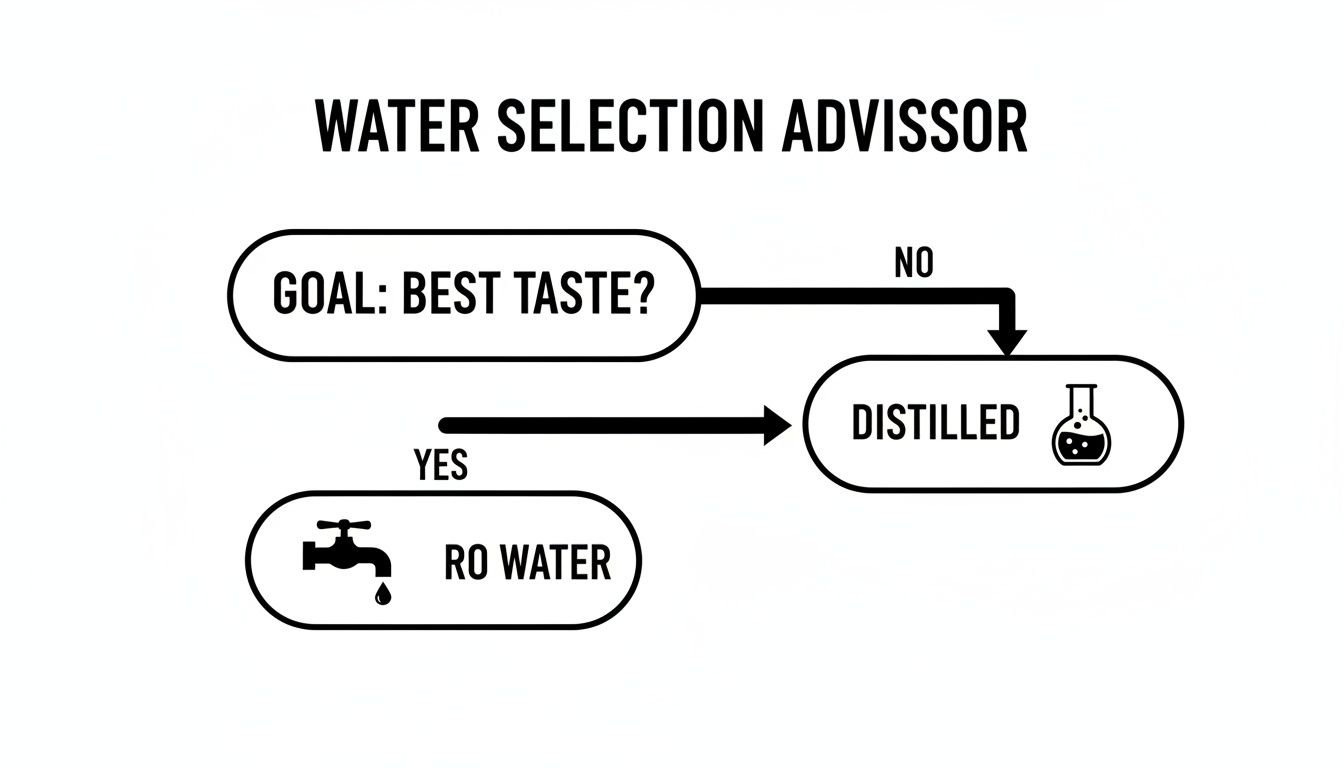
As you can see, if great-tasting drinking water is your top priority, remineralized reverse osmosis is the way to go.
For Drinking And Cooking
When it comes to the water you and your family actually consume, taste is everything. Distilled water is incredibly pure, but that purity comes at a cost—it tastes flat and lifeless because all the natural minerals have been boiled out.
On the other hand, reverse osmosis water, especially when it runs through a remineralization filter, gives you the best of both worlds. It’s stripped of contaminants but then infused with healthy minerals for a crisp, clean taste everyone will actually enjoy drinking.
For the kitchen, an under-sink RO system is the hands-down winner. You get an endless supply of fantastic, purified water right from the tap for drinking, cooking pasta, brewing coffee, and filling water bottles. It’s a simple upgrade that makes a huge difference.
For Specialized Home Equipment
Some appliances are picky and need a specific type of water to work properly and last longer. This is where distilled water really shines.
- CPAP Machines & Humidifiers: Manufacturers are clear on this one—use distilled water. Its lack of minerals prevents the crusty limescale buildup that can clog and destroy these sensitive devices.
- Irons & Car Batteries: It's the same story here. Using distilled water prevents mineral deposits, ensuring these items function correctly and have a longer lifespan.
For these jobs, keeping a jug of distilled water from the store is the easiest solution. But trying to use it for everything else around the house would be a massive, impractical headache. For more on this, check out this great resource on understanding ultrapure water and its suitability for drinking.
The takeaway is simple: match the water to the task. Use distilled for specific machines, but for everything else you do—from drinking to bathing—you need a more practical, comprehensive solution. That’s where a whole-house system comes in.
For Whole-House Purity
Imagine turning on any faucet in your home and getting purified water—your shower, your washing machine, even the hose you use to fill the pool. That's the power of a whole-house reverse osmosis system. It's simply the best solution for providing consistent, high-quality water across your entire property.
Here at Water Medic, this is exactly what we do. We design and install systems built for the unique water challenges we see here in Southwest Florida. We’ll look at your home’s specific needs and your family’s lifestyle to build a seamless system that protects both your health and your plumbing.
Analyzing The True Cost And Environmental Footprint
When you're looking at water purification systems, the price tag is just the starting line. The real story unfolds over months and years, where the long-term financial and environmental costs of reverse osmosis and distillation reveal two very different paths for homeowners.
You have to look past the initial setup fee. The true cost of ownership includes daily operating expenses, ongoing maintenance, and the system's overall sustainability. This is where a whole-house RO system really pulls ahead as the more practical and intelligent choice for daily life.
The Financial Breakdown
If you need a lot of pure water for your family every day, the high energy demand of distillation quickly becomes a budget-buster. Think about it: a distiller has to boil water for hours just to produce a single gallon. That's a surefire way to see a noticeable spike in your electric bill.
A modern reverse osmosis system, on the other hand, runs mostly on your home's existing water pressure. The only electricity it might need is for a small, optional booster pump. The main ongoing expense is swapping out filters, which is a predictable and affordable task, unlike the fluctuating cost of electricity.
When it comes to energy efficiency and cost for everyday homeowners in Southwest Florida, reverse osmosis crushes distillation, proving RO isn't just a substitute for distilled water but a smarter, more practical choice.
To really see how these systems stack up over time, let's break down the true investment in terms of cost, maintenance, and day-to-day usability.
Long-Term Cost & Usability Breakdown
| Factor | Whole-House Reverse Osmosis | Home Water Distiller |
|---|---|---|
| Initial Cost | Higher upfront investment | Lower initial cost |
| Operating Cost | Very low; runs on water pressure. Minimal electricity. | Very high; requires significant electricity to boil water. |
| Maintenance | Simple filter changes every 6-24 months. | Requires frequent descaling and cleaning to remove mineral buildup. |
| Water Output | High output; provides pure water on demand to the whole house. | Very slow; produces ~1 gallon every 5-6 hours. |
| Convenience | "Set it and forget it" convenience for the entire home. | Manual process: fill, run, collect, repeat. |
| Best For | Families needing large volumes of purified water daily. | Small-scale, specific uses (CPAP, aquariums) where only a little water is needed. |
The table makes it clear: while a distiller might seem cheaper at first, the ongoing electricity costs and manual effort make it an expensive and cumbersome choice for anything beyond niche uses.
The Environmental Impact
From an environmental standpoint, both systems leave a footprint, but technology has given RO a clear edge. A common knock against older RO systems was the amount of wastewater they generated. That’s a valid concern, but the high-efficiency models we install today have come a long way, dramatically reducing water waste while maximizing pure water output.
Distillation, with its heavy reliance on electricity, often carries a much larger carbon footprint, especially here where a lot of power comes from non-renewable sources. For homeowners looking for a more sustainable solution, the efficiency of a professionally installed whole-house RO system makes it the more responsible choice. It delivers pure water for your entire home without the massive energy draw, solidifying its place as the superior long-term solution.
Why a Whole-House RO System Is the Smart Choice
After weighing the processes, purity levels, and day-to-day practicalities, one solution clearly comes out on top for Southwest Florida homeowners who want the best water quality possible. While distillation produces incredibly pure water for very specific needs, a whole-house reverse osmosis system provides a comprehensive, on-demand solution that’s far more practical and affordable for daily family life. It isn't just a filter—it's an upgrade for your entire home.
A Superior Solution for Your Entire Home
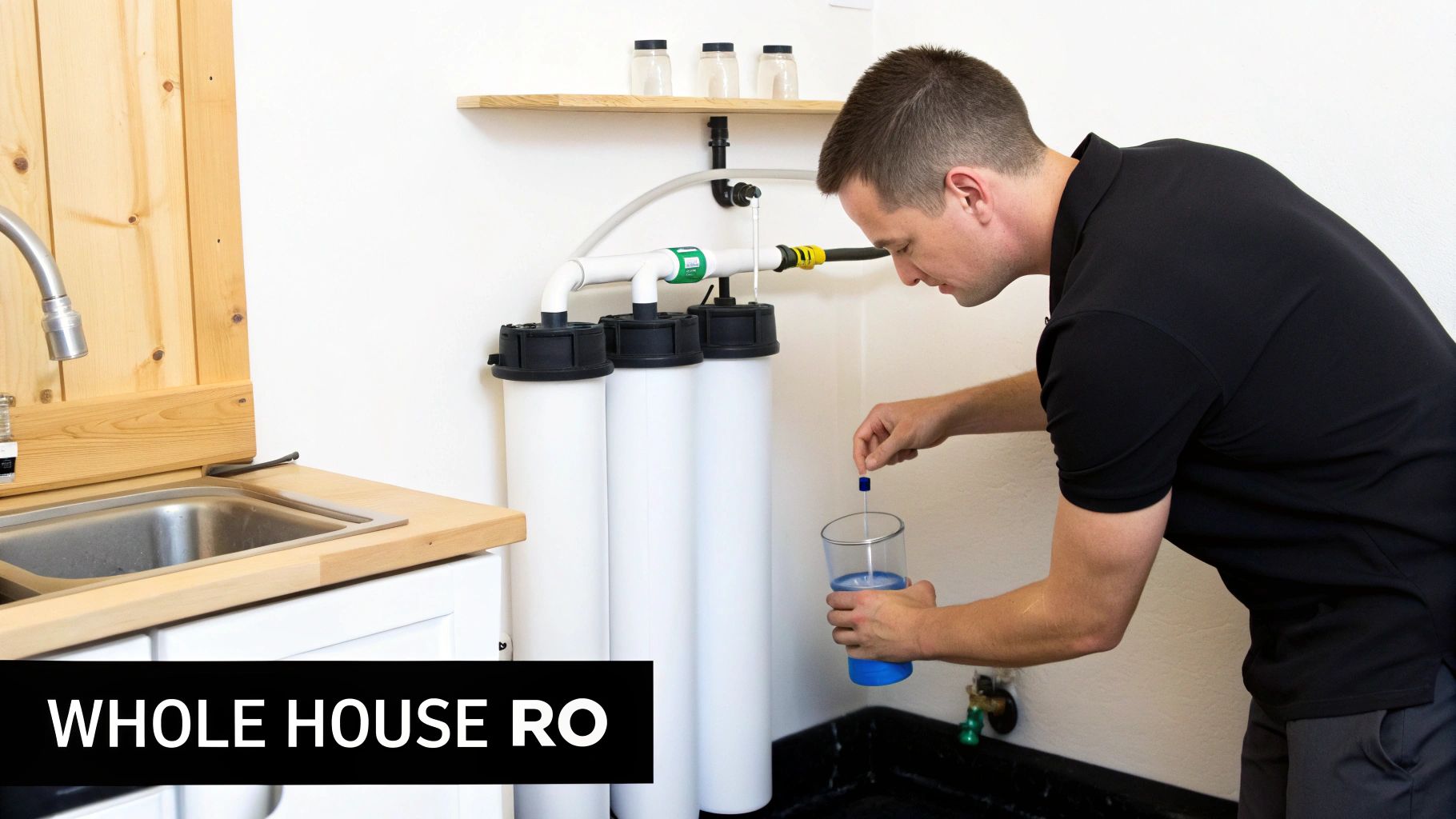
The biggest win for a whole-house RO system is how seamlessly it fits into your life. Every single tap, from the kitchen sink to the master bathroom shower, delivers purified, fantastic-tasting water. This means you can finally stop dealing with slow countertop distillers or lugging cases of bottled water home from the store.
You get genuine peace of mind knowing your family is drinking, cooking, and bathing in water that's free from the specific contaminants we see here in Southwest Florida, like nitrates, salts, and PFAS.
Even better, these systems protect your entire home. By filtering water right where it enters your house, a whole-house reverse osmosis system guards your pipes and appliances against the damaging scale and sediment buildup that’s so common in our local water. This directly extends the lifespan of your dishwasher, washing machine, and water heater, saving you a lot of money in the long run.
Choosing a whole-house system is an investment in your family’s health and your home's infrastructure. It settles the “is reverse osmosis distilled water” debate by offering a practical solution built for the real demands of a modern household.
With over 25 years of hands-on experience solving Southwest Florida's unique water problems, Water Medic is the local expert you can count on. We design and install custom systems that deliver truly exceptional water quality and reliability.
Ready to experience the difference for yourself? Contact Water Medic today for a complimentary water analysis and consultation. Let our experts show you just how easy it is to bring pure, delicious water to every faucet in your home.
A Few Common Questions We Hear
Getting the right water system for your home often comes down to understanding the practical details. Here are some answers to the questions we get asked most often, which should help clarify the best choice for your needs.
Can I Use Reverse Osmosis Water in a CPAP Machine or Aquarium?
This is a great question. While reverse osmosis water is incredibly pure, manufacturers of sensitive equipment like CPAP machines, humidifiers, and irons will almost always recommend using distilled water. This is because distillation removes virtually everything, eliminating any possible risk of mineral buildup over time.
For aquariums, it's a similar story. Both RO and distilled water are stripped of minerals, so you'll need to add back specific minerals and nutrients to create the right environment for your fish. The key is controlling what goes in.
However, for everything else in your home—from amazing drinking water to crystal-clear ice cubes—a professionally installed RO system is by far the more practical and cost-effective solution.
Does Reverse Osmosis Remove the Good Minerals Too?
Yes, a standard RO membrane is designed to remove nearly everything, which includes beneficial minerals along with harmful contaminants. That’s precisely why we never install a system without a remineralization filter. This is a crucial final step.
This special filter adds back a healthy balance of minerals like calcium and magnesium. Not only does this boost the water's health benefits, but it also dramatically improves the taste. You get crisp, clean water that’s refreshing, not "flat" like some demineralized waters can be.
How Much Upkeep Does a Whole-House RO System Need?
We design our systems to be as low-maintenance as possible. Generally, the pre-filters will need to be swapped out every 6-12 months, and the main RO membrane itself can last 2-3 years or even longer, depending on the quality of your incoming water.
The best part is you don't have to worry about any of it. When you work with us, you can sign up for a full-service maintenance plan. We keep track of the schedule, handle all the filter changes, and make sure your whole-home water treatment system runs perfectly year after year.
Ready to stop worrying about your water quality? The experts at Water Medic of Cape Coral have over 25 years of experience designing and installing the perfect water solutions for Southwest Florida homes. Contact us today for a complimentary water analysis and consultation.